

|
Ride the train to the Balkans...
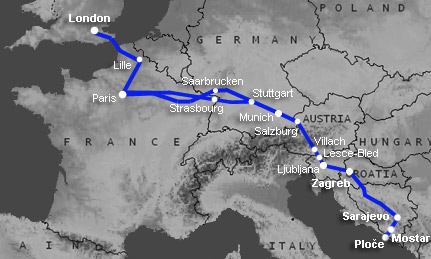
A train journey across Europe from the UK to Sarajevo is a real adventure, yet it's safe, comfortable and affordable. You can leave London in the morning on day 1 and arrive in Sarajevo in the early evening of day 2, travelling via Paris, Munich and Zagreb as shown on the route map below. This page will help you plan the journey and buy your tickets.
Train times, tickets & information
 London to Sarajevo & Mostar by train
Hotels in Sarajevo, Mostar & Bosnia
On other pages
General information about train travel in
Europe
Luggage
Taking bikes
Taking dogs
Route map
Useful country information
|
Train operator: |
ŽFBH (Zeljeznice Bosne i Hercegovine), www.zfbh.ba, in the Federation of Bosnia and Herzegovina. ŽRS in Republika Srpska, https://zrs-rs.com. |
|
Railpasses: |
Beginner's guide to European railpasses Buy a rail pass online |
|
|
Time zone: |
GMT+1 (GMT+2 last Sunday in March to last Saturday in October). |
|
|
Dialling code: |
+387 |
|
|
Currency: |
£1 = 2.1 BAM, €1 = 1.95, known locally as marks or KM. Euros widely accepted although only BAM is legal tender. Currency converter |
|
|
Tourist information: |
||
Accommodation: |
||
Visas: |
UK citizens do not need a visa to visit Bosnia. Check travel advice at www.gov.uk/foreign-travel-advice before going to Bosnia. |
|
|
Page last updated: |
14 January 2024 |
London to Sarajevo & Mostar
|
|
|
|
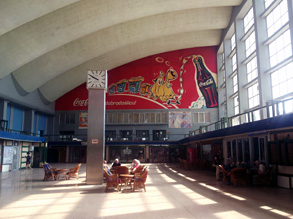
Inside Sarajevo station. Photo courtesy of Krzysztof Sokol |
|
|
|
|
|
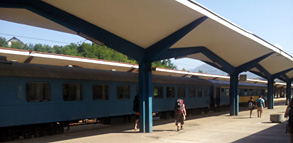
A train from Mostar to Sarajevo arrived at Sarajevo. The blue coach appears to be a second-hand Swedish or Norwegian one! Photo courtesy of Krzysztof Sokol |
|
 |
|
|
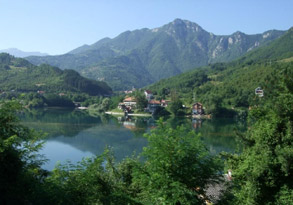
Superb scenery from the Sarajevo to Mostar train... Photo courtesy of Simon Russell |
|
 |
|
|
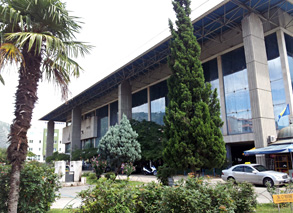
Mostar station. Photo courtesy of Krzysztof Sokol |
|
 |
|
|
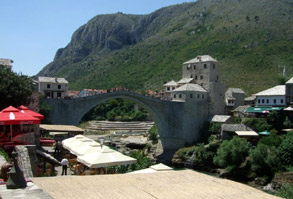
The famous bridge at Mostar. Photo courtesy of Simon Russell |
London ► Sarajevo & Mostar
-
Step 1, travel from London to Zagreb as shown on the London to Croatia page.
-
Step 2, travel from Zagreb to Sarajevo by train.
Here's the problem: Until 2016 there was a daily direct train, using elderly communist-era carriages. It was about to become a modern Bosnian Talgo train service, but a disagreement between Bosnian and Croatian Railways means there is currently no direct train. It is not clear when or if any direct train service will resume. Bosnia is now cut off from the rest of the European rail network...
Here's the solution: It's still possible to travel by train from Zagreb to Sarajevo, with a 100 km taxi ride in the middle, from the Croatian border to Banja Luka where you can pick up the train to Sarajevo. It needs no prior reservation, it cannot sell out, you just get up and go. See the Zagreb to Sarajevo page for details.
-
Day 3, travel from Sarajevo to Mostar by train, an incredibly scenic train ride taking just 1h55. There are two trains per day, see the Sarajevo to Mostar by train page for times & fares.
Mostar & Sarajevo ► London
-
Step 1, travel from Mostar to Sarajevo, an incredibly scenic train ride which takes just 1h55. There are two trains per day, see the Mostar to Sarajevo by train page for times & fares. Stay overnight in Sarajevo.
-
Step 2, travel from Sarajevo to Zagreb by train.
Here's the problem: Until December 2016 there was a daily direct train, using old communist-era carriages. It was about to become a modern Bosnian Talgo train service, but a disagreement between Bosnian and Croatian Railways means there is currently no direct train. It is not clear when or if any direct train service will resume. Bosnia is now cut off from the rest of the European rail network...
Here's the solution: It's still possible to travel by train from Zagreb to Sarajevo, with a 100 km taxi ride in the middle, from the Banja Luka to the Croatian border. It's needs no prior reservation, it cannot sell out, you just get up and go. See the Zagreb to Sarajevo page for details.
I would play safe and spend a night & day in Zagreb, a lovely city to visit.
-
Step 3, travel from Zagreb to London as shown in option 2 on the London to Croatia page.
Fares & how to buy tickets
-
See the London to Croatia page for fares & how to buy tickets from London to Zagreb.
-
Zagreb to Sarajevo is very inexpensive, see the Zagreb to Sarajevo page for details.
-
Sarajevo to Mostar is also very inexpensive, see the Sarajevo to Mostar page for details.
Travellers' reports
Traveller Simon Hodge travelled by train from Zagreb to Sarajevo in 2011: "The train was the morning InterCity service from Zagreb. When it rolled into the somewhat dated, Tito-era station at Banja Luka, the train consisted of two coaches from Republika Srpska railways and one from Croatian Railways. Having noticed that the “No Smoking” signs were being largely ignored in the Bosnian carriages, I made my way into the Croatian carriage, where I found a seat in a ubiquitous 6-seat compartment. Once we reached Doboj, the locomotive changed and the journey became faster (well it’s all relative, we perhaps reached a speed of 50mph) and a steward plied up and down the carriages with a shopping trolley containing a range of soft drinks and some moderately chilled Sarajevsko Pivo, the top-selling beer in these parts. Given that it was after 6pm and I had been a good boy, I treated myself to a Sarajevsko for around 80 pence, then leant almost rebelliously out of the window and enjoyed the views as the scenery became more mountainous. The light of the evening sun played stunningly on the mountain villages, which are all focused on the minaret of the village mosque. We twisted and turned in time with the Bosna river, as does the main road and the new motorway running north out of the capital. Eventually we swept round to the left, bringing into focus the bullet hole-ridden tower blocks of western Sarajevo."
...and from Sarajevo to Mostar: "After 2 days of breathing in this most refreshingly diverse of European Capitals, I left on an early morning train to Mostar. Although there was a mixture between open coaches and compartments, all of which are designated as 2nd class non-smoking, I found myself in a “First Class” compartment. Alongside me on one side there were two symbols – one of which was “No Smoking” and the other was “No Dogs”. To my amusement, across the aisle, an elderly Bosnian man sparked up a Camel Light and had a large Golden Labrador taking up all the aisle space! The train itself was a relic of 1950s Sweden. Signs in Swedish were still prominently displayed, much to the delight of a Swedish couple a few rows away! Although decrepit, the seats were comfortable and extremely spacious – I could just about touch the seat in front with my outstretched foot. As we settled in, a lady from the buffet car made her way through the carriage offering a dose of typically strong Bosnian coffee, the sort that makes sleep a challenge for the next two days, for a reasonable 1 KM (about 45p). The train quickly climbs through the mountainous hills once occupied by Bosnian Serb aggressors – that hostility is barely conceivable now, as the line cuts through valleys, alongside rivers and through long tunnels. Approaching the small town of Konjic, the scenery is so spectacular that even the locals are glued to the window admiring the beauty. Nobody worries that the train is going so slowly – this is one of the most scenic and memorable journeys I have made anywhere in the world, right up there alongside the train to Machu Picchu in Peru, the Rhine Valley in Germany or any of the scenic trains in Switzerland. Just when you think you’ve been through the best of it once you pass the town of Jablanica, the train snakes along the upper valley of the Neretva River, which is the same watercourse that is bridged so famously at Mostar."
Traveller Jasper Goldberg took the Zagreb-Sarajevo train in 2010: "I think that most of the people who took it the full distance were tourists like myself. However, it does get pretty crowded at times. The reason that the train takes 9 hours (instead of the pre-war 6) is that the train crosses Croatia and there are four passport and ticket checks, as well as two crew and locomotive changes. The Bosnian part of the trip is the nicest because of the scenery and friendly locals, and it was one of my favourite train journeys in Europe."
Traveller Neil Edwards took the train from the UK to Sarajevo in 2008: "The three of us who made the train journey from London to Sarajevo can confirm that it was certainly a great experience and worth the effort if you can spare the extra travelling time. The Zagreb-Sarajevo daytime train isn't the most decadent, modern or rapid of trains, though in a way this adds to the charm. There's no buffet car although a chap with a small pull-a-long trolley tried to sell us small bottles of fizzy drink on a number of occasions. It's a long journey and you will need supplies for the 9-10 hour journey. Don't expect to pick up anything decent for the trip at Sarajevo station, there are a couple of kiosks nearby but you can only get fluids and chocolate. Ah, and as for bathroom facilities, go early on as they quickly become flooded or soiled!
Traveller Phillip Mullen took the overnight train from Zagreb to Sarajevo in October 2008: "There was no problem in buying the ticket from the International travel desk at Zagreb Glavni Kolod (main station), where a return cost me the equivalent of £40 including a couchette for the outward journey [Note: There are no longer any couchettes on this train]. The train had only a few passengers on it, and being so empty I had the whole 6-person compartment to myself and was settled down and sleeping by 10pm. I was woken twice during the night by border guards, the first time around 11pm when they hammered on my door, which locked from the inside for security, as the guard had told me. I waited just a little too long to open up because I'd been warned about beggars! Oh well, they were a bit irate! The second time was around midnight and I'm not sure what that was for, but they seemed fairly content after glancing at my passport. As I recall the train arrived on time in Sarajevo, around 6:30am. It was not possible to book a couchette for my return journey at the ticket office in Sarajevo train station, and I was prepared to sleep in a seat on the way back to Zagreb. But I boarded the train 20mins before it was due to leave, found the guard and asked for a couchette. He didn't speak much English, but he mentioned a fee of €10, which I thought was a bargain for a night's rest! Whether this was an official fee or a perk-of-the-job I don't know, as no receipt or alteration to my ticket was made, but it seemed a modest sum."
London to Sarajevo via Budapest or Belgrade
Sadly, the Budapest to Sarajevo and Belgrade to Sarajevo trains are discontinued from 9 December 2012, due to massive cuts to services in Croatia.
European Rail Timetable & maps

 The
European Rail Timetable
(formerly the Thomas Cook European Timetable)
has train & ferry times for every country in Europe plus
currency & climate information. It is essential
for regular European train travellers and an inspiration for armchair
travellers. Published since 1873, it had just celebrated 140 years of
publication when Thomas Cook decided to pull the plug on their entire publishing
department, but the dedicated ex-Thomas Cook team set up a private venture and
resumed publication of the famous European Rail Timetable in March 2014.
You can buy it online at
www.amazon.co.uk (UK addresses) or
www.europeanrailtimetable.eu (shipping worldwide).
More information
on what the European Rail Timetable contains.
The
European Rail Timetable
(formerly the Thomas Cook European Timetable)
has train & ferry times for every country in Europe plus
currency & climate information. It is essential
for regular European train travellers and an inspiration for armchair
travellers. Published since 1873, it had just celebrated 140 years of
publication when Thomas Cook decided to pull the plug on their entire publishing
department, but the dedicated ex-Thomas Cook team set up a private venture and
resumed publication of the famous European Rail Timetable in March 2014.
You can buy it online at
www.amazon.co.uk (UK addresses) or
www.europeanrailtimetable.eu (shipping worldwide).
More information
on what the European Rail Timetable contains.
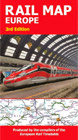
Rail Map Europe is the map I recommend, covering all of Europe from Portugal in the west to Moscow & Istanbul in the east, Finland in the north to Sicily & Athens in the south. Scenic routes & high-speed lines are highlighted. See an extract from the map. Buy online at www.europeanrailtimetable.eu (shipping worldwide) or at www.amazon.co.uk (UK addresses).
Guidebooks

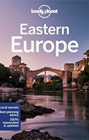 You
should take a good guidebook. I think that the Lonely
Planets and the Rough Guides are easily the best for the
independent traveller. Both guides have plenty of
background historical and cultural information, plus lots of
practical information. You won't regret buying one of
these guides!
You
should take a good guidebook. I think that the Lonely
Planets and the Rough Guides are easily the best for the
independent traveller. Both guides have plenty of
background historical and cultural information, plus lots of
practical information. You won't regret buying one of
these guides!
Click the images to buy at Amazon...
My own book, an essential handbook for train travel to Europe based on this website called The Man in Seat 61, was published in June 2008 with a new edition in April 2010, and is available from Amazon.co.uk with shipping worldwide.
Find hotels in Bosnia

 Backpacker
hostels
Backpacker
hostels
www.hostelworld.com: If you're on a tight budget, don't forget about backpacker hostels. Hostelworld offers online booking of cheap private rooms or dorm beds in backpacker hostels in most cities at rock-bottom prices.
Travel insurance & other tips
|
|
|
|
|

Always take out travel insurance
You should take out travel insurance with at least £1m or preferably £5m medical cover from a reliable insurer. It should cover trip cancellation and loss of cash & belongings up to a reasonable limit. These days, check you're covered for covid-19-related issues, and use an insurer whose cover isn't invalidated by well-meant but excessive Foreign Office travel advice against non-essential travel. An annual policy is usually cheapest even for just 2 or 3 trips a year, I have an annual policy with Staysure.co.uk myself. Don't expect travel insurance to bail you out of every missed connection, see the advice on missed connections here. Here are some suggested insurers, I get a little commission if you buy through these links, feedback always welcome.
 www.staysure.co.uk
offers enhanced Covid-19 protection and gets 4.7 out of 5 on
Trustpilot.
www.staysure.co.uk
offers enhanced Covid-19 protection and gets 4.7 out of 5 on
Trustpilot.
www.columbusdirect.com is also a well-know brand.
 If you live in the USA try
Travel Guard USA.
If you live in the USA try
Travel Guard USA.
|
|

Get an eSIM with mobile data package
Don't rely on WiFi, download an eSIM with a European mobile data package and stay connected. Most newer mobile phones can download a virtual SIM including iPhone 11 & later, see device compatibility list. There's no need to buy a physical SIM card! Maya.net is a reliable eSIM data retailer with a 4.5 out of 5 Trustpilot rating and a range of packages including unlimited data.
|
|
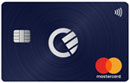

Get a Curve card for foreign travel
Most banks give you a poor exchange rate then add a foreign transaction fee on top. A Curve MasterCard means no foreign transaction fees and gives you the mid-market exchange rate, at least up to a certain limit, £500 per month as I write this. The money you spend on your Curve card goes straight onto one of your existing debit or credit cards. And you can get a Curve card for free.
How it works: 1. Download the Curve app for iPhone or Android. 2. Enter your details & they'll send you a Curve MasterCard - they send to the UK and most European addresses. 3. Link your existing credit & debit cards to the app, you can link up to two cards with the free version of Curve, I link my normal debit card and my normal credit card. 4. Now use the Curve MasterCard to buy things online or in person or take cash from ATMs, exactly like a normal MasterCard. Curve does the currency conversion and puts the balance in your own currency onto whichever debit or credit card is currently selected in the Curve app. You can even change your mind about which card it goes onto, within 14 days of the transaction.
I have a Curve Blue card myself, it means I can buy a coffee on a foreign station on a card without being stung by fees and lousy exchange rates, just by tapping the Curve card on their card reader. The money goes through Curve to my normal debit card and is taken directly from my account (in fact I have the Curve card set up as payment card on Apple Pay on my iPhone, so can double-click my phone, let it do Face ID then tap the reader with the phone - even easier than getting a card out). I get a little commission if you sign up to Curve, but I recommend it here because I think it's great. See details, download the app and get a Curve card, they'll give you £5 cashback through that link.
|
|

Get a VPN for safe browsing. Why you need a VPN
When travelling you may use free public WiFi which is often insecure. A VPN encrypts your connection so it's always secure, even on unsecured WiFi. It also means you can select the geographic location of the IP address you browse with, to get around geoblocking which a surprising number of websites apply. See VPNs & why you need one explained. ExpressVPN is a best buy with a 4.7 out of 5 Trustpilot ranking which I use myself - I've signed up as an ExpressVPN affiliate, and if you go with expressvpn.com using this link you should see a special deal, 3 months free with an annual subscription. I also get some commission to help support this site.
|
|

Carry an Anker powerbank
Tickets, reservations, hotel bookings and Interrail or Eurail passes are often now held on your mobile phone. You daren't let it run out of power, and you can't always rely on the phone's internal battery or on being near a power outlet. I always carry an Anker powerbank which can recharge my phone several times over. Buy from Amazon.co.uk or Buy from Amazon.com.
Touring cities? Use hill walking shoes!
One of the best things I've done is swap my normal shoes for hill-walking shoes, in my case from Scarpa. They're intended for hiking across the Pennines not wandering around Florence, but the support and cushioning for hiking works equally well when you're on your feet all day exploring foreign cities. My feet used to give out first and limit my day, now the rest of me gives up before they do!