

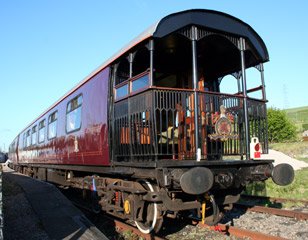
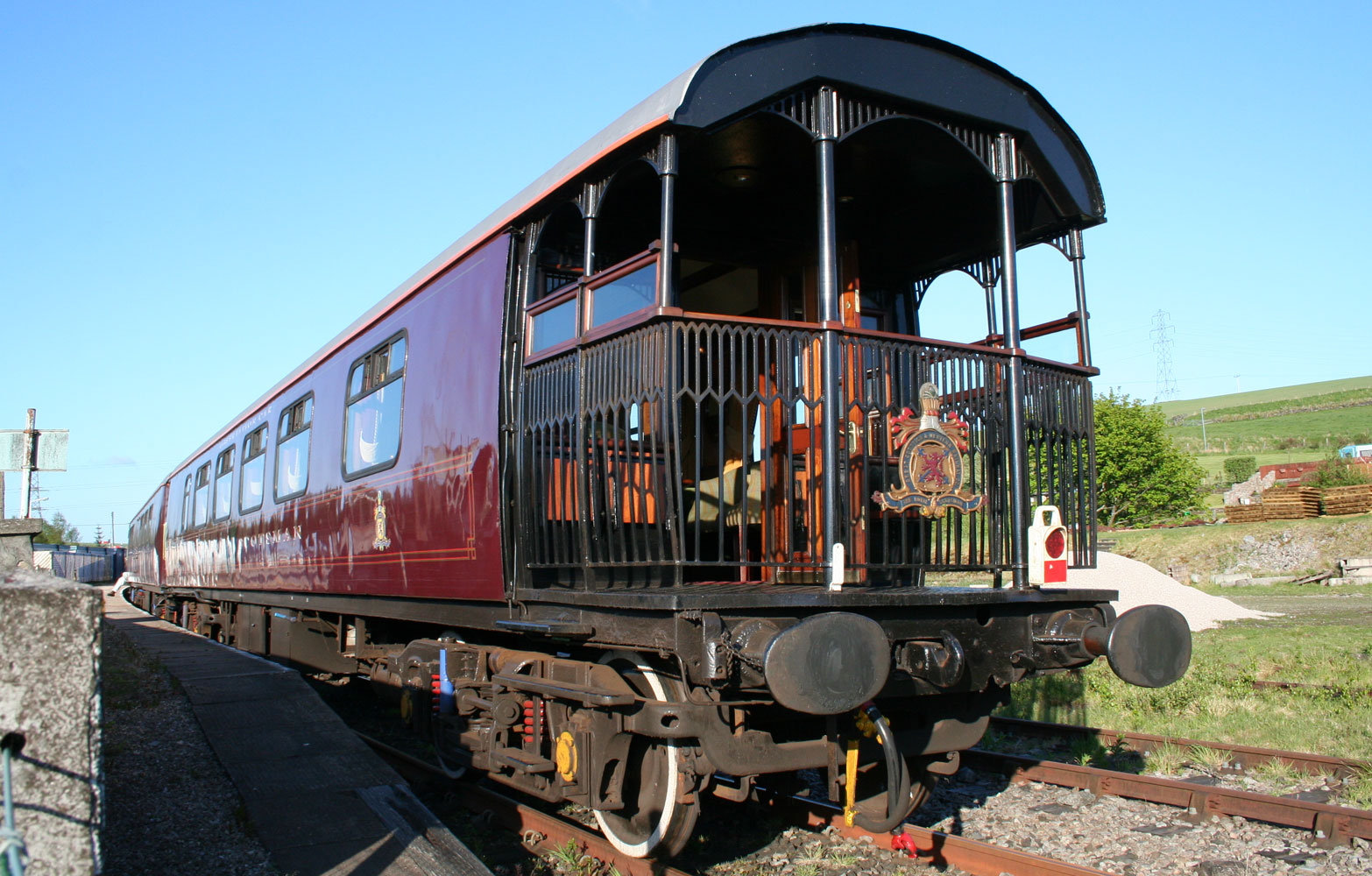
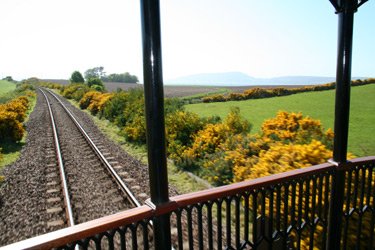
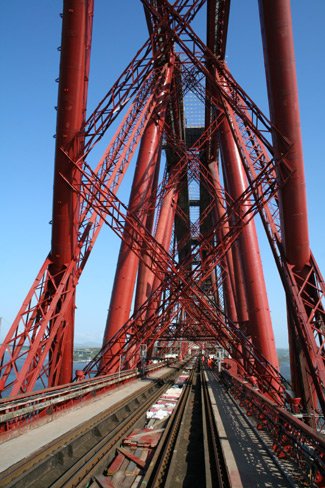
The Belmond Royal Scotsman's observation car. Crossing the famous Forth Bridge on this open-air viewing platform is an amazing experience... |

Tour Scotland on the Royal Scotsman
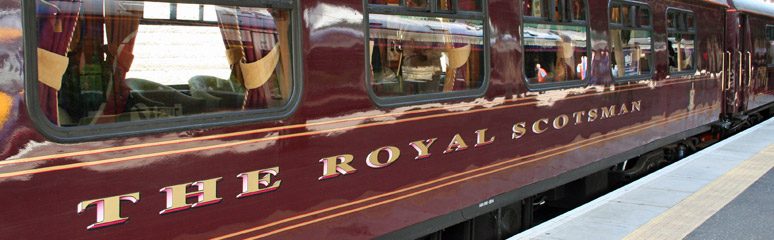
The Royal Scotsman is Scotland's luxury cruise train, offering 2, 3, 4, 5 or 7 night tours of the Scottish Highlands. Run by Belmond who also run the famous Venice Simplon-Orient-Express and equally luxurious Eastern & Oriental Express, the Belmond Royal Scotsman sets the same top-end standards of service & cuisine. They aim to create the atmosphere of a Scottish 5-star country house hotel and they succeed. The 9-coach train carries a just 36 passengers maximum with a passenger to staff ratio of 3:1. I've experienced the Royal Scotsman and it feels very exclusive, an unbeatable combination of superb scenery on Britain's most scenic train routes, country-house all-inclusive luxury with great food, wine & service and some very well-chosen off-train excursions. A trip on the Royal Scotsman isn't cheap, but if it's a special occasion or a once-in-a-lifetime opportunity to see a lot of Scotland in a very short time, you really won't be disappointed. This page gives you the low-down on the Belmond Royal Scotsman experience.
-
The Belmond Royal Scotsman operates from April to October, offering 2, 3, 4 , 5 or 7 night itineraries.
-
All Belmond Royal Scotsman tours start & finish at Edinburgh Waverley station.
-
Some itineraries head over the famous West Highland Line, others the Highland Main Line, some the Kyle line and some a combination of these. The tours beautifully showcase the history, culture & scenery of the Scottish Highlands. Which tour should you choose?
-
Prices start from around £4,500 per person for 2 nights rising to over £13,000 for 7 nights.
-
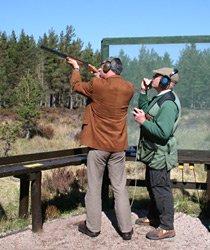
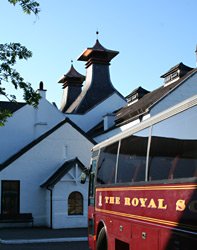
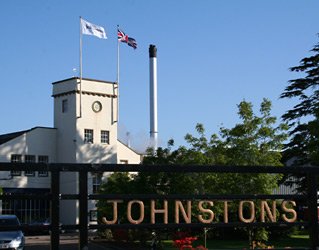
The price includes all meals, alcoholic & non-alcoholic drinks, on-board accommodation & off-train excursions such as (depending on the tour) a guided tour of a whisky distillery, clay pigeon shooting on a Scottish laird's estate, a visit to a highland woollen mill.
-
You can check itineraries, prices & departure dates at www.belmond.com/.../belmond-royal-scotsman.
-
Buy tickets online at www.belmond.com/.../belmond-royal-scotsman but also call Railbookers (see here for phone numbers) as they can sometimes offer better rates and can also sort hotels & connecting trains.
-
How to book a trip on the Royal Scotsman Recommended hotels in Edinburgh Travel to Edinburgh by train
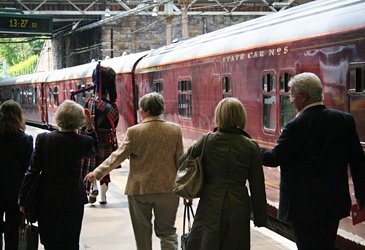
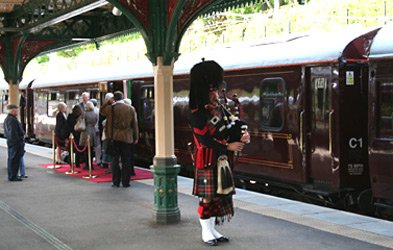
Boarding the Belmond Royal Scotsman in Edinburgh
The lounge-observation car
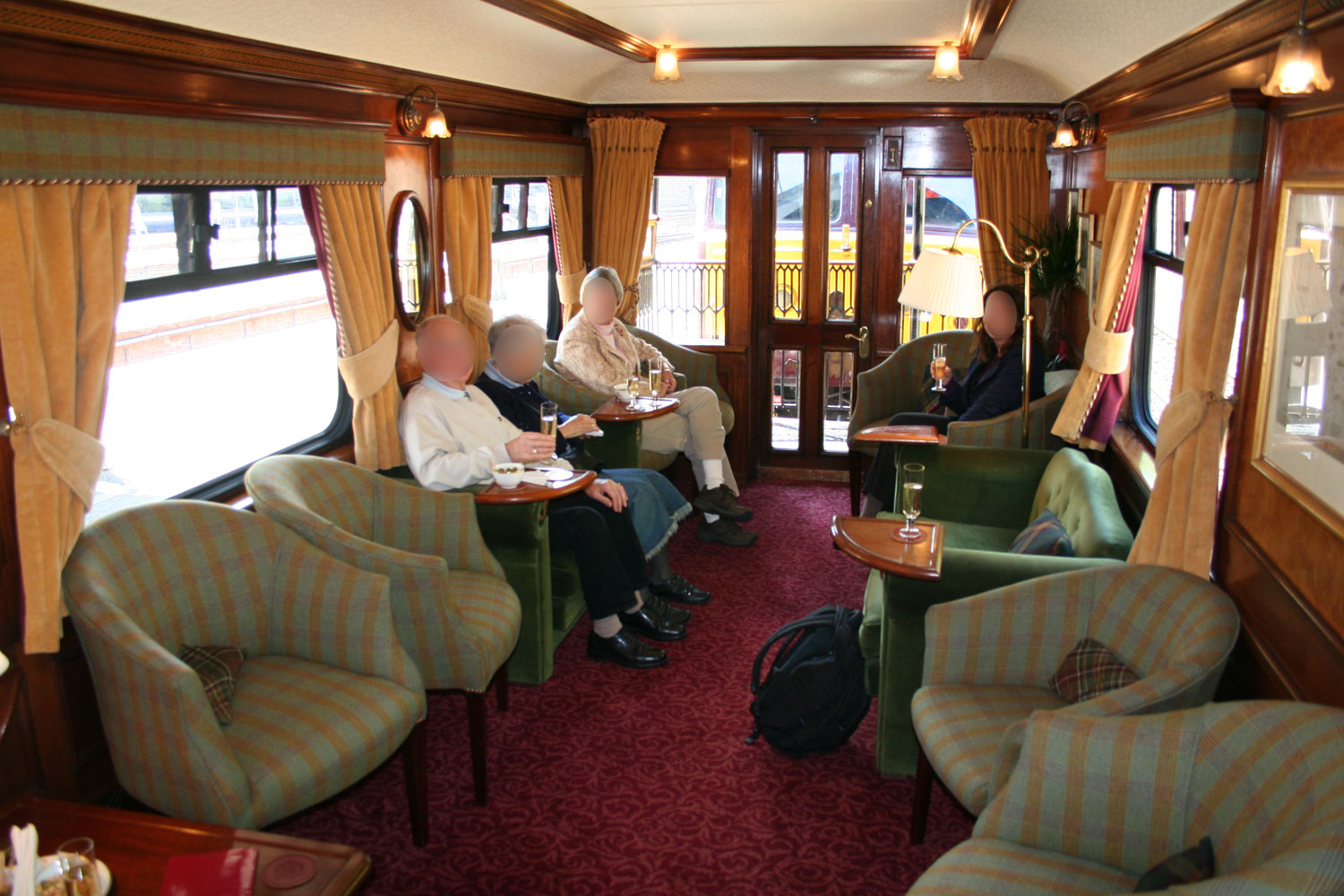
This is the social hub of the train, located either at the rear or (for some parts of the trip) immediately behind the locomotive. The lounge has armchairs, sofas, coffee tables, a bar serving tea & coffee, alcoholic & non-alcoholic drinks (all included in the price, just ask), and best of all there's an open-air observation platform, great for photography. The day's activities, timetable & menus are posted in the carriage vestibule. The bar carries some 30 different types of Scottish whisky, from the stronger west coast whiskies like Lagavulin, Talisker or Oban to the smoother eastern malts like Dalwhinnie. You might not get through all 30, but with some suitable suggestions and guidance from the train manager and you may well find yourself doing some... er... interesting research...
Your private stateroom
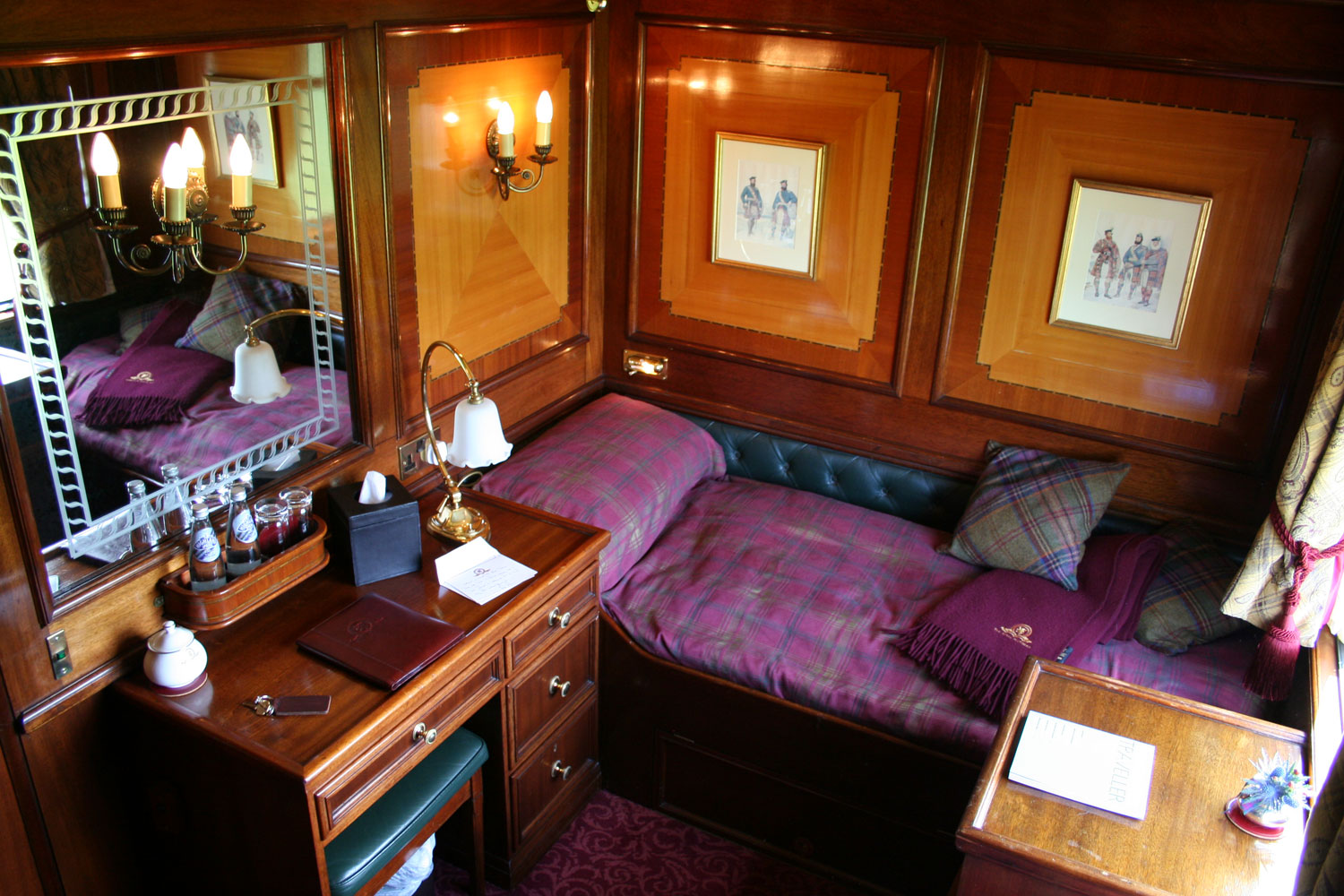
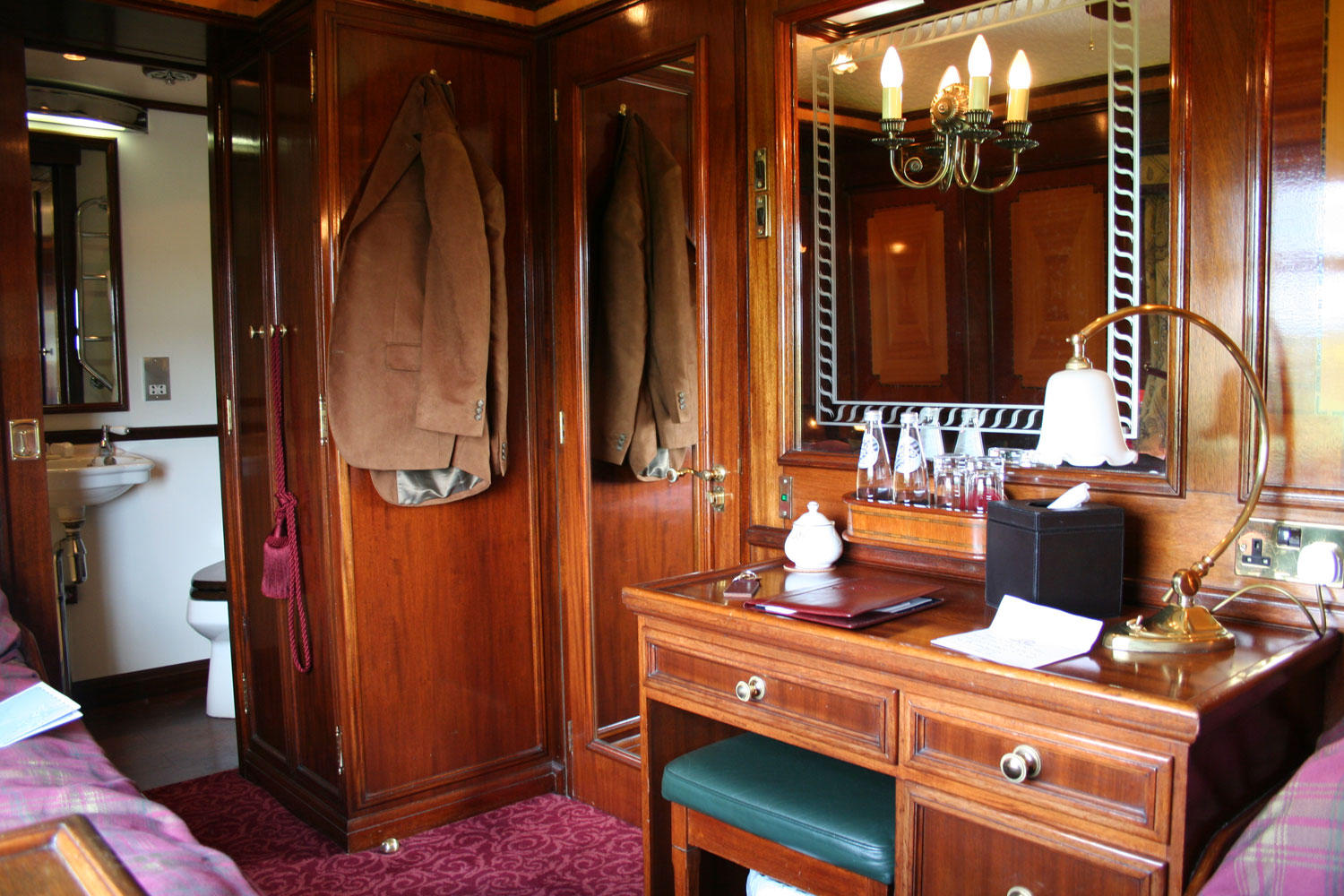
Your wood-panelled stateroom includes two single beds (there are a few single rooms with one bed) and all the facilities of a good (though compact) hotel room: Small en suite shower & toilet, desk, table, wardrobe, tissues, mineral water, bathrobe & slippers, writing paper, soap, fluffy towels, shampoo & shower gel. The train is always stabled in a siding or quiet platform for the night, so you don't have to sleep on the move. The cars were specially rebuilt as 'hotel cars' for the Belmond Royal Scotsman from 1960s Pullman seating cars. You can find more about the history of the Belmond Royal Scotsman train here.
The dining experience
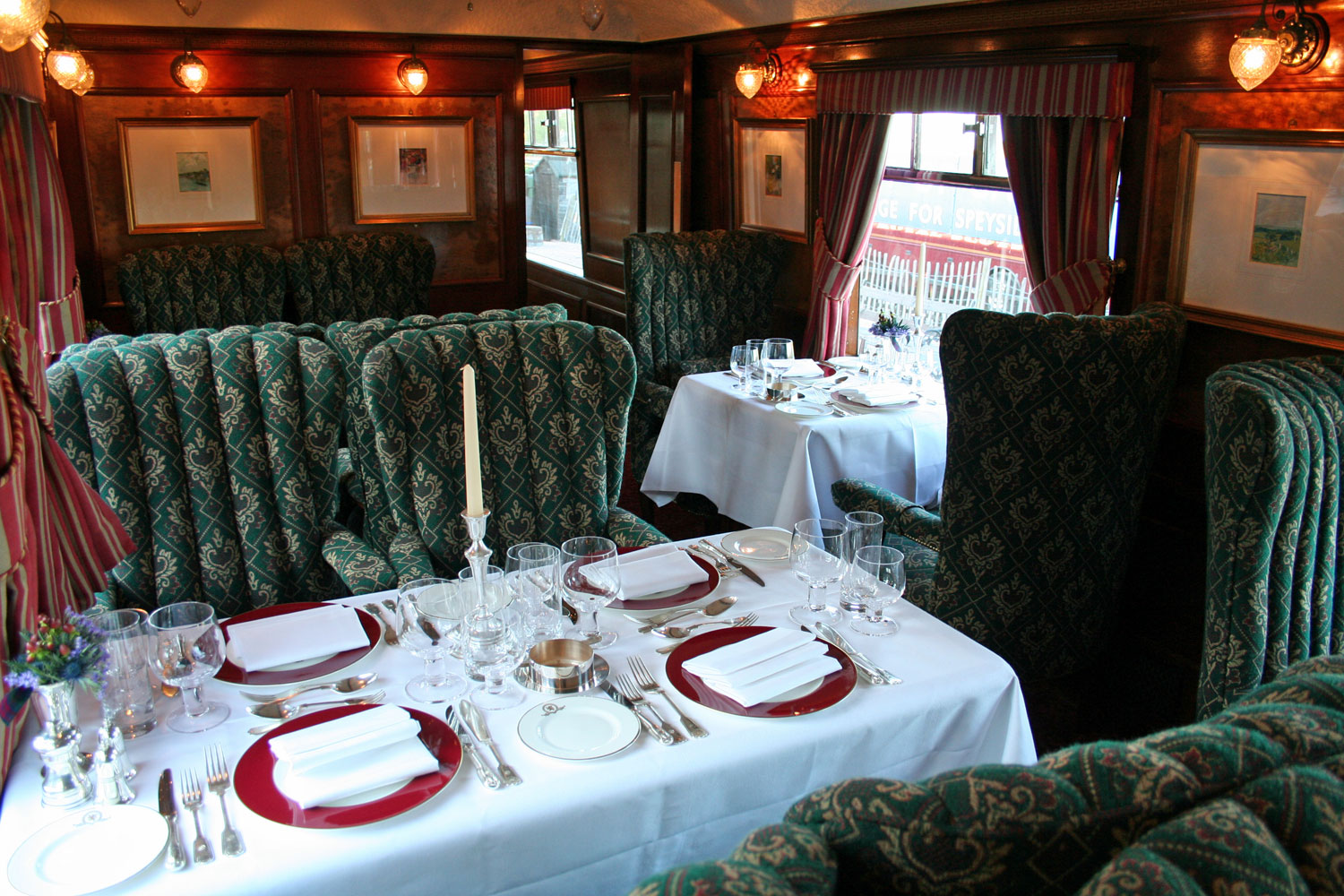
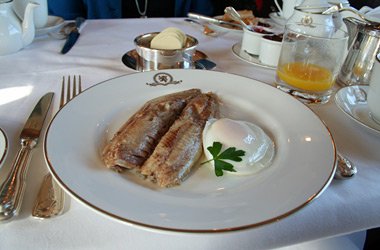
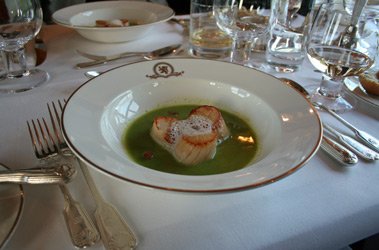
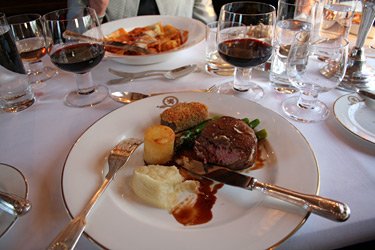
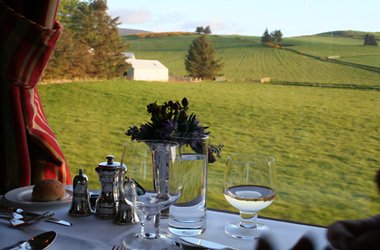
The Belmond Royal Scotsman has two dining cars, Raven with a long central table & 16 seats, and Victory with conventional restaurant car tables offering 20 seats. Victory dates from 1945 making it the oldest car on the train. The meals and well-chosen wines are all included in the price. The food is cooked on board in the train's tiny kitchen, and it's excellent. At least one dinner on each tour is 'formal', so remember to bring your dinner jacket!
Off-train excursions
Each Belmond Royal Scotsman tour includes several well-chosen off-train excursions, which vary depending on which tour you choose. Be warned, the clay pigeon shooting is addictive. Tea & coffee followed afterwards at the big house, where you may even get to meet the Laird. In the evening over after-dinner drinks in the lounge car, you may be privileged to listen to Highlander Ray Owens talk about 17th century Highland Life, which he can bring alive like no-one else.
The scenery
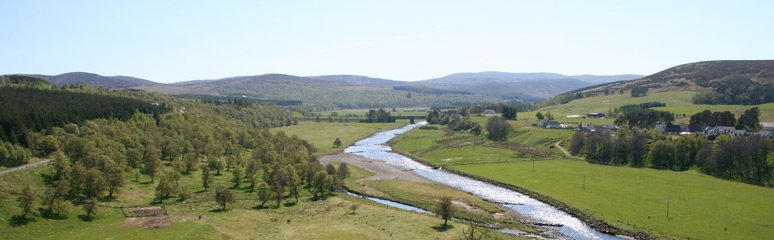
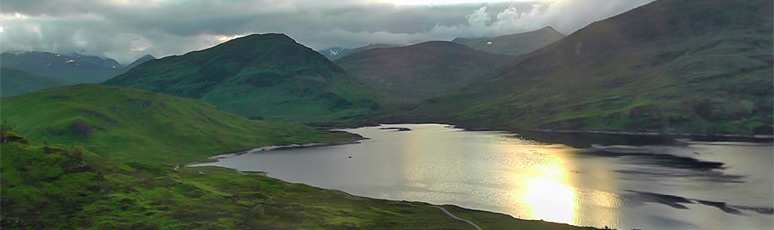
If you drive around the Highlands, the winding single-track roads of childhood memory have sadly been replaced across much of the countryside by wide straight 60mph concrete highways blasted thoughtlessly through the landscape. The good news is that you can still see unspoilt Highland countryside from Scotland's railways, and the train takes you through some of the best scenery in Scotland (or indeed, in Britain). The most scenic route of all is probably the West Highland Line from Glasgow to Fort William & Mallaig, so for sheer remote Highland beauty take one of the itineraries heading up this route. But the Highland Line is also beautiful as the photos below try to show, and itineraries that travel over the Highland Line usually return via the famous Tay & Forth Bridges between Dundee & Edinburgh.
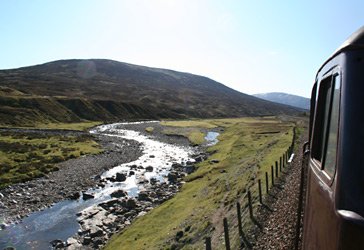
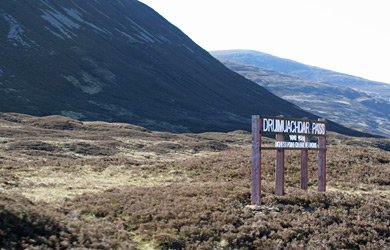
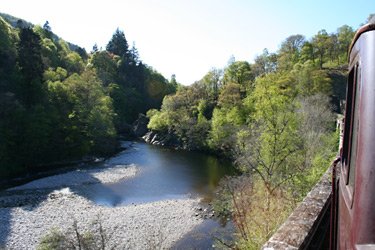
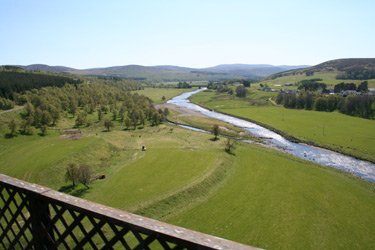
The Tay & Forth Bridges
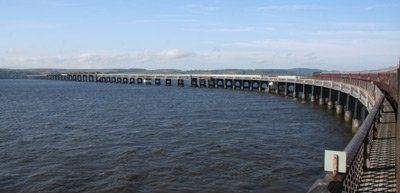
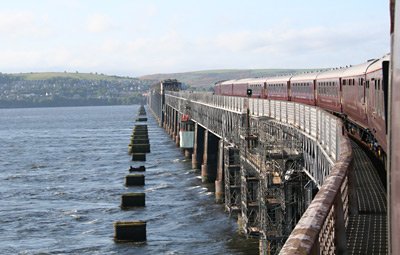
The Belmond's Royal Scotsman 2-night Taste of the Highlands, 4-night Scotland's Classic Splendours, 5-night Grand Taste of the Highlands & 7-night Grand Western Scenic Wonders tours usually take you over the famous Tay Bridge & Forth Bridge between Dundee & Edinburgh, and these deserve a special mention. Once the longest & largest bridges in the world, it's a real privilege to cross them standing on the Belmond Royal Scotsman's open-air viewing platform, as you get views and a photo opportunity that you simply don't get from any regular sealed-in train. As you can see in the photo below, the stumps of the piers from the first (1878) Tay Bridge remain visible in the water next to the current (1887) Tay Bridge, a macabre reminder of the first Tay Bridge which collapsed under a train in a storm in 1879 with the loss of all 72 passengers on board. The Tay Bridge Disaster was immortalised in a poem by William McGonagall, allegedly Scotland's worst poet. The train was found on the sea bed, still encased in the bridge girders. The locomotive was found relatively undamaged and was raised and returned to service. Nicknamed 'The Diver' (it sank twice whilst being salvaged and brought ashore) it was only scrapped in 1937, but for years no driver would dare take it over the Tay Bridge...
Which tour to choose?
You may find this map of the British train network useful. The West Highland Line is the route from Glasgow to Fort William & Mallaig. The Highland Line is the one from Perth to Inverness, The Kyle Line is the one from Inverness to Kyle of Lochalsh. The Tay bridge is just south of Dundee on the line to Edinburgh, the Forth Bridge is on that same line just north of Edinburgh.
If it's wild, remote Highland scenery you're after, the West Highland Line from Glasgow to Fort William is considered the most scenic route in Britain (see the West Highland Line page) so choose any of the tours that take in that route.
If you're a Harry Potter fan, you'll also want a West Highland itinerary as these include crossing the Glenfinnan Viaduct as featured in the Harry Potter films.
If you can only spare 2 nights (3 days), then take the 2-night Taste of the Highlands tour, as the Highland Line from Edinburgh via Perth to Inverness is also beautiful, if not quite a wild or remote as the West Highland Line, and you normally cross the infamous Tay Bridge & awe-inspiring Forth Bridge on the way back to Edinburgh.
The Kyle Line from Inverness to Kyle of Lochalsh, just across the water from the Isle of Skye, is another candidate for most scenic route in Britain. If you can't decide and just want to see everything, the 5- or 7-night itineraries cover all or almost all of the others in one trip.
How to buy tickets
Book it with Railbookers: Call train specialist Railbookers who can book the Belmond Royal Scotsman and sometimes offer special rates. Railbookers can also arrange hotels & scheduled train travel (such London-Edinburgh) to connect with the Royal Scotsman.
 UK call 0207 864 4600,
www.railbookers.co.uk
- please quote 'Seat 61'.
UK call 0207 864 4600,
www.railbookers.co.uk
- please quote 'Seat 61'.
 US call free 1-888-829-4775,
www.railbookers.com.
US call free 1-888-829-4775,
www.railbookers.com.
 Canada call free 1-855-882-2910,
www.railbookers.com.
Canada call free 1-855-882-2910,
www.railbookers.com.
 Australia call toll-free 1300 971 526,
www.railbookers.com.au.
Australia call toll-free 1300 971 526,
www.railbookers.com.au.
 New Zealand call toll-free 0800 000 554 or
see
website.
New Zealand call toll-free 0800 000 554 or
see
website.
Book it with Tailor Made Rail can also organise a Royal Scotsman trip. Call their dedicated seat61 phone line 020 3778 1461 and quote seat 61 when booking. From outside the UK call +44 20 3778 1461. Lines open 09:00-17:30 Monday-Friday. See www.tailormaderail.com/trains/belmond-royal-scotsman.
Or see www.belmond.com/.../belmond-royal-scotsman.

Hotels in Edinburgh: A tale of two rivals
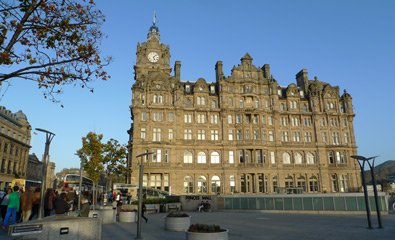
Consider these two historic rival hotels before or after your Royal Scotsman tour, both luxurious hotels in prime locations, both originally built by railway companies:
The Balmoral Hotel, an excellent 5-star hotel now run by Rocco Forte. Built in 1902 as the North British Hotel and known locally as the 'NB', this was the North British Railway's prestigious Edinburgh Hotel, located on Edinburgh's famous Princes Street right next to Waverley station where the Royal Scotsman departs and where trains from London & the south arrive. In the 19th & early 20th centuries, the North British Railway was one of two competing railways linking Scotland with the south, handling trains to and from London's Kings Cross station via the East Coast Route via York & Newcastle.
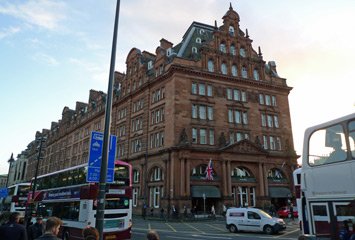
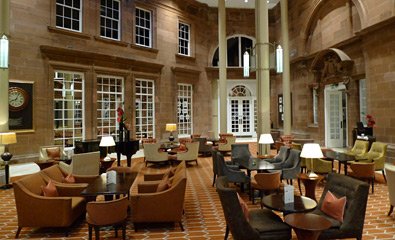
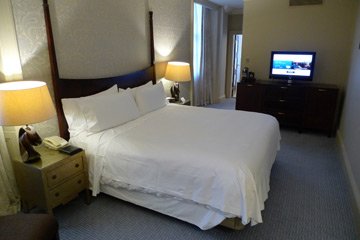
The Caledonian Hotel, 5-star. The Caledonian Railway was the North British Railway's arch rival, which handled trains via the West Coast Route to and from London's Euston station via Carlisle and Crewe. In 1903, the Caledonian Railway built their own imposing railway hotel at the opposite end of Princes street, next to their own Princes Street station. The hotel is now all that's left of Princes Street station, which was closed in 1965, all trains now use the North British Railway's Edinburgh's Waverley station. This hotel underwent a £14m refurbishment in 2012 became The Caledonian, a Waldorf Astoria Hotel.
Train travel to Edinburgh
London to Edinburgh takes only 4h20 by train, city centre to city centre stress-free, trains run every hour or better and cost from just £14.90 one-way if you book in advance. The journey takes you via York, so why not stop in York for a day on the way? See the guide to the London to Edinburgh train journey.
History of the Royal Scotsman train
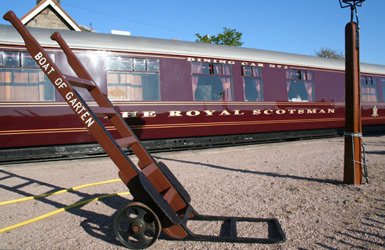
The Belmond Royal Scotsman has been running since 1985, when it was started by two entrepreneurs using an assortment of leased coaches. It was a success, and this enabled a new purpose built (or rather, purpose rebuilt) set of Royal Scotsman carriages to be introduced in 1990. Six of the nine coaches including most of the sleeping-cars, dining-car 'Raven' and the lounge-observation car, were rebuilt from Pullman seating cars originally built by Metro-Cammell in Birmingham in 1960 and used on prestige trains on the East Coast route between London Kings Cross, Leeds, York, Newcastle & Edinburgh. The coaches' interiors are radically different from their original 1960 interiors, with new Edwardian-style interior wood panelling provided by a specialist firm in Bournemouth. Dining-car number 2 'Victory' was built in 1945 as an LNER (London & North Eastern Railway) first class carriage, used for much of its life as a inspection saloon for railway officials. The last two vehicles (one service & generator car, one crew/sleeper) were built in the early 1980s as British Rail Mark 3 sleeping-cars. The Royal Scotsman was acquired by Orient Express Trains Ltd in 2005, and it's now part of their portfolio of world-class luxury trains. More details about the Royal Scotsman carriages. The locomotive that hauls the Royal Scotsman train is contracted from the West Coast Railway Co. Ltd, and it's usually a ex-British Rail class 47. Dating from the 50s & 60s, class 47s were once the most common mainline diesel in Britain but are now a rarity.