


|
|



 overseas
credit card? Use
overseas
credit card? Use
20+ operators, one network
Click here for the best map of the UK train network
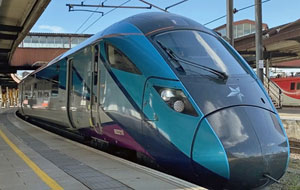
Here's a quick guide to train travel in Britain. Since 1995, Britain's rail network has been run by over 20 different train companies, but they work together as National Rail with co-ordinated fares & ticketing. You can find train times & fares for all train operators all on one website, you can buy a train ticket between any two stations, and unless it says otherwise, tickets are valid on any operator's trains.

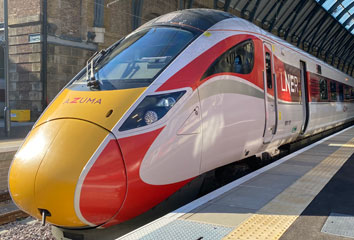
A typical inter-city train
Trains come in many different types & company colours, but they all work together as National Rail. This is an LNER Azuma train, used on the East Coast Main Line linking London-York-Newcastle-Edinburgh. You'll find seat maps for key British trains on the seat maps page.
How to check train times & fares
-
To check train times & fares, use the National Rail website www.nationalrail.co.uk. This is provided by RDG (Rail Delivery Group) on behalf of all train operators, and it shows train times & fares for all routes and all operators. RDG was formerly (perhaps more accurately) called the Association of Train Operating Companies.
Pro tip: You can look up fares & restrictions at www.brfares.com although this is an online version of rail industry fares manuals so takes some getting to grips with. However, I use it all the time to check the list of fares between two points without having to use a journey planner.
-
To check train times & fares by phone, call National Rail Enquiries on 0345 7 48 49 50 (from outside the UK, +44 20 7278 5240). Lines open 24 hours a day, calls from UK phones charged at local rates.
-
Is your train on time? Go to www.nationalrail.co.uk/live-trains and enter the name of your station to see a live online departure board showing train arrivals & departures in the next hour or two, and whether they are on time or not.
Pro tip: If you want a really detailed version with planned train formations and rolling stock type, see www.realtimetrains.co.uk.
Maps of the rail network
-
Map of the national rail network: Click here for the best national rail map. This is the map which used to come with the printed Great Britain National Timetable, and in my opinion it's the still best map of the network, schematic enough to see the lines, geographic enough to see where they really go. The map is sadly no longer available on the National Rail website and none of the replacement maps are as good.
-
Other maps: There are other train network maps listed on www.nationalrail.co.uk/travel-information/maps-of-the-national-rail-network, including maps of the London area rail network, the London & Southeast rail network, and rail networks in other major cities.
I also recommend rail fare expert Barry Doe's UK rail map which shows which train operator runs where, www.barrydoe.co.uk/railmap61.pdf.
-
Station plans: For plans of most stations showing layout, platforms & facilities see www.nationalrail.co.uk/stations.
How to buy tickets
|
|
-
Buy train tickets for any train journey in Britain at tfw.wales.
Transport for Wales (tfw.wales) is one of the 20+ British train operators, they sell tickets for all routes, trains & operators (except sleepers), charging the official price with no added booking fee.
You'll be offered a mobile ticket for many journeys, simply show the QR code on your phone, tablet or laptop.
Or you can collect tickets from the self-service machines at any main station. You'll need the original credit or debit card with you as ID, if you have any problems you can also collect from the staffed ticket office.
Or they will post tickets to any UK address for a fee, with guaranteed next day delivery by 1pm.
Overseas users: If you have any problems getting tfw.wales to accept your credit card, buy from www.thetrainline.com instead.
-
There's no need to find the 'right' operator's website
Or to compare prices on different sites as all train operator websites including tfw.wales sell tickets for all British trains at exactly the same prices from exactly the same National Rail fares database.
Although www.thetrainline.com checks for split ticket savings, most operator websites don't.
-
There are 3 types of fare, Anytime, Off-Peak & Advance
Anytime fares are good for any train. Off-Peak fares are good for any train outside Monday-Friday peak periods. Advance fares are only good for the specific train you book with limited or no changes or refunds. For more a detailed explanation, see British train fares explained.
-
Avoid booking fees!
Train operator websites such as tfw.wales don't charge a booking fee. Most independent third-party ticket retailers add a small booking fee on top of the ticket price, including www.thetrainline.com & www.raileasy.co.uk. There are a few exceptions, for example trainsplit.com doesn't charge a fee, but will share the saving if a split ticket saves you money.
-
Train ticket booking normally open 8-12 weeks ahead
Beware of trying to book too far ahead as explained here. 90% of all British train tickets are bought less than a month before travel. But here's a good idea: Sign up for a free 'ticket alert' by email when ticket booking opens for the specific route you want, allowing you to snap up a cheap fare as soon as they're released (It's worth trying later in the day if you don't immediately see any cheap deals available).
To sign up for an alert, go to www.thetrainline.com, click the 3-line 'menu' button top right, click UK trains then Advance Ticket Alert.
-
Can you choose your seat from a seat map?
You can sometimes choose your seat from a seat map, only on inter-city trains (not local or commuter ones) and usually only if you use that operator's own website. For example, you can choose your seat from a seat map on Avanti trains if you book using the Avanti West Coast website or on LNER trains if you book on the LNER website. However, independent split ticketing website trainsplit.com lets you choose your seat on most LNER, Avanti West Coast, Cross Country & East Midlands Trains services, all on one site - and it charges no booking fee and it checks to see if split tickets could save you money, too.
You'll find seat maps for key British trains on the seat maps page.
-
Upgrade to first class with Seatfrog
If you buy a standard class ticket for LNER (London-York-Edinburgh), GWR (London-Bath, Bristol, Cardiff, Devon, Cornwall), Avanti West Coast (London-Birmingham, Manchester, Liverpool, Preston, Glasgow), EMR (London-Sheffield), Trans-Pennine or Cross-Country you can bid for a budget upgrade to first class. Download the Seatfrog app to see how it works.
-
The National Rail website www.nationalrail.co.uk doesn't sell tickets itself, but after answering your enquiry it will offer you a choice of ticket selling websites, with the operator most relevant to your journey at the top of the list.
-
To buy train tickets by phone, call any train operator telesales line. They all sell the same tickets at the same prices, for example, Avanti West Coast on 0345 528 0253.
Tips for finding the cheapest tickets
-
Consider buying a railcard
This is well worth it if you're under 26, over 60, travel as a family, travel as a couple, or have a registered disability. Railcards give 33.3% off Anytime, Off-Peak and Advance fares, see the railcard section below.
-
Book longer-distance trips in advance. Advance fares are the cheapest ticket for medium & long-distance journeys. The price varies like budget air fares, the earlier you book, the cheaper they're likely to be. Buy tickets for any route in Britain at tfw.wales or any other train operator website. You can also buy at www.thetrainline.com, but they add a small booking fee.
Advance fares are only good for the specific train you book, no refunds, limited or no changes to travel plans. If you want flexibility, you need to buy an Off-Peak fare or Anytime fare.
-
Even booking the night before can save money: Bookings for Advance tickets theoretically close at 18:59 the day before travel. But in practice they remove any remaining Advance fares at 23:59 on many routes, and one or two operators now even sell them on the day, so it's worth trying even if you've just missed the deadline!
-
Avoid busy days & times: Advance fares vary in price from train to train & day to day just like budget airline fares, so hunt for the cheapest train. Wednesday lunchtime is usually cheaper than Friday or Sunday afternoon.
-
Sign up for a ticket alert : Advance fares normally go on sale 8-12 weeks ahead, but it varies. If bookings aren't yet open for your date of travel, sign up for an automatic ticket alert at www.thetrainline.com/ticketalert (please let me know if that link stops working), this works for many city pairs and if yours is covered they'll email you when booking opens. But don't fall into the 'trap' explained above by buying an expensive Anytime or Off-Peak ticket before cheap Advance fares go on sale.
Beware of booking too far ahead
-
Don't fall into the trap! There are several weeks at the extremity of the booking horizon when expensive Anytime & Off-Peak fares go on sale but before cheap Advance fares go on sale. This 'trap' catches out many overseas visitors to the UK, desperate to book train trips months ahead. To see how far ahead booking for major operators is currently open, see www.thetrainline.com/ticketalert.
-
Anytime & Off-Peak fares go on sale 12 weeks out, even if reservations have not yet opened, because these fares can be sold without a seat reservation. They have a fixed price & unlimited availability, they cannot sell out. There's no advantage in buying these in advance.
-
Advance fares are much cheaper, but can only go on sale when reservations open, usually 8 to 10 weeks out (it varies) because availability at each price level is controlled by the reservation system. To secure a cheap price, you need to buy these Advance fares in advance.
-
So if the cheapest price you see when booking your London-York trip 10 weeks out is £100+, don't think "Oh no, all the cheap tickets have sold out!", just wait a few weeks until Advance fares magically appear from £23 upwards. Got that? Great!
Cheaper fares on slower routes
-
Journey planners are built to find the fastest route, then find fares for that route. Sometimes there's a slower route with cheaper fares which a regular journey planner enquiry won't find. For example:
London to Exeter, Plymouth, Bath, Bristol, Newport & Cardiff: There are cheaper fares on the slower route from London Waterloo via Salisbury, compared to the main route from London Paddington.
London to Liverpool, Manchester, Crewe, Preston and so on: There are cheaper fares using slower London & North Western trains rather than the fast Avanti West Coast expresses.
London to Birmingham: There are cheaper fares on the slower routes through High Wycombe, and on London & North Western trains.
-
To check if there's a cheaper but slower option, simply run the usual enquiry on www.westmidlandsrailway.co.uk and note the prices. Then look for the little easy-to-miss link at the bottom of the search results saying Check for alternative trains on slower routes. Click this and you will usually see a list of fares, starting with the cheapest. Click the button against each price, working your way down the list. Only www.westmidlandsrailway.co.uk and one or two other train operator websites have this feature.
Split-ticketing
-
Split the journey, where two tickets are cheaper than one
You'll sometimes find that the cost of a ticket from A to B plus a ticket from B to C is less than the cost of a ticket from A to C. As long as the train stops at 'B', you're legally entitled to use a combination of tickets, there is no need to get off the train.
This can arise for several reasons:
First, a straightforward fare anomaly, where different pricing managers from different train companies have priced the various sections of route and haven't noticed that [A-B] + [B-C] is cheaper than [A-C] even for the same ticket type.
Second, where you can make a peak-time journey more cheaply by combining an Anytime fare for the peak part with an Off-Peak fare for the part where the train becomes off-peak. For example, instead of buying an expensive Anytime fare all the way from London to Manchester for the 17:53 peak-time departure, it's cheaper to buy an Anytime ticket from London to Milton Keynes and a much less expensive Off-Peak ticket from Milton Keynes to Manchester, because Off-Peak tickets are valid on that departure north of Milton Keynes, but not from London.
Third, where you can mix & match different fare types. For example, cheap Advance fares might be offered from A to B which can be combined with an Off-Peak or Anytime fare from B to C, but there are few or no cheap Advance fares from A to C.
Anomalies are less likely to happen on the direct main routes to/from London, as these are usually priced by a single operator's pricing manager who will naturally avoid letting this happen (although the peak/off-peak issue crops up a lot). Fare anomalies often happen on cross-country routes such as Plymouth-Glasgow or Bristol-Scarborough, indeed I wouldn't buy tickets for such routes without checking for split ticket savings.
-
How to check if split-ticketing saves money:
Check prices at www.thetrainline.com (which has a built-in split ticket checker) or a split-ticketing site such as trainsplit.com.
You then click to buy all the tickets online as one transaction, as easily as buying one ticket. There's no booking fee unless they make you a saving, then they take a small fee out of the saving.
The benefit (if any) of split ticketing varies enormously from route to route and time period to time period. I might only save 60p on an off-peak 45-mile trip from Aylesbury to London, but if I needed to catch the 07:06 from London to Plymouth tomorrow morning I could save almost £40 using these systems.
The Man in Seat 61 says: "I have been surprised at the savings these sites find on many routes when booking longer-distance off-peak & anytime fares. I checked these claims using nationalrail.co.uk, and they were correct! I'm not sure I'd now buy any long-distance flexible ticket without at least checking it, especially for cross-country journeys such as Plymouth to Glasgow or Wolverhampton to Edinburgh!"

-
A word of warning about 'travelling short'
There are many cases where it's cheaper to buy a ticket from A to C and get off at B. For example, a cheap limited-availability Advance ticket might be available from London to Edinburgh, but no cheap fares available to Newcastle, only Off-Peak or Anytime fares costing more than the cheap deal to Edinburgh. In practice you might get away with this, especially if there are no ticket barriers at your destination so you can just walk out of the station. But technically, you are not allowed break your journey with an Advance fare. Under the National Rail Conditions of Carriage, ticket inspectors are entitled to charge you the difference in fare between what you've paid and the cheapest walk-up ticket for the journey you've actually made.
Railcards: Save money if you're under 26, over 60, a family, or disabled
-
Railcards cost £35 for 1 year or £80 for 3 years. They give 33.3% off Anytime, Off-Peak & Advance fares on all National Rail train operators.
There are railcards for young people 16-25 & 26-30, seniors over 60, families, two people of any age travelling together and disabled people.
You don't need to live in the UK or be a UK citizen to buy a railcard, anyone who qualifies can buy one, see the overseas visitors paragraph below.
National Railcards give discounts within Britain, not on Eurostar or in mainland Europe (the clue is in the name!).
A railcard can pay for itself in just one or two long-distance train journeys. For example, an Off-Peak return London-Manchester costs around £100, so it's £66 return with a railcard, that's a £34 saving straight away.
To see the range of railcards and to buy online see www.railcard.co.uk.
Or buy at www.thetrainline.com/trains/great-britain/railcards.
-
16-25 Railcard
The 16-25 Railcard is for anyone between the ages of 16 & 25 (inclusive), or anyone of any age who is a student attending a college or university full-time. You get 33.3% off almost all train fares, the most important restriction is that if you travel before 10am on Mondays-Fridays there's a minimum fare of £12 for Anytime or Off-Peak one-way or return tickets, although not for Advance tickets. That's to stop people using it for commuter trips to work. This restriction does not apply in July & August or on public holidays. Tip: If you're aged 16 or 17 there's a better railcard which gives up to 50% off, see here.
Buy at www.railcard.co.uk.
Or buy at www.thetrainline.com/trains/great-britain/railcards/16-25-railcard.
-
26-30 Railcard
There is a 26-30 railcard for those aged 26 but under 31, buy at www.railcard.co.uk or www.thetrainline.com.
-
Senior Railcard for over 60s
Available to anyone over 60. this gives 33.3% off almost all rail fares including 1st class. The key restriction is that you can't use the card for journeys wholly within the London & Southeast area in the morning rush hour on Mondays-Fridays (that's to stop the card being used for London commuting and to avoid adding to overcrowding at these times). See the website for details.
Buy at www.railcard.co.uk.
Or buy at www.thetrainline.com/trains/great-britain/railcards/senior-railcard.
-
Family & Friends Railcard
These are for small groups of up to 4 adults and 4 children. You don't need to be related, as long as the party includes at least one child and all travels together. One Family & Friends railcard gets 33.3% off all the adult fares in the group (adults of any age) & 60% off all the child fares in the group. It can easily pay for itself in just one long-distance train trip!
Buy at www.railcard.co.uk.
Or buy at www.thetrainline.com/trains/great-britain/railcards/family-friends-railcard.
-
Two Together Railcard
This gives 1/3 off most Advance, Off-Peak & Anytime fares nationwide, standard class & first class, as long as the two individuals named on the railcard travel together. These named individuals need not be related, but must be over 16. Both will need their photo on the railcard.
Buy at www.railcard.co.uk.
Or buy at www.thetrainline.com/trains/great-britain/railcards/two-together-railcard.
-
Disabled Person's Railcard
Go to www.railcard.co.uk, select Disabled Railcard and read through that page to see if you qualify. Incidentally, anyone in a wheelchair or registered blind automatically qualifies for a 33.3% reduction on Anytime fares (the expensive peak fares) even without a railcard, and so does one companion, but this isn't widely known or advertised. See www.nationalrail.co.uk/.../visually-impaired-customer-without-a-railcard and www.nationalrail.co.uk/.../wheelchair-user-without-a-railcard.
-
Network Railcard
This is the odd one out as it isn't national, it just covers the old London & Southeast Network SouthEast area, for anyone of any age. It costs £35 for a year and gives 33.3% off most London & Southeast train fares after 10:00 on Mondays-Fridays, any time at weekends, but there's a £13 minimum fare on Mondays-Fridays (unless a public holiday). You can also take up to 3 other adults with you, also at 33.3% off, and up to 4 children aged 5-15 at 60% off the child fare (minimum fare £1) I have a Network Railcard, and it saves me money over the year on my off-peak trips into London. The fare from my local station to London is £25 off-peak return, so I pay £16.50 with my railcard, saving over £8 each time I go to London.
Buy at www.railcard.co.uk - click on Network Railcard.
Or buy at www.thetrainline.com/trains/great-britain/railcards/network-railcard.
-
If you're visiting the UK from overseas & want to save money with a railcard:
You can buy a UK national railcard even if you live outside the UK, as long as you meet the criteria for age or for a family group or two people travelling together. You don't need to be a British citizen or live in the UK to qualify.
The easiest option is to buy online & download a digital railcard onto the National Rail Railcard App on your iPhone or Android phone. Just go to www.railcard.co.uk, select the railcard you want and follow the instructions. Or you can buy from www.thetrainline.com.
Tip: The railcard lasts 1 year from the date you buy it. You can buy tickets online with the railcard discount applied before buying the railcard, because you don't need the railcard number to buy tickets. So it makes sense to only buy the railcard close to the date you plan to first use it.
Tip: Make up a UK phone number if it insists on one, it doesn't matter no-one ever phones you.
Tip: You may not need to enter an address, but if you do and the system refuses to accept your non-UK zip/postcode, no problem, just use this UK one: EC1A 4HD, it makes no difference. At the payment stage you can select your correct nationality then enter the correct postcode for your billing address.
Tip: If it says invalid passport number there's advice on how to fix this in the railcard website FAQ, it involves entering everything exactly as it's written in your passport. Persevere, the system should accept any current machine-readable passport from any country except passports from the Philippines or Bangladesh issued before 2010.
Tip: If it won't accept a U.S. passport number, start typing the numbers and letters at the bottom of your U.S. passport's photo page. When you get to 30 characters, the system should accept it, even without the remaining numbers and letters.
After buying your railcard (or even before you buy it, as you don't need the card number) you can buy railcard-discounted tickets online at any National Rail authorised sales site such as tfw.wales.
If you have any problems buying a railcard online, simply buy one in person, you can do this over the counter at any staffed station when you get to the UK, just remember to have any necessary passport-size photos with you (photos are not necessary for a Senior Railcard). You can still buy tickets online in advance with the railcard discount using any ticket sales website such as tfw.wales - you don't need to enter the railcard number, just make sure you buy the railcard over the counter at any staffed station before you board the train.
General train travel information: www.nationalrail.co.uk
As well as online train times and fares, www.nationalrail.co.uk has:
-
details of any major disruption and a 'live departure board' system showing whether trains are running on time.
-
telephone numbers and addresses for lost property, travel assistance, current train running information, telesales and customer services departments for every train operator in Britain.
-
general information for travelling on the UK national rail network.
-
details of station facilities.
-
links to each train operator's own website.
-
There are left luggage offices at all the major London stations, also at Birmingham New Street, Edinburgh Waverley, Glasgow Central, Leeds, Liverpool Lime St, and Manchester Piccadilly. See www.left-baggage.co.uk. There's also a small office at Holyhead. Most other stations don't have left luggage facilities.
Are the trains running on time? Are there engineering works?
-
Go to www.nationalrail.co.uk/live-trains, enter the name of your station to see a 'live departure board' showing train arrivals & departures in the next hour or two, and whether they are on time or not.
-
Advanced users may find the website www.realtimetrains.co.uk useful. If you look up a train and click for the detailed version, it shows rail mileages. It holds actual on-time performance data for the past 7 days. You can check the progress of a train that's currently running, and it even shows the booked rolling stock type and train formation.
-
Tip: At major stations including the London termini, platform numbers are only posted when they are confirmed, which might only be 10-30 minutes before departure. However, www.realtimetrains.co.uk and phone app UK Live Trains show the planned platform before the actual platform is posted, unlike most official apps and the station departure boards which keep you guessing until the last moment. If you know in advance what platform your train is expected to use, it reduces stress and you can position yourself ready near that platform. Just remember that the actual platform sometimes differs from the planned one!
Train company websites
-
Go to www.nationalrail.co.uk, scroll right to the bottom and click 'Train Operating Companies' for each train company's website address, postal address & phone numbers.
First or Standard class?
Most leisure travellers go standard class, with first class used by businessmen. But if you pre-book you can find some great first class deals. First class fares on inter-city trains run by Avanti West Coast, LNER and East Midlands Trains include light meals & drinks, at least on Mondays-Fridays. GWR & Cross-Country first class includes complimentary tea & coffee on their inter-city routes. However, your default assumption on other routes should be that first class simple means nicer seats and more room.
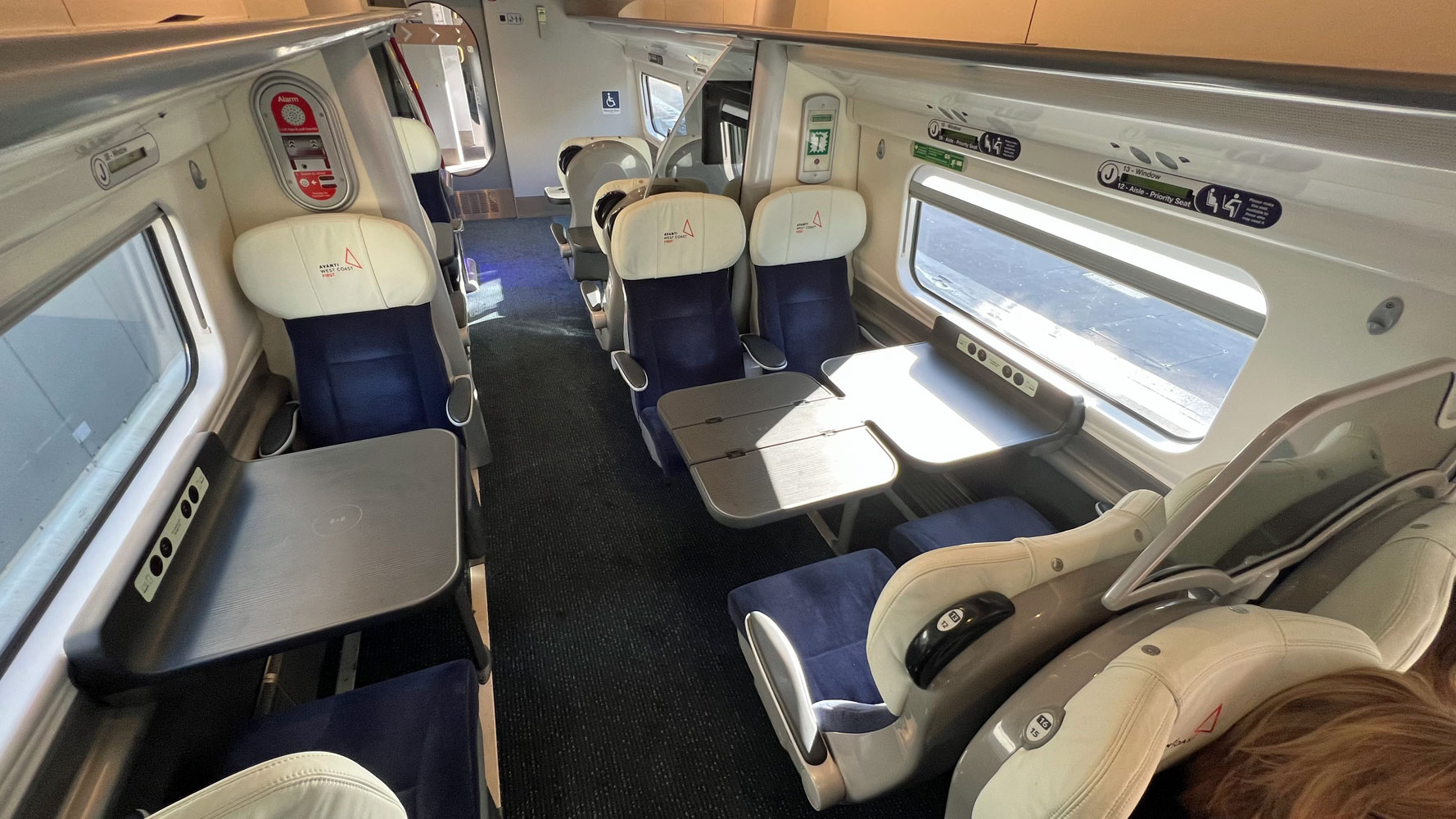
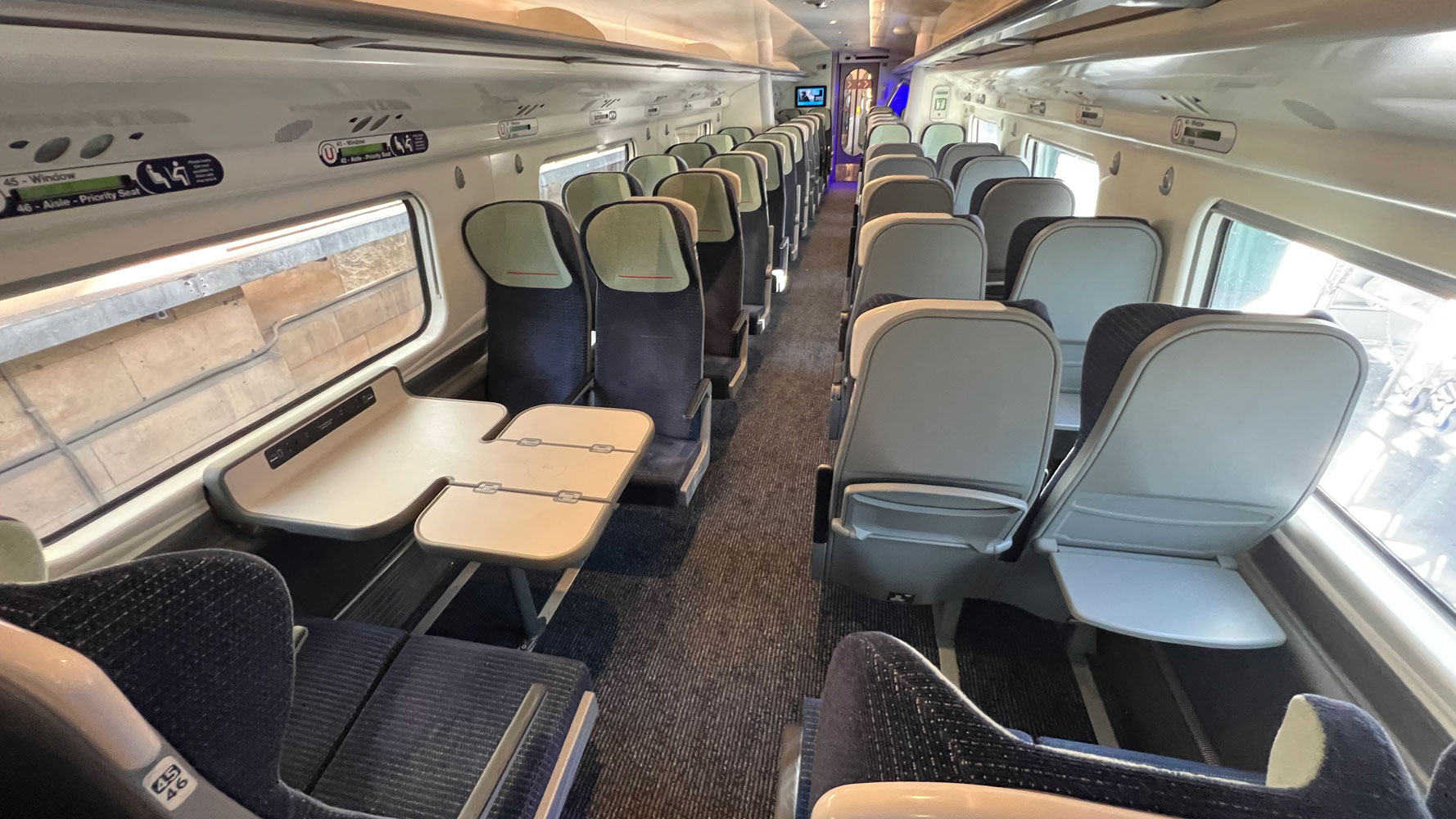
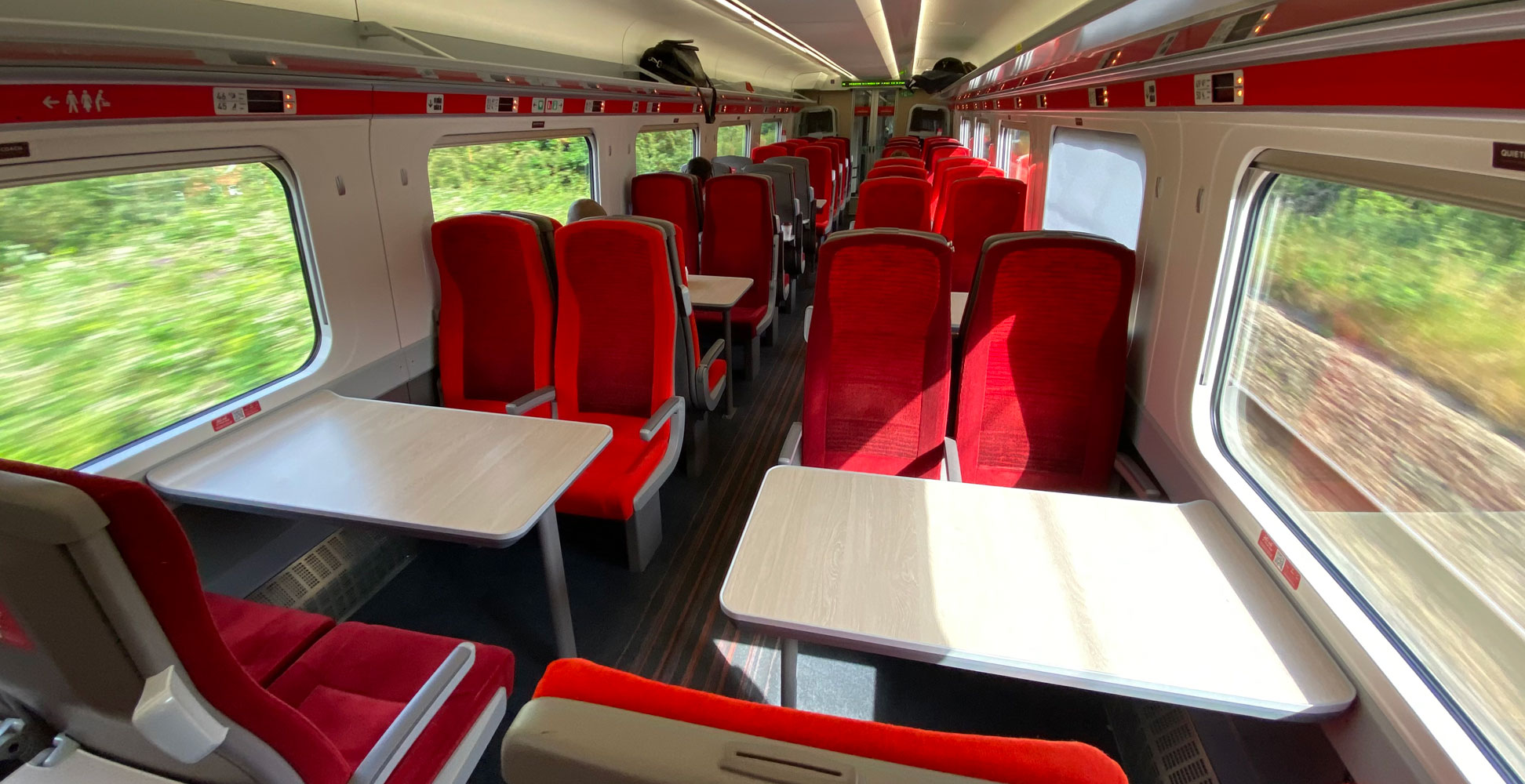
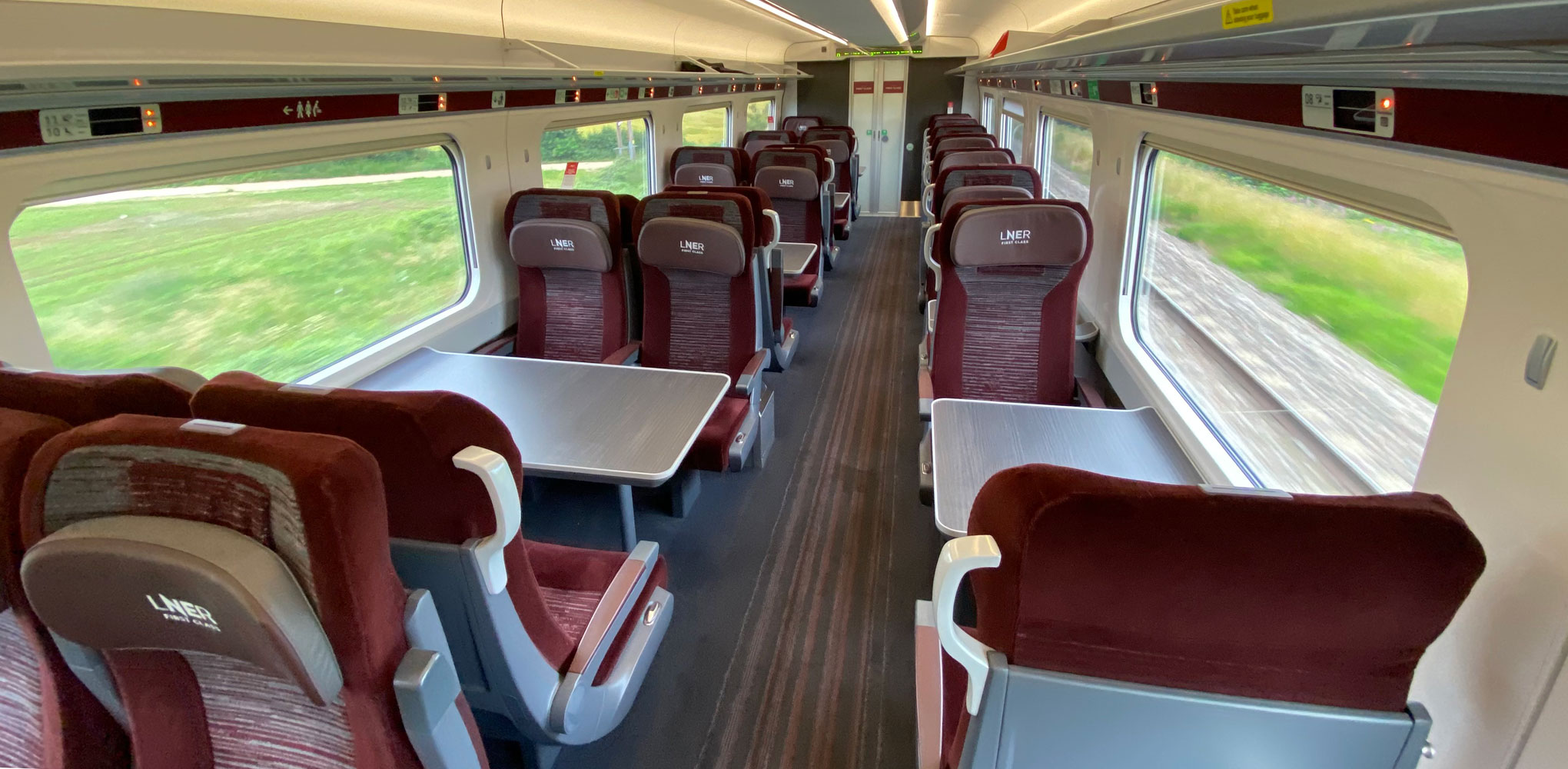
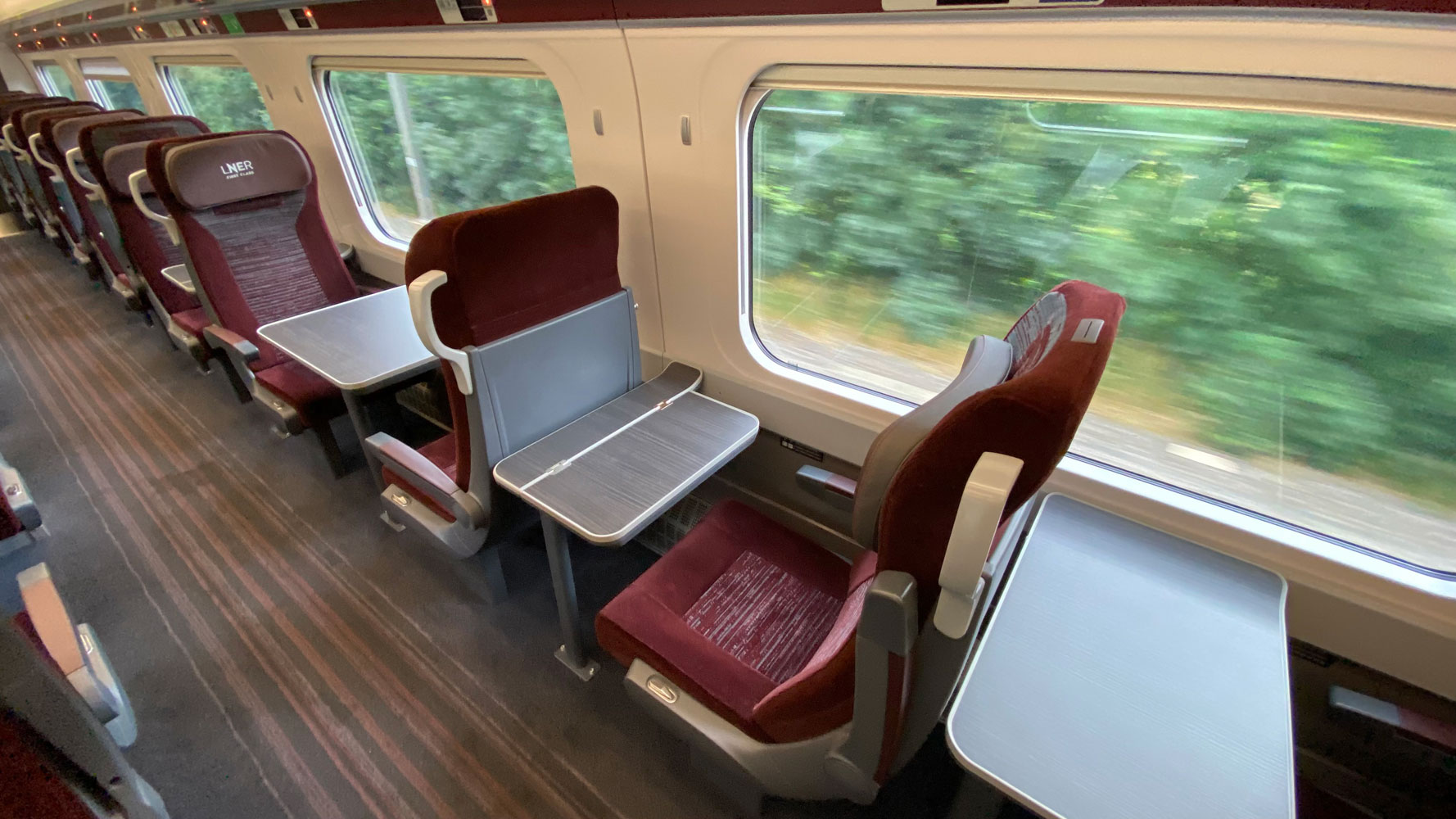
This is 1st class (above left) and standard class (above right) on a Pendolino from London to Birmingham, Manchester, Liverpool, the Lake District, Carlisle and Glasgow, run by Avanti West Coast. As you can see, in standard class there are 2+2 seats across the car width, in first class it's 1+2, so there's more elbow room, more legroom, and there are tables for two and solo seats (below left). Avanti West Coast is unique in offering a middle class between standard and first called Standard Premium, which uses exactly the same seating as 1st class but without any food or drink included.
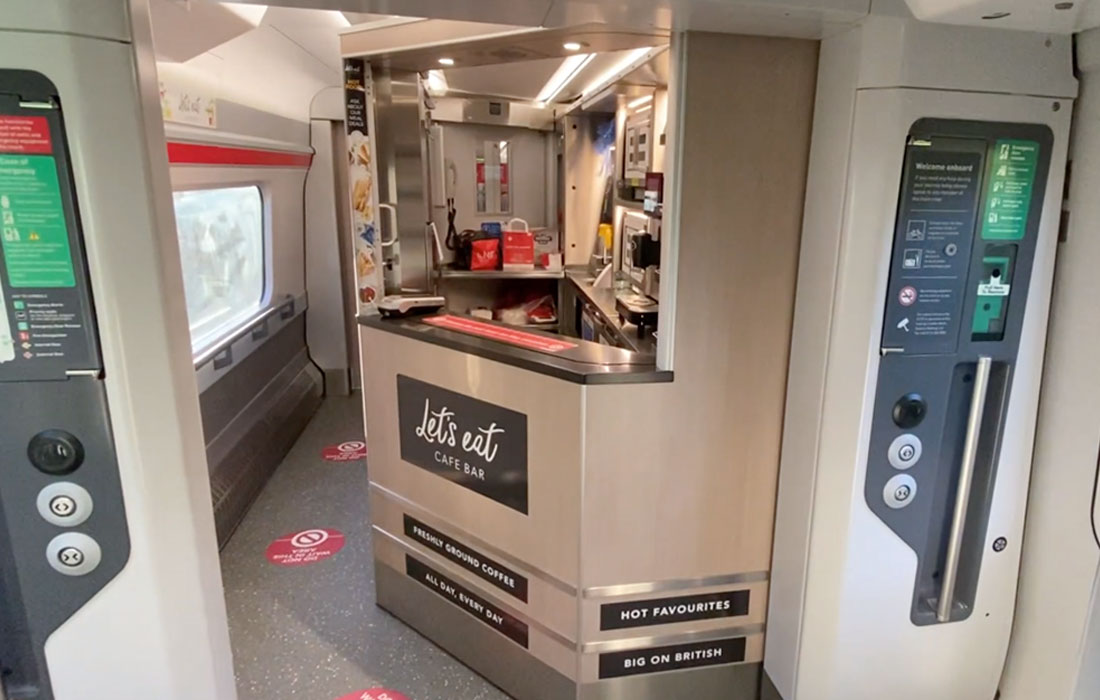
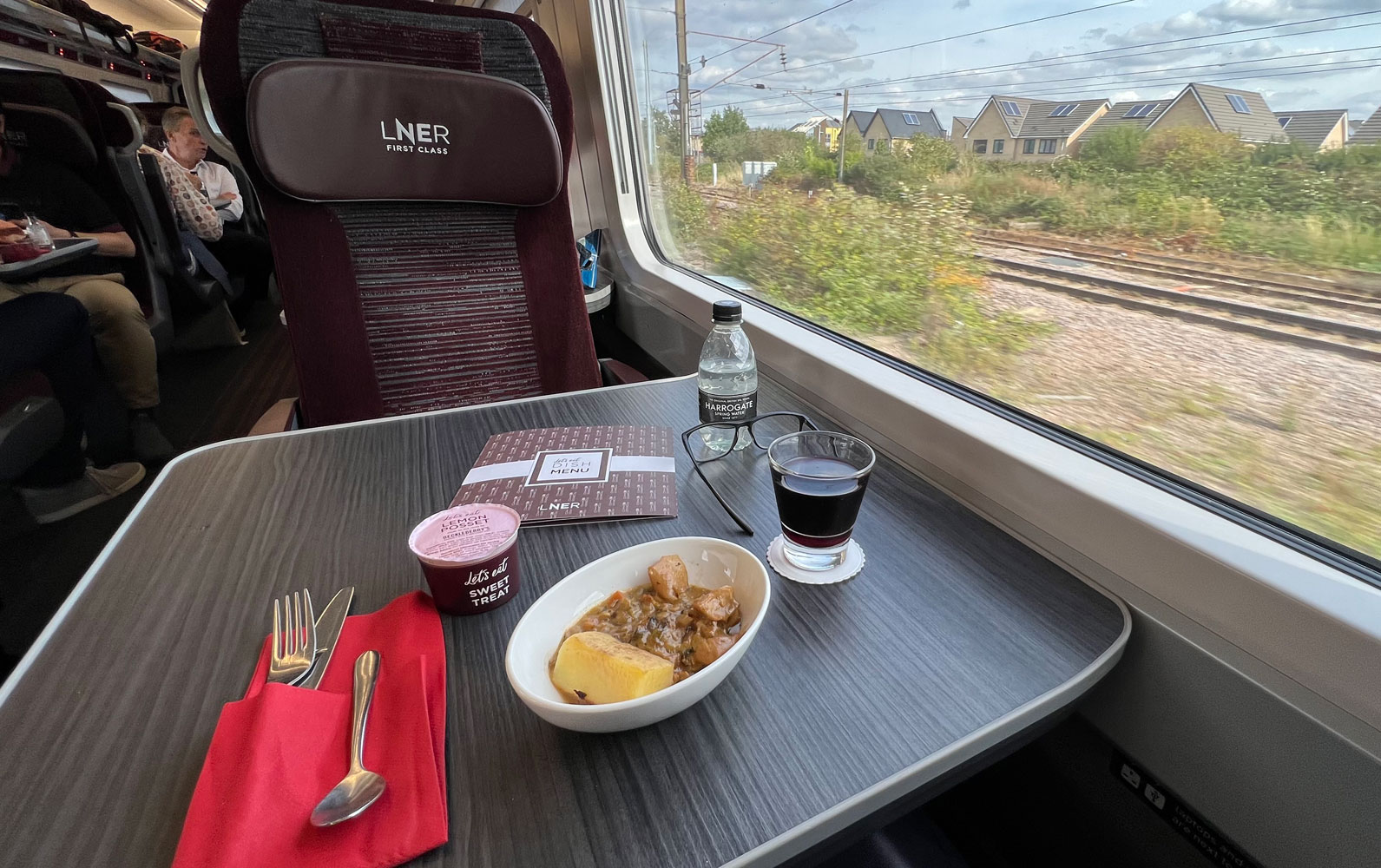
Food included in 1st class on LNER, Avanti West Coast & East Midlands Trains: Below right, a light meal and wine served on an LNER Azuma train from London to Edinburgh, included in the fare. Avanti West Coast & East Midlands Trains offer a similar 1st class food & drink service. Another good reason for taking train not plane between London and Edinburgh, Glasgow, Manchester or Newcastle!
London Underground & Bus information
-
tfl.gov.uk for London Underground, bus, Docklands Light Railway, Croydon Tramlink and other London transport information.
-
tfl.gov.uk/modes/tube for London Underground information.
Need a bus at the other end?
-
www.traveline.info allows you to check local bus times across the UK, or you can call Traveline on 0871 200 22 33. Traveline is a national initiative to make local travel information available on a single number nationwide. All call centres open 08:00-20:00, some open longer.
-
There is a system called PLUSBUS, where for £2-£3 more than the normal train fare you can add unlimited bus travel within your origin and/or destination city. So for example, instead of buying a normal return from London to Manchester for (say) £98, you can buy a return to Manchester Plusbus for just £3 or so more and get exactly the same train ticket but with unlimited free bus travel within central Manchester for the day added on. See www.plusbus.info for details of the 200 towns and cities in which PLUSBUS operates, or just ask when you buy your train ticket.
Need a ferry at the other end?
-
Ferries to the Isle of Wight: www.wightlink.co.uk for Portsmouth-Ryde and Lymington-Yarmouth, www.redfunnel.co.uk for Southampton-Cowes, www.hovertravel.co.uk for hovercraft Portsmouth-Ryde. You can buy through train & ferry tickets between any mainland station and any isle of Wight station using any train operator site such as tfw.wales.
-
Ferries to Jersey, Guernsey & the Channel Islands, see the Channel Islands page.
-
Ferries to the Isle of Man, see the Isle of Man page.
-
Ferry to the Scilly Isles: www.islesofscilly-travel.co.uk, also see the seat61 Cornwall page.
-
Ferries to Skye and the Hebrides - Caledonian MacBrayne, www.calmac.co.uk.
-
Ferries to Orkney and the Shetland Islands (Scrabster-Stromness and Aberdeen-Lerwick), www.northlinkferries.co.uk.
-
Train+ferry travel to Belfast & Northern Ireland, see the Northern Ireland page.
-
Train+ferry travel to Dublin & the Republic of Ireland, see the Ireland page.
-
Train+ferry travel to Amsterdam & the Netherlands, see the Stena Line Rail & Sail page.
For ferries to France, Spain, Belgium, Denmark, Norway & Sweden, see the relevant country page.
To Orkney & Shetland
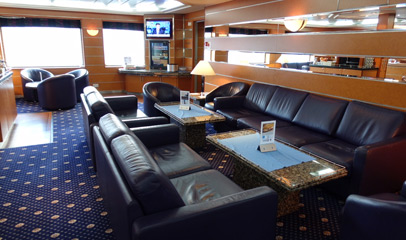
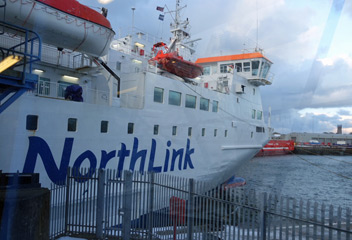
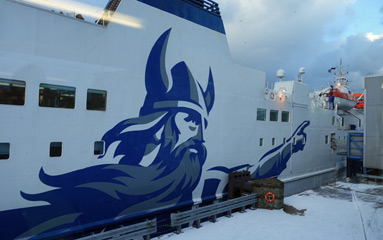
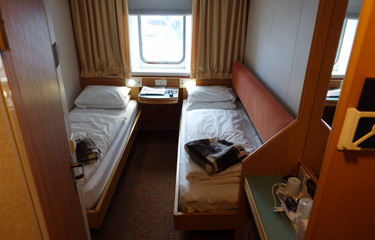
Northlink Ferries (www.northlinkferries.co.uk) sail from Scrabster near Thurso to Stromness in Orkney (see the Orkney page), and from Aberdeen to Kirkwall on Orkney & Lerwick on Shetland. Aberdeen-Shetland has a daily overnight service, the ships are little gems, with cosy cabins, lounges, bar, restaurant, and an excellent premium Magnus Lounge which is well worth the extra charge. All cabins have toilet & shower, premium cabins include access to the Magnus Lounge. Northlink's terminal in Aberdeen is in central Aberdeen, an easy 5-10 minute walk from Aberdeen station.
Taking your bike?
Most trains carry bicycles, sometimes for free, sometimes for a small fee with advance reservation required.
-
Details can also be found at www.nationalrail.co.uk/on-the-train/train-travel-with-bicycles and on individual train company websites.
-
For information on taking your bike on Eurostar & other European trains, see the Taking your bike to Europe by train page.
-
Only a few operators will carry tandems, for advice on train travel with tandems see tandem-club.org.uk.
Rail Rovers: Unlimited train travel for
anyone
Rail Rovers give unlimited travel over all or selected parts of the British rail network and can be bought by anyone, including UK residents, see www.nationalrail.co.uk/.../ranger-tickets-and-rover-tickets or www.gwr.com/your-tickets/choosing-your-ticket/rangers-and-rovers. There are rail rovers covering the whole network or just certain areas. The All-Line Rail Rover gives unlimited travel over the whole British national rail network.
2026 All Line Rail Rover prices:
-
7-day standard class All-Line Rail Rover £625 (child under 16 half price, 33.3% off with 16-25/senior/two together/forces/disabled railcard)
-
14-day standard class All-Line Rail Rover £949 (child under 16 half price, 33.3% off with 16-25/senior/two together/forces/disabled railcard)
-
7-day 1st class All-Line Rail Rover £949 (child under 16 half price, 33.3% off for senior/two together/forces/disabled railcard holders)
-
14-day 1st class All-Line Rail Rover £1,450 (child under 16 half price, 33.3% off for senior/disabled/two together railcard holders)
How to buy a rail rover
You can buy an All-Line Rail Rover at ticket.tpexpress.co.uk/search (click other). This sells 14 day standard class ones, but for some reason not 7 day.
Alternatively, you can buy Rail Rovers from any railway station or train operator telesales line. You can only buy one from stations within 3 days of the date you want them to start. If you have any trouble buying a rail rover, ask them to look in section G of their fares manual.
Travel restrictions
The All-Line rover used to be valid on all national rail trains without time restrictions but some restrictions were introduced in 2011 to stop business travellers using it on certain key business routes. No restrictions apply on Saturdays, Sundays and Bank Holidays, but on Mondays to Fridays the All-Line Rail Rover is not valid for boarding or alighting train services operated by Avanti West Coast, LNER, East Midlands Trains or Arriva CrossCountry at the following stations before 10:00:
London Euston
London Kings Cross
London St Pancras International
Birmingham New Street
Bedford
Luton
Luton Airport Parkway
Milton Keynes Central
Stevenage
Watford Junction
There are no restrictions on these companies' trains at other stations or on Saturdays, Sundays and holidays, or on other companies' trains at any station on any day. So it's no problem using a Great Western train getting in to London before 10:00, or a ScotRail sleeper arriving at London Euston before 10:00.
How to get around these new restrictions from Edinburgh, Newcastle, York, Leeds etc: You cannot use your Rail Rover on a weekday from (say) Edinburgh or Newcastle to London if it arrives in London before 10:00, but you can use it on the same train as far as Peterborough where no alighting restrictions apply, then use a suburban train run by First Capital Connect for the rest of the journey to London, even if this arrives in London before 10:00.
All-Line Rail Rovers are also valid on the Ffestiniog Railway, and on Caledonian sleepers (seated cars free, sleepers if you pay the berth supplement). They are not valid on Eurostar, Heathrow Express, Heathrow Connect, London Underground or Docklands, heritage railways (except Ffestiniog Railways) or shipping services. For information on rail rovers covering other areas call National Rail Enquiries on 03457 48 49 50.
If you buy a rover using a 2-Together railcard, you also can't use the pass before 09:30 Monday-Fridays.
 BritRail
passes: Unlimited train travel for overseas visitors
BritRail
passes: Unlimited train travel for overseas visitors
If you live overseas and plan to visit the UK, you can buy a 'BritRail' pass which gives unlimited train travel on all 20+ British train operators for various periods. It's now available as a mobile pass that you can buy & download to your phone.
-
Tip: Compare BritRail prices with Interrail pass prices, as a global Interrail pass also gives unlimited unrestricted travel on all National Rail routes and operators in Britain.
BritRail pass or point-to-point tickets?
A pass is only worth it if you're going to make a number of long-distance train trips around Britain, so don't bother with a BritRail pass if all you're going to do is make one long-distance trip, or a number of relatively short trips. For longer distances, a BritRail pass typically works out about the same as a normal Off-Peak flexible ticket bought on the day of travel, it's more expensive than the cheaper Advance tickets, but is far cheaper than the Anytime tickets needed to travel in the Monday-Friday business peaks, see my explanation of British train fares. So if you want to make early starts on Monday-Fridays and have complete all-day flexibility, a BritRail pass is a great idea, but if you're prepared to avoid the Monday-Friday morning & afternoon business peaks, and especially if you book cheap tickets in advance at tfw.wales (no booking fee!) on a no-refunds, no-changes-to-travel-plans basis, ordinary point-to-point tickets will be the same or cheaper than a pass. Before investing in a BritRail pass, check that normal tickets wouldn't be cheaper for what you plan to do, using tfw.wales or www.nationalrail.co.uk or www.thetrainline.com.
How to make BritRail seat reservations online
Seat reservation are optional on all British trains (except overnight sleeper trains). So you don't have to have one, and indeed can't make one anyway on many local/rural/urban/suburban routes. But they are a good idea on long-distance routes, especially at busy times.
Do not pay £££ (or $$$) to make seat reservations through an agency. There are several well-hidden ways to make seat reservations for free to go with a pass (or any other ticket that you have already bought):
-
Option 1, at www.gwr.com - can reserve seats on all reservable trains/operators
1. Go to www.gwr.com. Mobile or desktop, but not their app.
2. Click Sign in /Create an account & register for an account.
3. When registered and signed in, click My account.
4. Click My journeys.
5. Click Make a reservation.
6. A popup appears, click Next.
7. A journey planner appears marked Select your service. Find and select the train you want.
8. Click Standard class or First class. Continue and make a reservation. It says you won't be charged and you'll get a free seat reservation without the need to enter any payment details.
9. Your reservation details with car number & seat number will appear on the screen. Jot them down!
You don't get (and don't need) a reservation ticket, simply make a note of the car & seat numbers or take a screenshot, although you should also get an email confirmation. Then board the train and sit in those seats. The conductor won't ask you for any proof of reservation, but you (obviously) need to know where your reserved seat is and you might want to show proof if you find someone sitting in your seat.
This process works for any train, route or operator on which seat reservations are possible, including GWR, LNER, Avanti West Coast, East Midlands Trains, Cross-Country, TransPennine & Scotrail.
Please let me know if this process changes, but if you think it's ceased to work, first make sure you've followed steps 1 to 5 above!!
-
Option 2, at ticket.tpexpress.co.uk - can reserve seats on all reservable trains/operators
1. Go to ticket.tpexpress.co.uk.
2. Use their desktop site or the Trans-Pennine Express app, not their mobile site. At the time I write this, you seem to get a Seat reservations are not available on this service message every time when using their mobile site.
3. Click Register top right and create an account.
4. When registered and logged in, click Welcome back, [your name] at top right and select Manage my tickets / refunds.
5. Click on Make a seat / bike reservation then on the Make a seat / bike reservation button which appears.
6. A popup appears, proceed to make a seat reservation for free.
7. To reserve a 2nd class seat, select Anytime single. To reserve a 1st class seat, select Anytime single first class.
8. Your reservation details with car number & seat number will appear on the screen. Jot them down!
You don't get (and don't need) a reservation ticket, simply make a note of the car & seat numbers or take a screenshot, although you should also get an email confirmation. Then board the train and sit in those seats. The conductor won't ask you for any proof of reservation, but you (obviously) need to know where your reserved seat is and you might want to show proof if you find someone sitting in your seat.
This process works for any train, route or operator on which seat reservations are possible, including GWR, LNER, Avanti West Coast, East Midlands Trains, Cross-Country, TransPennine & Scotrail.
Seat reservations can be made for a maximum of 4 journeys per day per account.
Please let me know if this process changes, but if you think it's ceased to work, first make sure you've followed steps 1 to 4 above!!
-
Option 3, at www.lner.co.uk - only works for LNER trains
If you want a seat reservation on an LNER train (for example, between London & York, Leeds, Newcastle, Edinburgh, Inverness, Aberdeen) you can also use www.lner.co.uk/travel-information/make-a-reservation to make a free seat reservation up to 5 minutes before the train leaves its starting station. You can choose your seat from a seat map on LNER trains if you reserve this way.
You'll need to register for an LNER account during the process, but no payment is necessary, it's free. Simply enter Britrail as your booking reference (or make one up, whatever).
However, unlike gwr.com or tpexpress.co.uk, the LNER website can only make reservations for LNER's own trains.
Or make reservations in person
Simply ask at any staffed station any time up to about 2h before departure, or ideally the day before. There are always places available, even on the day.
Anytime, Off-Peak & Advance fares explained
All train companies use the same 3 names for the same 3 types of ticket: Anytime, Off-Peak & Advance. Fully-flexible, semi-flexible, inflexible. Here's a guide, just make sure you confirm any specific restrictions and conditions when you buy your ticket.
Which train operators & routes can you use?
People get hung up on there being 20+ different train operators, but it's actually pretty simple. The government requires train operators to work together as a network, so:
-
If your ticket says 'Route any permitted' (as most of them do) then it is valid on any train operator's train, via any of the permitted routes between your origin and destination, although obviously if you have an Off-Peak ticket you must stick to any time restrictions which apply to it. There are no time restrictions with an Anytime ticket. An Advance ticket is only valid on the specific train you've booked.
-
If your ticket gives a specific route, for example 'Route Taunton' then it is valid on any train operator's train, via any of the permitted routes for that journey that pass through the specified place, in this case Taunton.
-
Only if it says (for example) 'Route Avanti West Coast only' are you restricted to using only the trains of that particular train company, in this example those of Avanti West Coast. Advance tickets are only valid on the specific train you're booked on, so are by definition only valid on a particular train company's train - you'll sometimes see the letters 'AP' added to the route, for example 'Route AP Avanti West Coast only', AP simply stands for Advance Purchase. However, it's relatively rare to find Anytime & Off-peak fares valid only on trains of a specific operator, and where they do exist there are almost always 'route any permitted' anytime & off-peak fares as well.
Why are there several 'Anytime' & 'Off-Peak' tickets for my journey, all with different prices? Unfortunately, online ticket systems don't usually show the ticket routing. So you might see two 'Anytime' fares from (say) London to Hull, one apparently valid on all the trains, the other only valid on a handful of trains and cheaper than the first one. The reason is simple, in this case the first one is the 'route any permitted' anytime fare, the other is a cheaper 'route Hull Trains only' anytime fare only valid on Hull Trains' own services. Similarly, you may find two Anytime or Off-Peak tickets between London & (say) Birmingham, one valid on all trains, the other only on some of the trains. In this case it's because there are two sets of fares to Birmingham, one set being the 'route any permitted' fares valid on all routes & operators, the second being cheaper 'route High Wycombe' fares valid on all operators but only on the slower route via High Wycombe. This would be obvious, rather than confusing, if the online systems stated the ticket routing for each fare they showed, but they don't. The choice between (on the one hand) slower but cheaper and (on the other hand) faster, more frequent but more expensive, is up to you.
Breaking your journey ('stopovers'): With an Off-Peak ticket you can take an interesting or scenic route and change trains as much as you like without leaving the station, as long as you stay within the time restrictions which apply to your ticket and stick to one of the permitted routes (see below). However, you can only break your journey (i.e. stop off and leave the station) on the return leg of an Off-Peak return, not on the outward leg of an Off-Peak return, and not at all on an Off-Peak one-way ticket. With an Anytime one-way or return ticket, there are no time restrictions and you can break your journey anywhere you like along any of the permitted routes.
How are fares set? Here comes the science bit... Behind the scenes, fare setting works like this: Every origin-destination pair (known as a 'flow') is allocated to a particular train operator who has the right and the obligation to set the fares. This operator is known as the 'Lead Operator' for that flow. Once the Lead Operator has set the fares, every other operator serving any part of that flow (known as the 'Secondary Operators') are legally obliged to accept those fares for travel on their trains. As I've said, Advance fares are by definition only valid on one train operator's trains, and both Lead Operators and Secondary Operators are allowed to set Advance fares for their own trains. In addition Secondary Operators are allowed to set other (more flexible) fare types for their own trains, although only a few choose to do so. For example, you'll see 'anytime' & 'off-peak' fares from London to Hull routed 'Hull Trains only' set by Secondary Operator Hull Trains, in addition to the main London to Hull 'route any permitted' anytime & off-peak fares set by Lead Operator LNER. However, Lead Operators are not permitted to set fares which are only valid on their own trains, other than Advance fares, temporary fares & first class fares. Revenue from the fares set by Lead Operators is shared between all operators serving that route, based on a computer system called ORCATS which models the proportion of passenger miles travelled on each operator.
What are the permitted routes?
The 'permitted routes' for a given origin & destination are set out in a document called the National Routeing Guide. Don't worry about getting hold of a copy, even ticket clerks can't understand it half the time, just accept that it exists, and its contents have been incorporated into the various journey planning systems such as those used on nationalrail.co.uk, thetrainline.com & raileasy.co.uk. To give you a flavour of how flexible the permitted routes are:
-
The shortest route by regular train service between the origin and destination is always a permitted route;
-
You'll generally find that most other reasonable routes are permitted, in addition to the shortest one.
-
If you use a through service (in other words, a direct train with no changes) then it is always considered a permitted route as long as you stay on that train, even if the train takes a round-about route;
-
From London to Birmingham for example, permitted routes are the West Coast Main Line from Euston via Milton Keynes, the slower route from Marylebone via High Wycombe & Banbury, and the route from Paddington via Reading, Oxford & Banbury. The rail maps on nationalrail.co.uk may help you understand the routes quoted here.
-
From London to Edinburgh, Glasgow & most stations in Scotland for example, the permitted routes include the two obvious main lines with direct trains (East Coast Main Line from Kings Cross via York & Newcastle, West Coast Main Line from Euston via Crewe & Carlisle, plus the Midland Main Line from St Pancras via Leicester, Derby or Nottingham, Sheffield, Leeds and the scenic Settle & Carlisle route, and permutations of those routes involving travel from Liverpool Street via Cambridge & Ely to Peterborough then on via York & Newcastle, plus the route from Paddington via Reading, Oxford, Birmingham & on via Carlisle. However, going via Swindon & Gloucester is not permitted as it's too far west, nor is going via Ipswich which is too far east. The rail maps on nationalrail.co.uk may help you understand the routes quoted here.
-
There are a few quirks in the system, naturally. A key one involves London to or from Devon & Cornwall. In theory, a 'route any permitted' ticket between London & Exeter (or anywhere west of Exeter) would be equally valid from Paddington via Bristol & Taunton or Westbury & Taunton, or on the slower scenic route from Waterloo via Salisbury & Honiton. However, the fares system in fact only contains a set of fares routed 'Taunton' and another set routed 'Honiton' as this is what was inherited from British Rail, there aren't any 'route any permitted' fares available. But don't worry, under the National Rail Conditions of Carriage you're entitled to travel on a different route from the one shown on your ticket (assuming it's not a train-specific Advance ticket, of course) on payment of a 'change of route' excess fare. This is the difference, if any, between the fare paid for the original route and the cheapest walk-up ticket valid for the train & route now being taken. Since the faster route via Taunton has the more expensive fares and the tighter time restrictions on its off-peak tickets, this 'change of route' excess fare normally costs nothing if you have a 'route Taunton' ticket but choose to travel via Honiton & Salisbury to/from Waterloo in one or both directions. If the conductor tries to tell you your ticket isn't valid, politely suggest he consults his Ticket Examiner's Handbook and National Rail Conditions of Carriage, and ask for a 'change of route excess fare' at zero cost.
London Terminals, London R1256, London zone U1...?
-
When buying a ticket to London, the cheapest option is to buy a ticket simply to the relevant London station, but for a little more money you can buy a ticket which includes onward Underground travel to an Underground station in a given zone, or even unlimited London bus & Underground travel all that day.
-
A ticket to 'London Terminals' (listed in some online booking systems as 'London mainline stations' or similar) means a ticket valid only as far as the London station where trains arrive from that particular starting point. For example, a ticket from Manchester to London Terminals would be valid to London Euston, a ticket from Oxford to London Terminals would be valid to London Paddington (in fact also to London Waterloo as there's an alternative route from Oxford into Waterloo).
-
A ticket to 'London R1256', with 'Travelcard' as a ticket type means a ticket to London with unlimited bus & Underground travel included all that day in all 6 London travel zones.
-
A ticket to 'London U1' is a ticket to London which includes onward travel by Underground to any station you like in Underground zone 1. In this case it does not include unlimited Underground travel, just one journey (or a return journey if it's a return ticket).
Suggested hotels
For me, a hotel isn't just a roof over my head, I always book something with character and history. Why just visit attractions when you can stay in one?
In London
All-time classics
The Savoy, Claridge's, the Dorchester and the Ritz are London's are top-end landmark hotels, attractions in their own right with a string of famous guests over a century of history.
Expensive, but if you get the chance to stay in one, go for it. I've been fortunate enough to stay at all four, the Savoy on my wedding night (followed by an iconic tea at the Ritz). Since you ask, the art deco Savoy remains my favourite (with the best hotel breakfast I have ever had), Claridge's is lovely, and the Dorchester was perfect (the receptionist didn't blink an eye as Mrs 61 and I checked in with no luggage wearing holed jeans and requesting a toothbrush each, a spur-of-the-moment decision to splurge). The Ritz's Louis XIV style I find a bit ornate!
I should probably add the Langham and the Connaught to this list, but I haven't stayed at either place.
Less pricey but still classics, often with a railway connection
The St Pancras Renaissance Hotel is located in the gothic splendour that is St Pancras Station. It's one of my favourites and I've stayed a couple of times, but book with care: The cheaper rooms (described as contemporary) are in a modern wing built in the early 2000s. To stay in the original historic building at the front of the station that was once the Midland Railway Hotel you must book one of the more expensive Chambers suites with Chambers Club access. This part of the hotel contains the most beautiful hotel staircase of any hotel, anywhere.
The Great Northern Hotel is St Pancras' great rival across the road at Kings Cross station. Less ornate (and a fraction less pricey) I've stayed a several times, a great place to stay with free jelly babies in a pantry on each floor. And I like jelly babies...
The Landmark near Marylebone station was once the Great Central Railway Hotel. In the 1960s & 70s it was British Rail's HQ, and the vast covered atrium in the centre that now contains the lounge and restaurant was then a car park. I have yet to stay, but have had lunch here several times.
The Charing Cross Hotel is perfectly located just off Trafalgar Square, ideal for a stroll to the National Gallery, Covent Garden or even Whitehall and Horse Guard's parade. Currently branded The Clermont, for a while branded the Ambla Hotel, but as a former Station Manager Charing Cross I shall call it by its original and proper name, The Charing Cross Hotel. Another great place to stay - and yes I've stayed here too - and another historic railway hotel.
And if we're talking former railway hotels, I rate the Hilton Paddington too, the former Great Western Royal Hotel in front of Paddington station.
In other cities
Bath: I suggest some hotels here, including one in the Royal Crescent itself: Why just visit an icon when you can stay in it?
York: I recommend the Principal Hotel, formerly the York Royal Station Hotel, a lovely quiet and spacious place set in its own grounds next to York station and only a few minutes walk from York's historic centre including the famous Shambles. See my photos here. Also consider the nearby Grand Hotel, York's only 5-star hotel, opened in 2010 in what was once headquarters of the North Eastern Railway, built in 1906.
Manchester: The Midland Hotel was built by the Midland Railway 1898-1904, handy for the Manchester Central Exhibition Centre (which of course started life as the Midland Railway's Manchester Central station). Charles Rolls met Henry Royce in this hotel, leading to the creation of Rolls-Royce in 1904 and the Beatles were infamously refused entry to the French Restaurant for being inappropriately dressed.
Edinburgh: I recommend two arch-rivals at each end of Princes Street, The Balmoral and The Caledonian, or failing that The Scotsman. You can read why I love these three (and which is my favourite) in the hotels section of the London to Edinburgh page.
Glasgow: Look no further than the iconic Glasgow Central Hotel (branded voco Grand Central Hotel since 2021), built in 1883 by the Caledonian Railway as part of Glasgow Central station. The world's first long-distance television pictures were transmitted to the hotel on 24 May 1927 by John Logie Baird. The hotel staircase once surrounded Europe's tallest chandelier - until someone in Budapest installed a taller one! I am still looking for an excuse to stay here!

Backpacker hostels:
www.hostelworld.com
If you're on a tight budget, don't forget the hostels. For a dorm bed or an ultra-cheap private room in backpacker hostels in most European cities use www.hostelworld.com.
 Rent a cottage
Renting a house or cottage for a week or two is one of my own favourite family breaks. However, unfortunately I'm no longer able to promote www.sykescottages.co.uk.