


 |
|
 |
UK to Ukraine by train
It's easy to travel by train from London to Ukraine, an adventurous journey that's comfortable & affordable. For example, take Eurostar to Brussels and the European Sleeper overnight to Prague. Enjoy a day in Prague, then take the Regiojet sleeper to Przemysl and connecting Ukrainian train to Lviv & Kyiv. This page explains train times, fares and how to buy tickets.
Update 2026: Trains to Ukraine are running in spite of the war, although for obvious reasons, non-essential travel to Ukraine is not generally advised, www.gov.uk/foreign-travel-advice/ukraine.
 London to Lviv & Kyiv
- times, fares & tickets.
London to Lviv & Kyiv
- times, fares & tickets.
Useful country information:
visas, dial code, currency...
Suggested hotels in Lviv & Kyiv
Train travel in Ukraine
Train travel in Ukraine, a
beginner's guide
How to buy Ukrainian train tickets
International trains to/from Ukraine
Trains from Kyiv & Lviv to
other European cities
Trains from other European cities to
Kyiv &
Lviv
On other pages
General information about European train travel
How to buy European
train tickets
Starting from other UK towns & cities
Taking your bike
Taking your dog
Useful country information
Which route to choose?
It's easy to travel from London to Lviv or Kyiv by train. Option 1 is easiest in terms of the journey itself, ticket availability (options 2 & 4 often sell out) and ease of booking. All these routes are currently operating.
Option 1, London to Lviv & Kyiv via Prague
- using the Brussels-Prague European Sleeper & Regiojet sleeper
Prague-Przemysl-Lviv-Kyiv. Usually has availability.
Option 2, London to Kyiv & Odessa via Warsaw
- using the daily Warsaw-Kyiv sleeper train. Most time-effective, runs daily,
but sells out
quickly.
Option 3, London to Lviv & Kyiv via Krakow
- by comfortable daytime trains with overnight hotel stops in Berlin & Krakow
and usually has availability.
Option 4, London to Lviv &
Kyiv
via Vienna - using the daily direct sleeping-car from Vienna to Lviv &
Kyiv. Runs daily, but sells out quickly.
Option 1, London to Lviv & Kyiv via Prague
This is the easiest route, taking 2 nights and running 3 times a week. You even get a day at leisure in Prague! It uses open-access operator Regiojet's Prague-Przemysl sleeper which offers two key advantages over other routes to Ukraine: First, availability on this Regiojet train is good, unlike other international trains to or from Ukraine which often sell out within hours of sales opening. Second, Regiojet have an allocation of seats on the connecting Ukrainian train from Przemysl to Lviv & Kyiv so they can sell integrated tickets from Prague to Lviv or Kyiv with no need for you to use the Ukrainian Railways website or obtain a Ukrainian 'digital signature'. In other words, this route is the easiest to book, as well as enjoyable to do!
London ► Kyiv
-
Day 1, travel from London to Brussels by Eurostar, leaving London St Pancras at 13:01, arriving Brussels Midi 16:06.
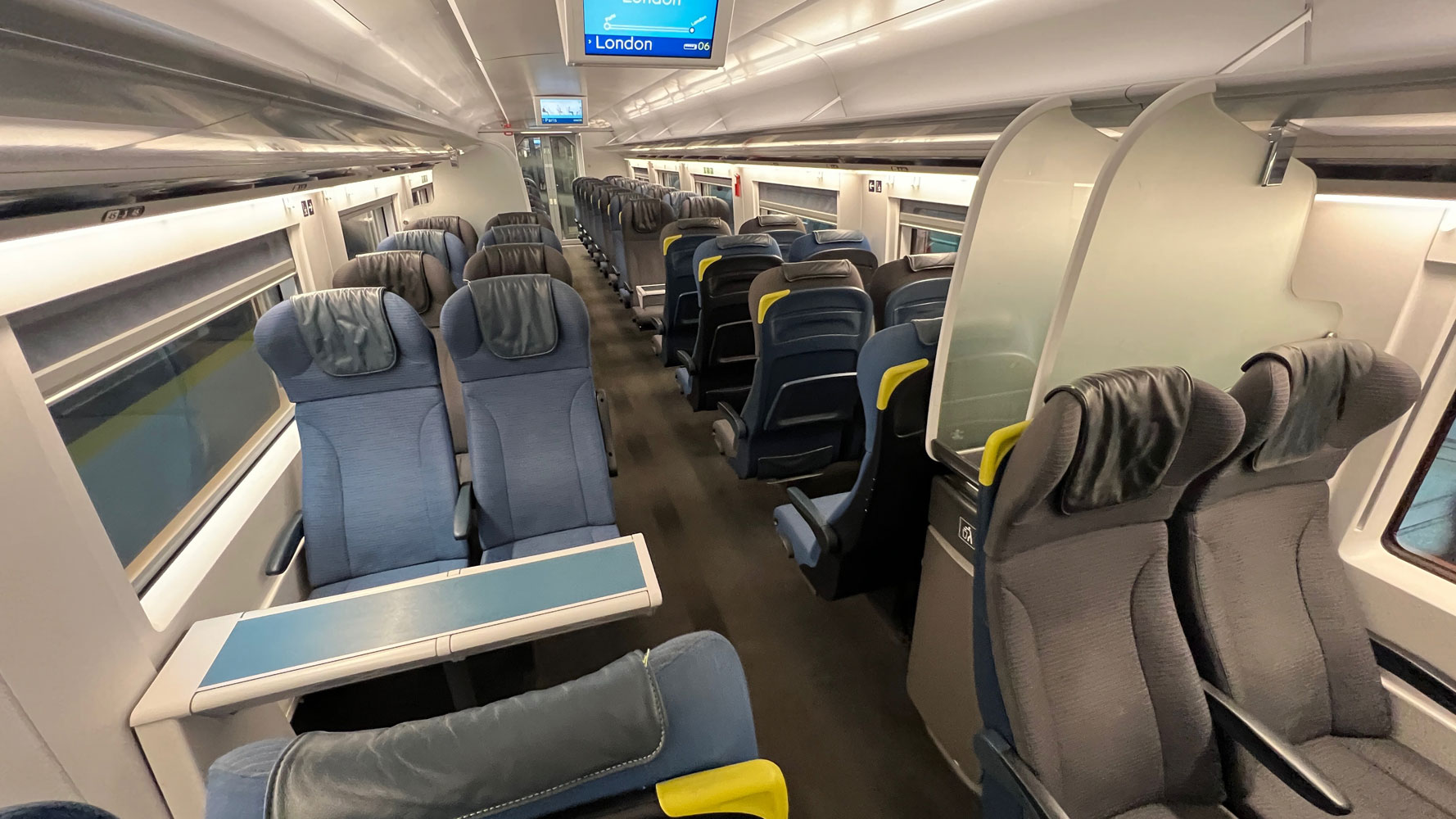
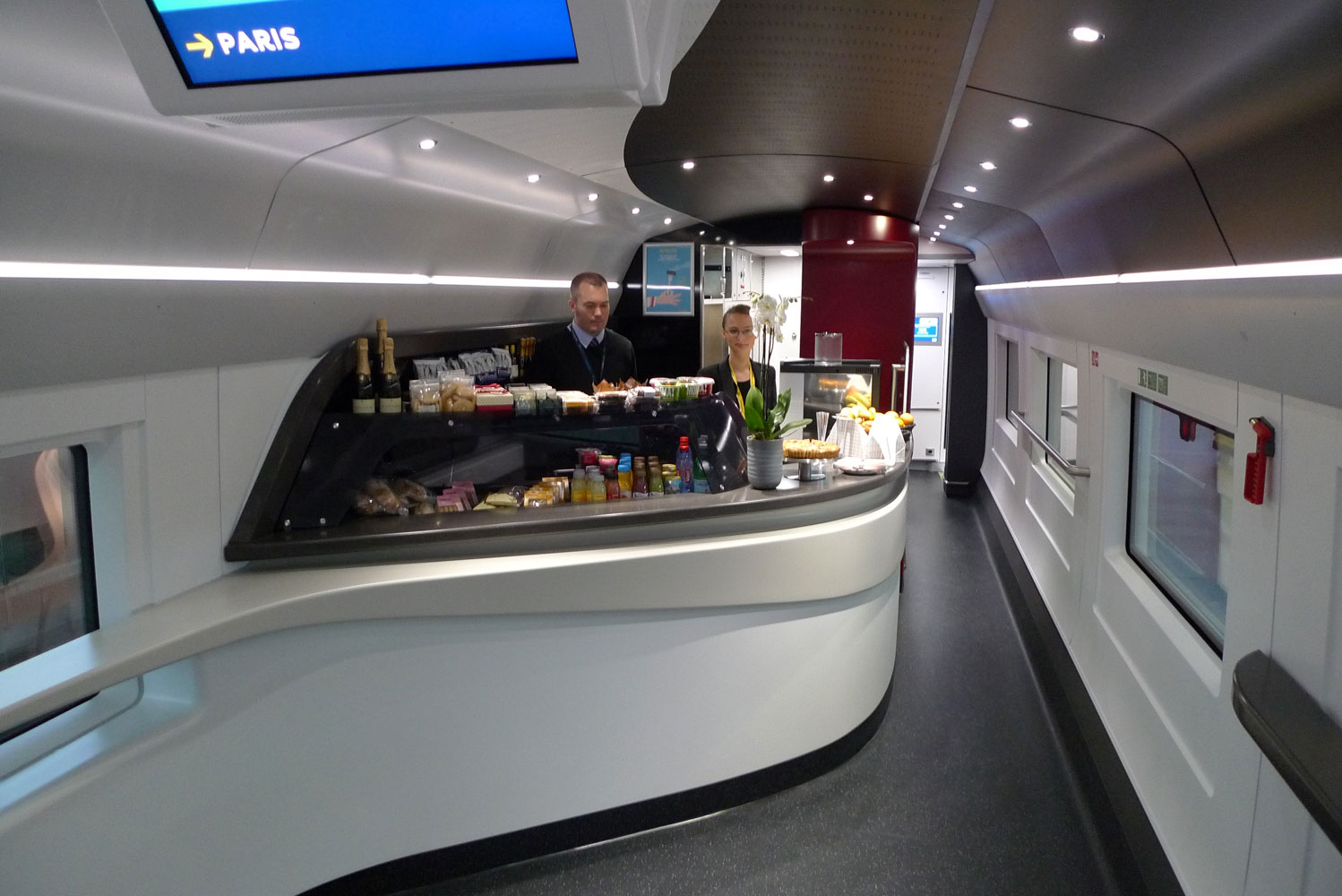
Eurostar has two cafe-bars, power sockets at all seats & free WiFi. Plus & Premier fares include a meal with wine.
A later 15:04 departure from London is theoretically possible, but as sleeper trains from Brussels can sometimes be retimed an hour earlier I recommend playing safe and booking the 13:01.
-
Day 1, travel from Brussels to Prague by European Sleeper, leaving Brussels Midi at 19:22 on Mondays, Wednesdays & Fridays arriving Prague Hlavni 10:51 (day 2).
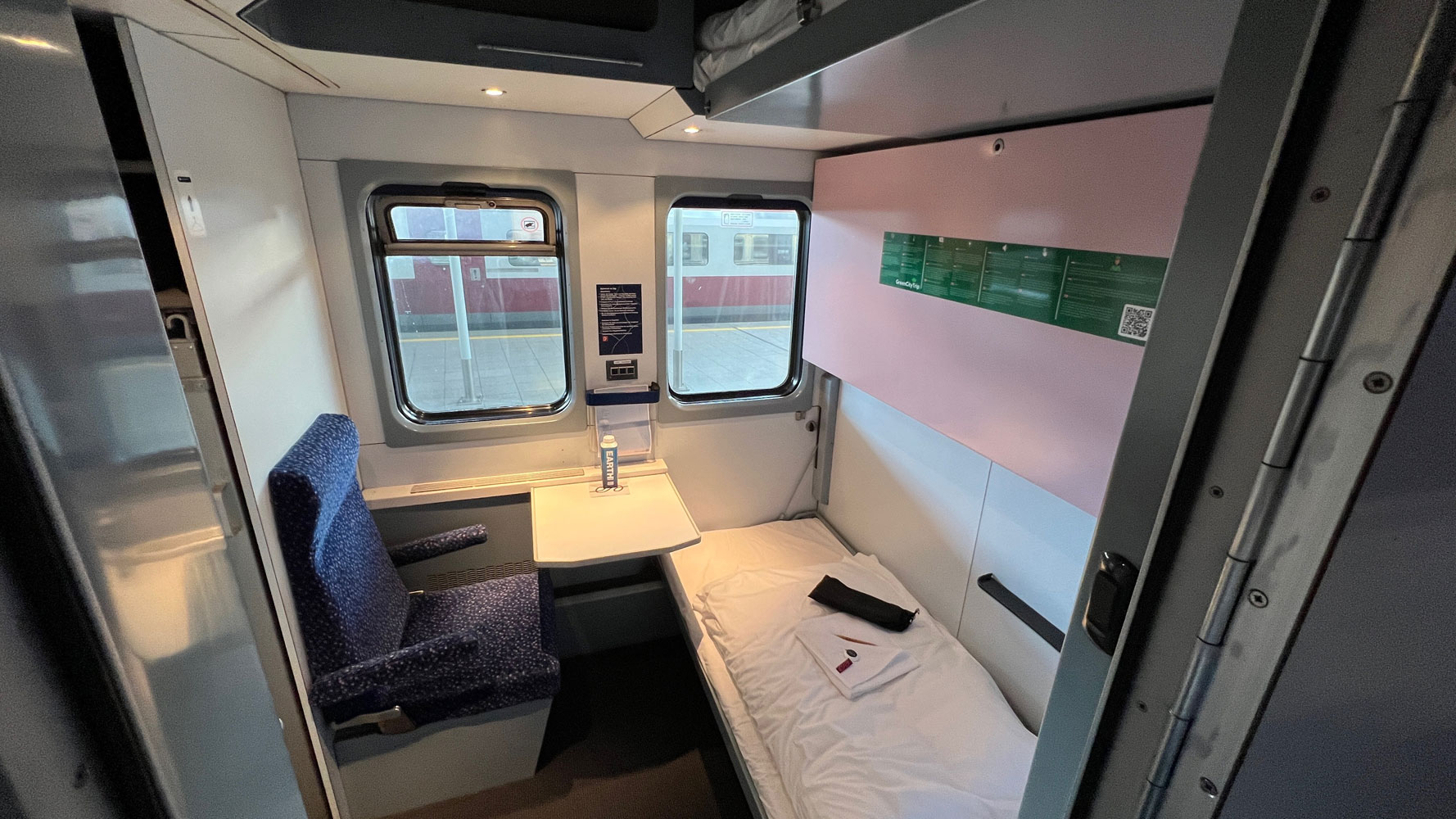
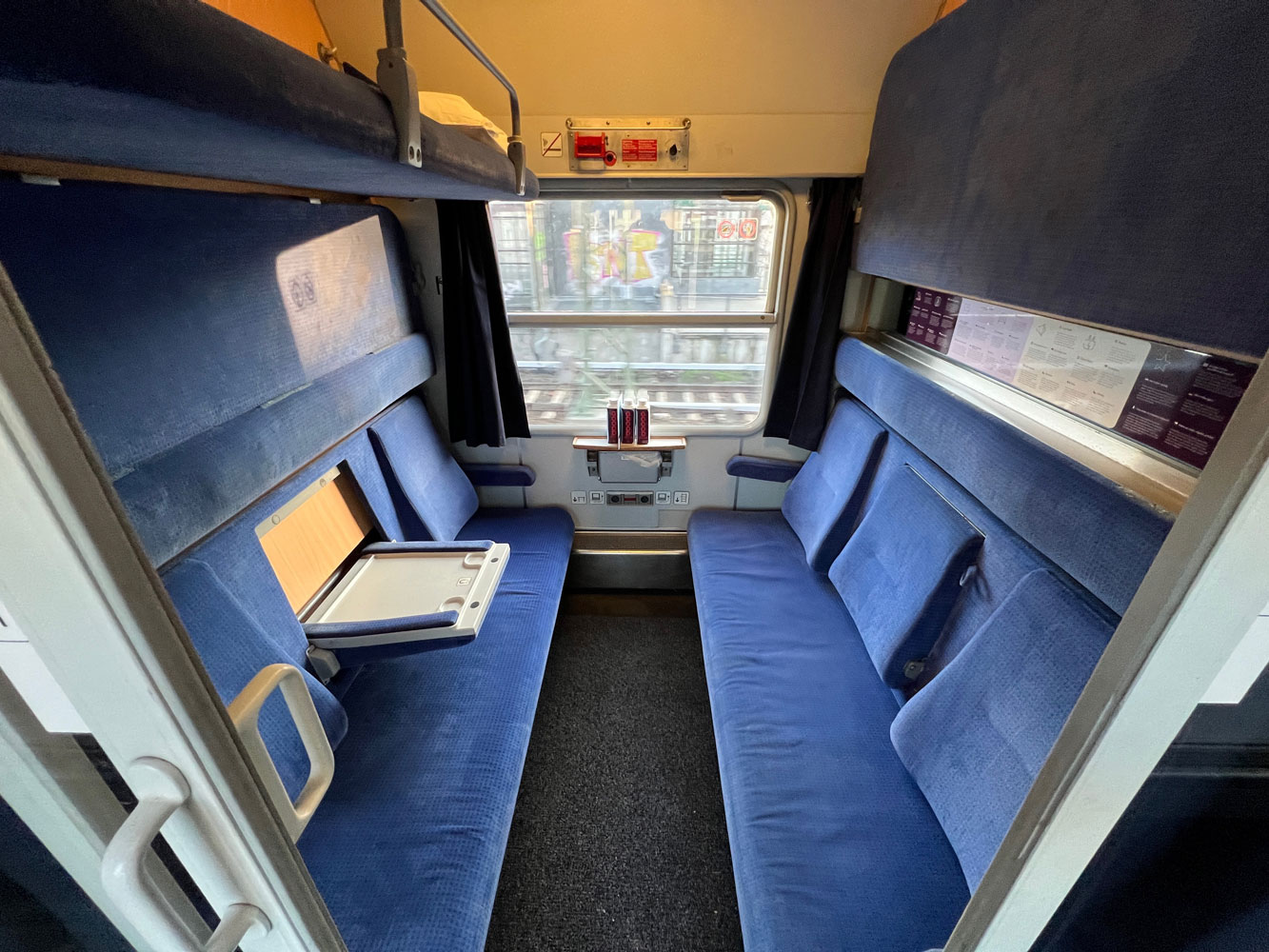
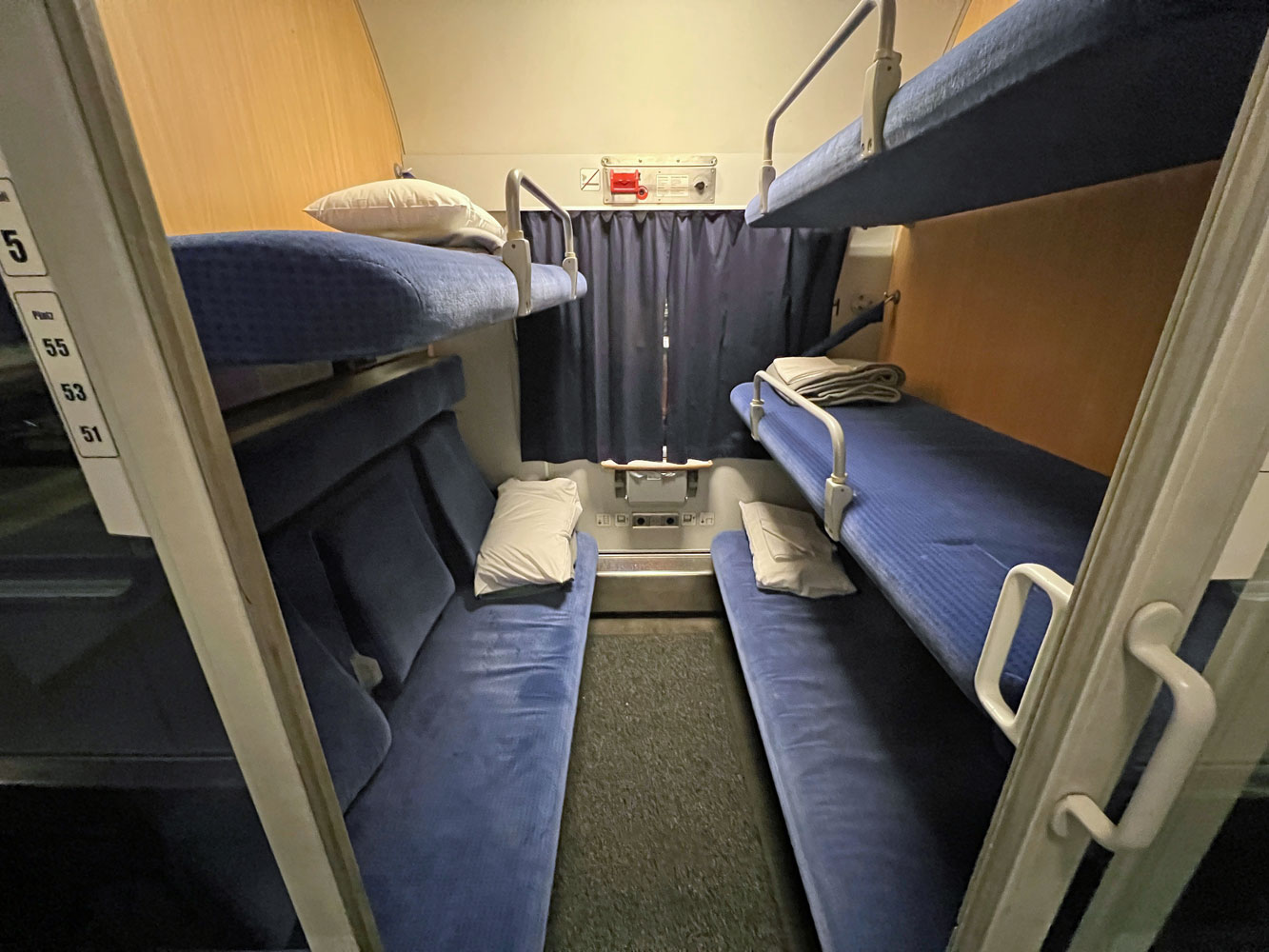
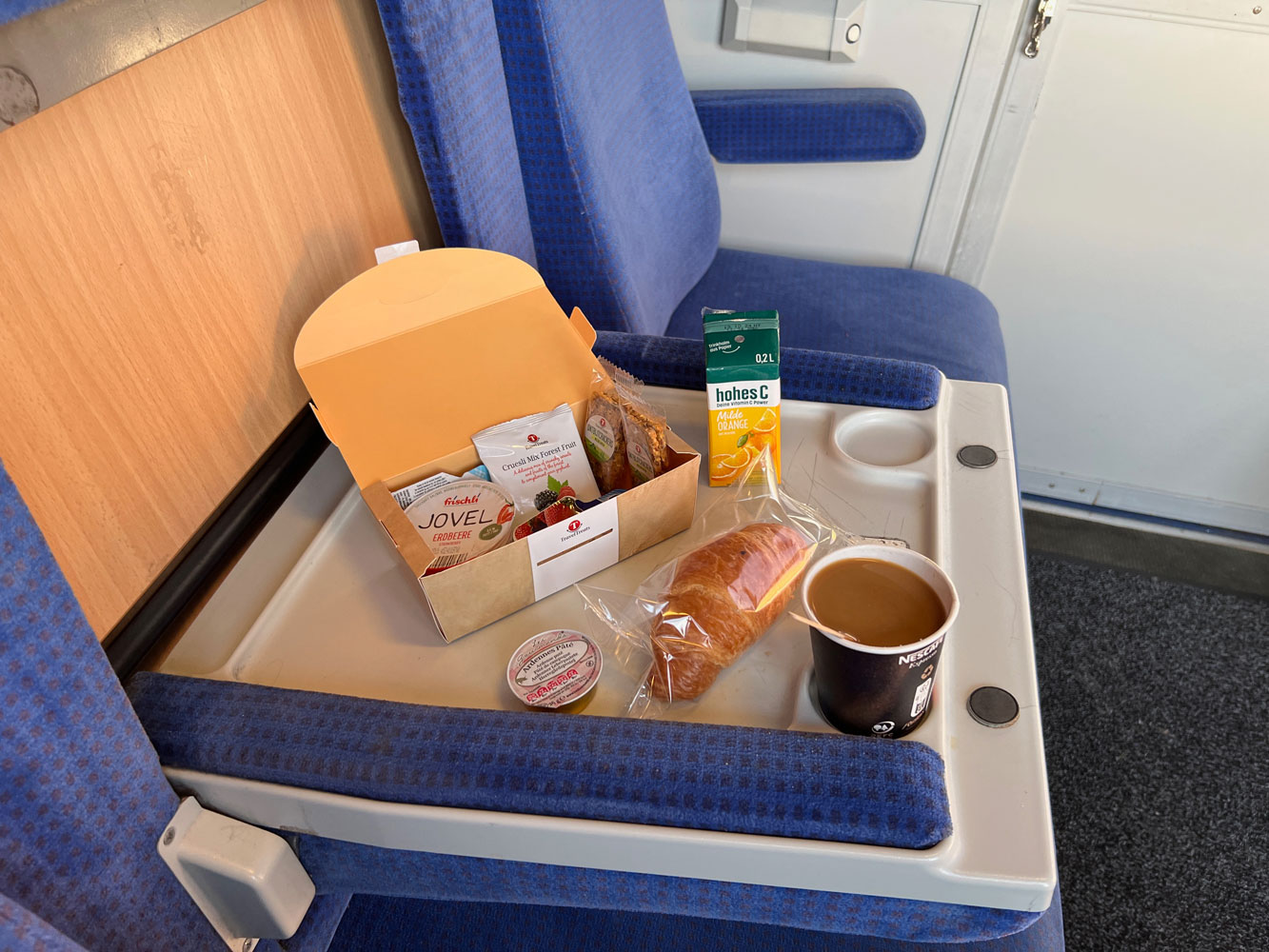
The European sleeper has 1, 2 & 3 bed sleepers, 5 & 6 berth couchettes and 2nd class seats. Sleeper fares include a light breakfast. Enjoy the scenic ride along the Elbe river valley over breakfast. More about the European Sleeper.
You now have a day to explore Prague. Left luggage lockers are available. Suggested restaurants for dinner in Prague.
-
Day 2, travel from Prague to Przemysl by Regiojet sleeper train, leaving Prague Hlavni at 21:48 every day, arriving Przemysl 06:25 (day 3).
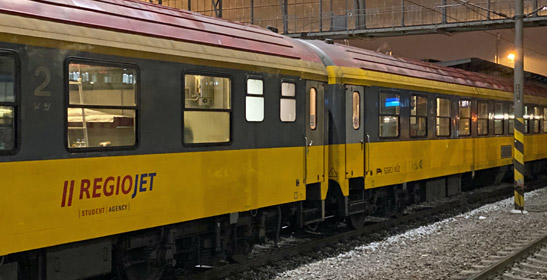
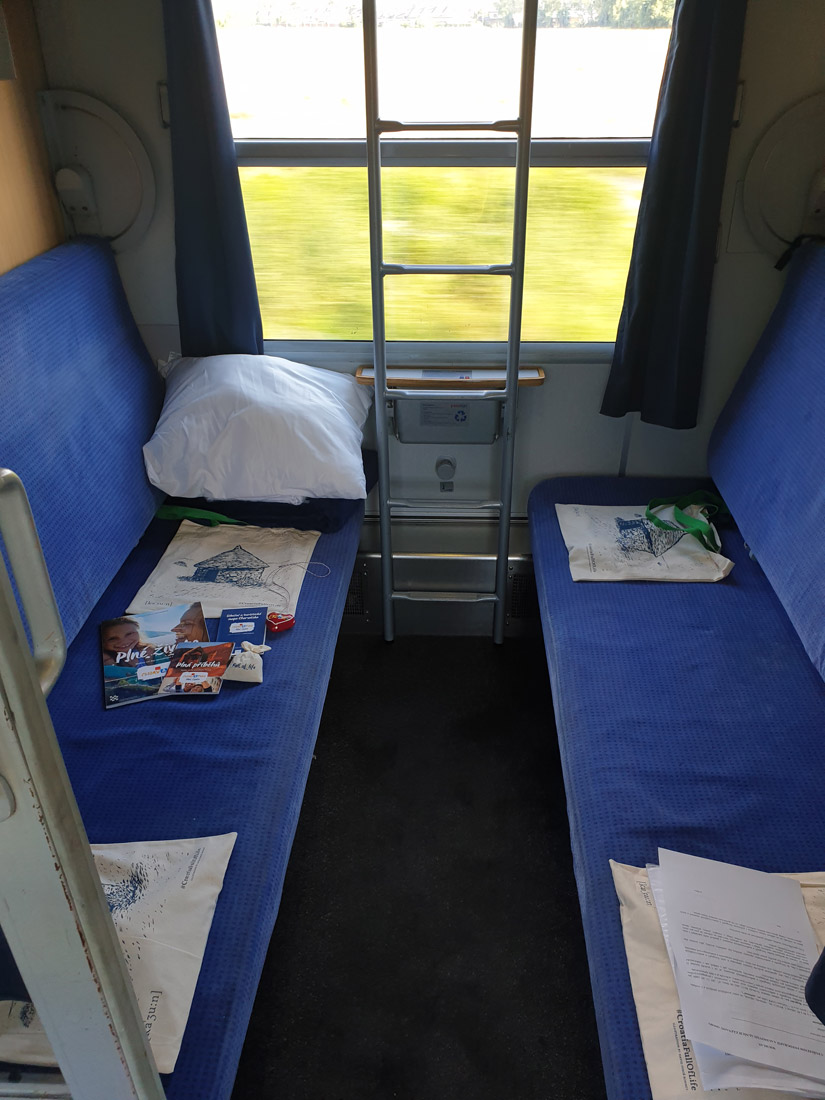
The Regiojet sleeper has 3 & 4 berth couchettes set up with full bedding like a sleeping-car. You can book an inexpensive berth in a shared compartment or you can book a whole compartment for sole occupancy if you like. Refreshments are available from the train staff.
-
Day 3, a connecting Ukrainian train leaves Przemysl at 09:49, arriving Lviv 12:26 & Kyiv Pass 20:10 (day 3).
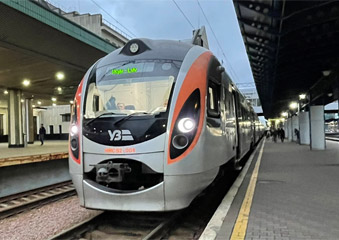
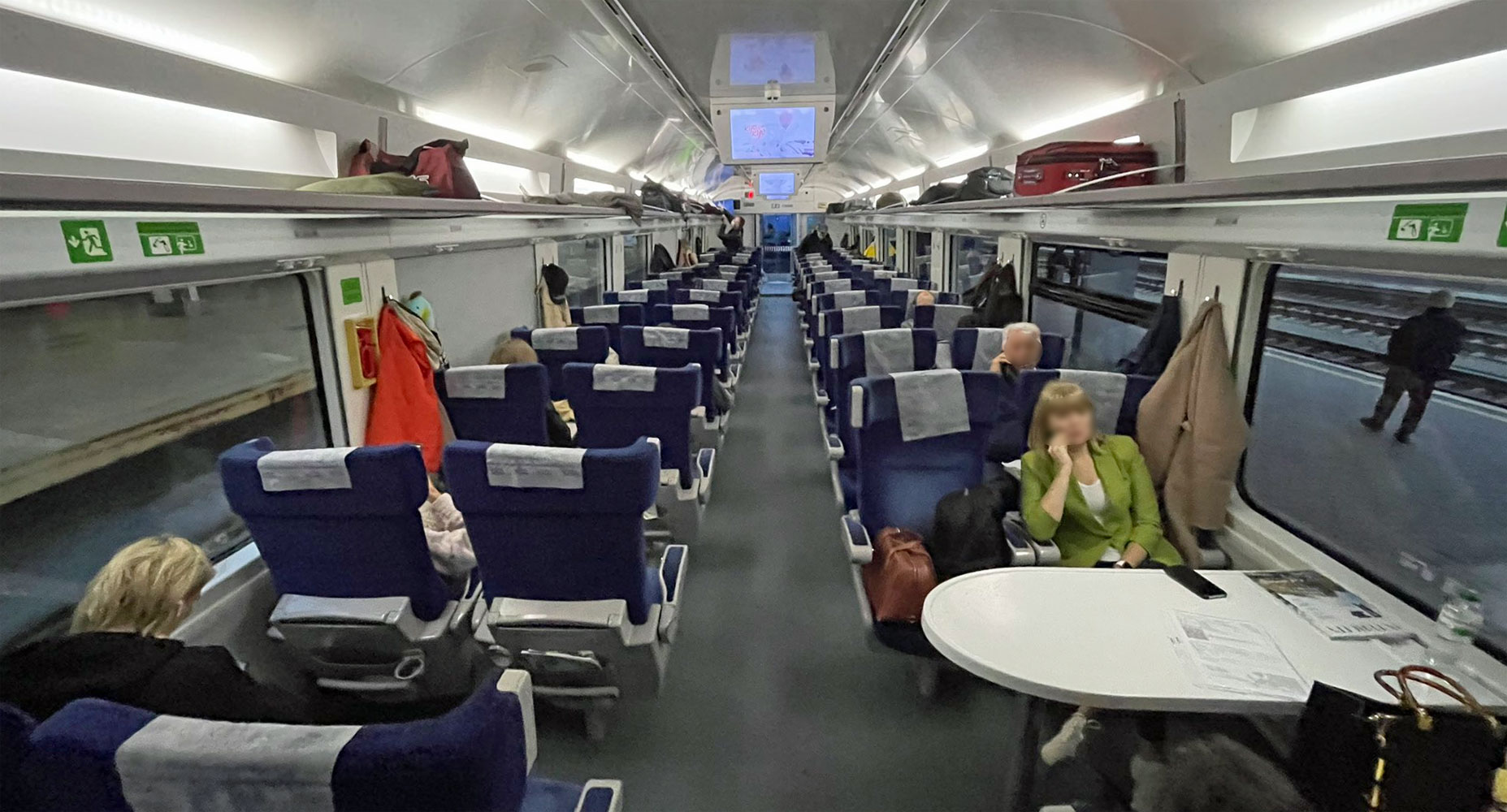
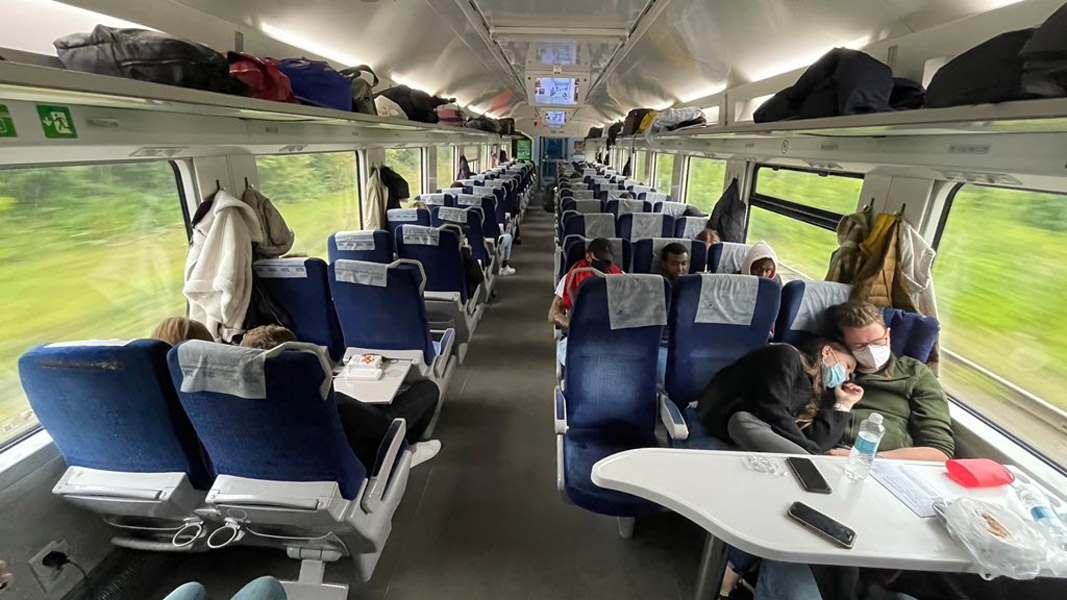
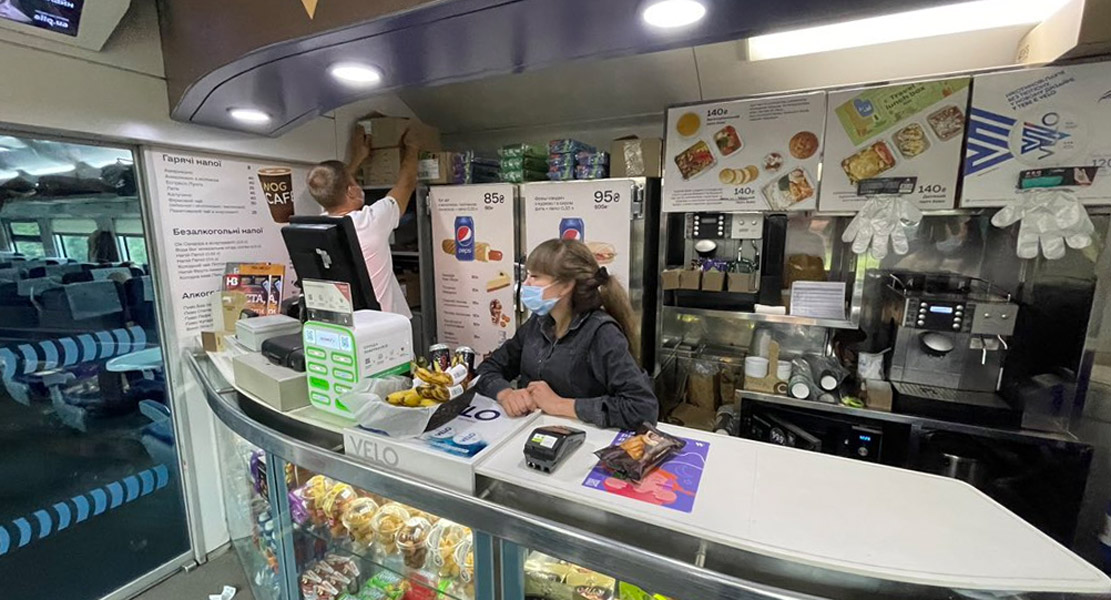
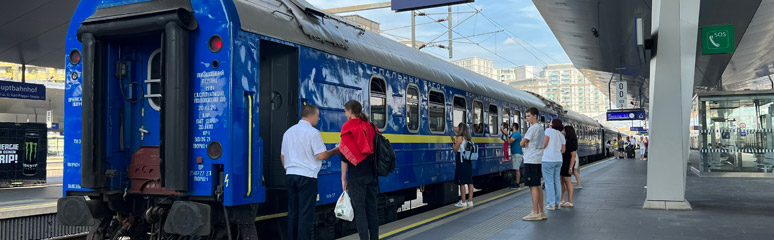
This is a comfortable air-conditioned Ukrainian Intercity train with cafe-bar. Regiojet have an allocation of seats, a Regiojet ticket from Prague to Lviv or Kyiv includes a 2nd class seat on this train.
Kyiv ► London
-
Day 1, travel from Kyiv or Lviv to Przemysl by Ukrainian train, leaving Kyiv Pass at 11:17 or Lviv at 18:30, arriving Przemysl 19:50.
This is a comfortable air-conditioned Ukrainian Intercity train with cafe-bar. Regiojet have an allocation of seats, a Regiojet ticket from Kyiv or Lviv to Prague includes a 2nd class seat on this train.
-
Day 1, travel from Przemysl to Prague by Regiojet sleeper train, leaving Przemysl at 21:34, arriving Prague Hlavni 06:58 (day 2).
The Regiojet sleeper has 3 & 4 berth couchettes set up with full bedding like a sleeping-car. You can book an inexpensive berth in a shared compartment or you can book a whole compartment for sole occupancy if you like. Refreshments are available from the train staff.
You now have a day free in Prague. Left luggage lockers are available.
-
Day 2, travel from Prague to Brussels by European Sleeper, leaving Prague Hlavni at 18:05 on Tuesdays, Thursdays & Sundays, arriving Brussels Midi 09:27 (day 3)
The European sleeper has 1, 2 & 3 bed sleepers, 5 & 6 berth couchettes and 2nd class seats. In summer when its light, enjoy the scenic ride along the Elbe river between Prague & Dresden. Sleeper fares include a light breakfast. More about the European Sleeper.
-
Day 3, travel from Brussels to London by Eurostar, leaving Brussels Midi at 12:56 arriving London St Pancras 13:57.
Eurostar has two cafe-bars, power sockets at all seats & free WiFi. Plus & Premier fares include a meal with wine.
How much does it cost?
-
London to Brussels by Eurostar starts at £51 one-way or £78 return in Standard, £98 one-way, £140 return in Plus (1st class).
-
Brussels to Prague by European Sleeper starts at €49 in a seat, €79 with a couchette in 6-berth, €99 with a couchette in 5-berth, €109 with a bed in 3-bed sleeper, €129 with a bed in 2-bed sleeper, €159 with a bed in single-bed sleeper. All per person per berth.
Fares vary like air fares, so book ahead. Children under 4 travel free, without their own berth. Children under 12 travel at a child rate.
-
Prague to Lviv or Kyiv starts at €58 with a berth in a shared compartment, or €119.90 for sole occupancy of a 4-berth couchette compartment for 1 to 4 people. Fares vary slightly according to demand. The fare includes the sleeper and a 2nd class seat on the connecting Ukrainian train.
How to buy tickets
-
Step 1, first book the Brussels-Prague sleeper at www.europeansleeper.eu.
Booking opens up to 6 months ahead although this varies. You print your own ticket or can show it on your phone.
-
Step 2, now book the London-Brussels Eurostar at www.eurostar.com.
Booking opens up to 11 months ahead, but I'd wait until the sleeper can be booked. You print your own ticket or can show it on your phone.
-
Step 3, book from Prague to Lviv or Kyiv at www.regiojet.com.
Booking only opens 1-2 months ahead, so book your other trains first then book this one a month or two before travel. There is usually plenty of availability 3+ weeks before departure, although it can sell out with a week or two to go. You print your ticket or show it on your phone.
What's the journey like?
1. London to Brussels by Eurostar
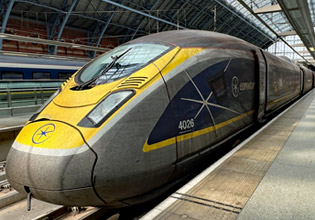
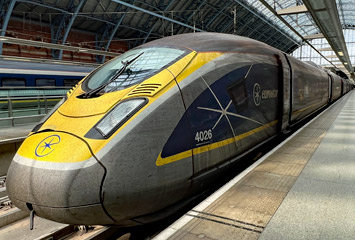
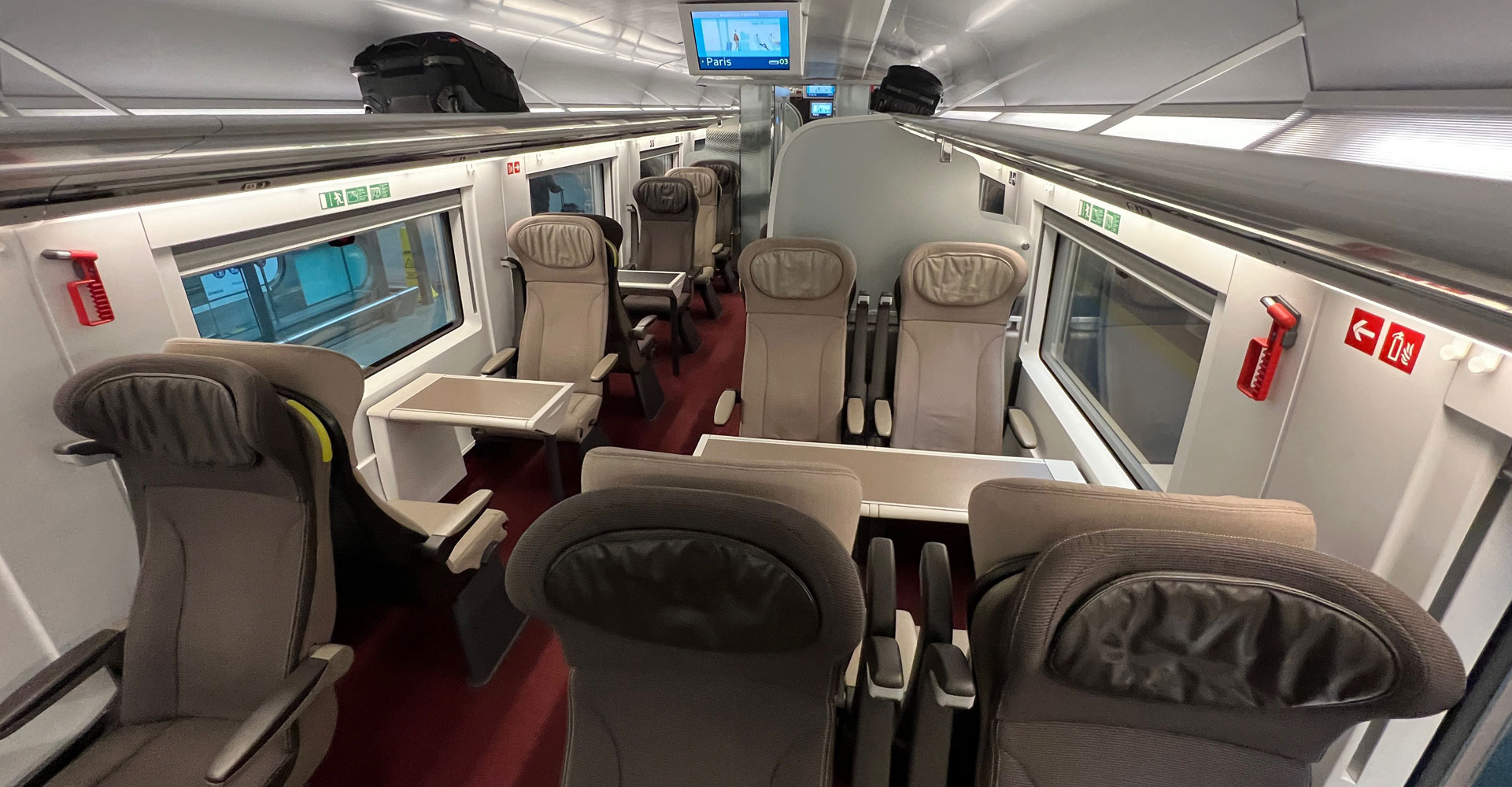
Eurostar trains link London & Brussels in just 2 hours, travelling at up to 300 km/h (186 mph). There are two bar cars, power sockets at all seats and free WiFi. Plus and Premier fares include a light meal with wine (or breakfast, on departures before 10:15). There's a 30-minute minimum check-in as all border formalities are carried out before you board the train. More about Eurostar & check-in procedure. London St Pancras station guide. Brussels Midi station guide.
2. Brussels to Prague by European Sleeper
Launched by two sleeper-loving entrepreneurs in May 2023, the European Sleeper has a sleeping-car with 1, 2 & 3 bed compartments with washbasin, newer couchette cars with 5-berth compartments, older couchette cars with 6-berth compartments & ordinary seats. A light breakfast is included in sleepers & couchettes. Light snacks and drinks can be ordered from the attendant, but there's no restaurant so bring a picnic and bottle of wine! More about European Sleeper. Prague Hlavni station guide.
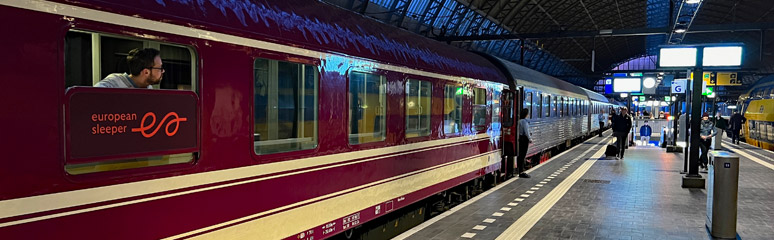
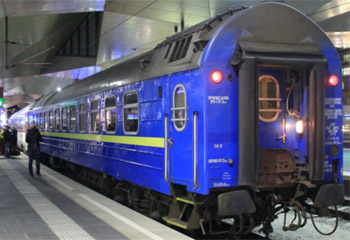
The European Sleeper calls at Amsterdam. This is a 5-berth couchette car, beyond it is the stainless steel sleeping-car.
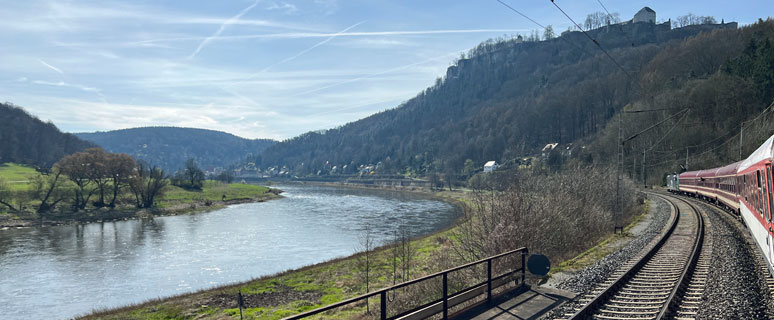
On the glorious morning of 26 March 2024, the very first European Sleeper to Prague runs along the Elbe river valley. See more photos.
3. Prague to Przemysl by Regiojet sleeper train
Regiojet is a private open-access operator that is co-operating with UZ (Ukrainian Railways) to offer combined tickets from Prague to Lviv & Kyiv by sleeper and onward Ukrainian train. The Regiojet sleeper has couchette cars with compartments sold as 3 and 4 berth with full bedding. For a reasonable price you can book sole occupancy for 1 or 2 people if you like. Refreshments are available from the train staff.
4. Przemysl to Lviv or Kyiv by Ukrainian intercity train
This comfortable air-conditioned Ukrainian intercity train has a cafe-bar. It has 1st & 2nd class, Regiojet tickets from Prague include a 2nd class seat which is fine.
Option 2, London to Kyiv via Warsaw
This is the most time-effective option. Departures are daily all year round except Christmas Day. You get some time to see a bit of Warsaw, too! However, the Warsaw-Kyiv sleeper can be difficult to book as it often sells out soon after sales open.
London ► Kyiv
-
Day 1, travel from London to Berlin by train, see the timetable here. For example:
Leave London St Pancras at 09:01, change at Brussels Midi (arrive 12:05, depart 12:25) & Cologne Hbf, arriving Berlin Hbf 19:16.
Leave London St Pancras at 11:04, change at Brussels Midi (arrive 14:05, depart 14:25) & Cologne Hbf, arriving Berlin Hbf 21:18.
Don't book the later 15:04 departure when you've onward travel next morning, give yourself some leeway in case of delay.
You travel from London to Brussels by Eurostar with cafe-bar, power sockets at all seats & free WiFi, Plus & Premier fares include breakfast before 10:30, or lunch with wine on departures after 10:30. About the 20-minute connection in Brussels.
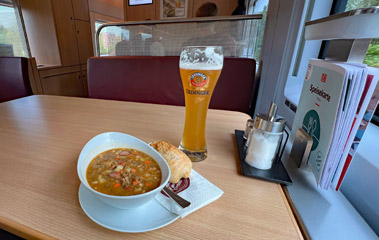
You then travel from Brussels to Cologne and Cologne to Berlin on ICE trains with restaurant car, power sockets at all seats & free WiFi. In 1st class a steward takes food & drink orders and serves you at your seat. I recommend the Erdinger Weissbier!
-
Stay overnight in Berlin.
Top choice here is the InterCity Hotel Berlin Hbf (my favourite), only 200m from Berlin Hbf's main entrance, relatively inexpensive with great reviews, or if you're in the money, the excellent 5-star Steigenberger Hotel just outside the station. If you're on a budget, the cheaper 3-star Motel One Berlin-Hbf is behind the station or use www.hostelworld.com. Of course, if you really want to push the boat out, the famous Hotel Adlon Kempinski Berlin is next to the Brandenburg Gate just 17 minutes walk away.
-
Alternatively, travel from London to Berlin using the European Sleeper as shown here, or the Brussels-Berlin Nightjet sleeper as shown here.
-
Day 2, travel from Berlin to Warsaw by EuroCity train, leaving Berlin Hbf at 09:52, arriving Warsaw Centralna 15:00.
Or there's an earlier EuroCity train leaving Berlin Hbf at 07:49, arriving Warsaw Centralna 13:00.
The Berlin-Warsaw EuroCity trains are comfortable air-conditioned Polish trains with a restaurant car serving drinks, snacks and meals. Treat yourself to lunch in the restaurant car with a beer or two.
Warsaw's historic old town is a 20 minute walk from Warsaw Centralna - if you fancy a modest splurge, the celebrated Ufukiera restaurant (www.ufukiera.pl) is excellent and right on the square in the heart of Warsaw's old town. The Palace of Culture (a wedding cake style Soviet skyscraper and distinctive Warsaw landmark, www.pkin.pl) is right next to the station and has a viewing terrace on the 30th floor.
Transfer from Warsaw Centralna to Warsaw Wschodnia by taxi, tram or local train, see how to transfer here.
-
Day 2, travel from Warsaw to Kyiv by Kyiv Express, leaving Warsaw Wschodnia at 18:50, arriving Kyiv main station 09:49 next day.
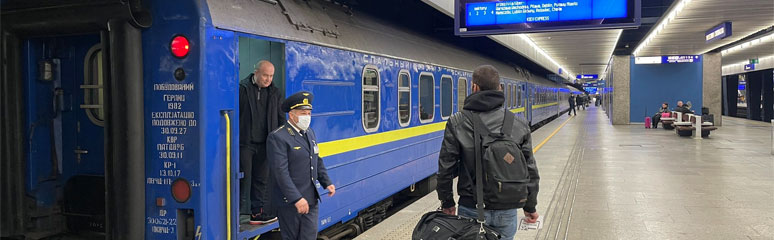
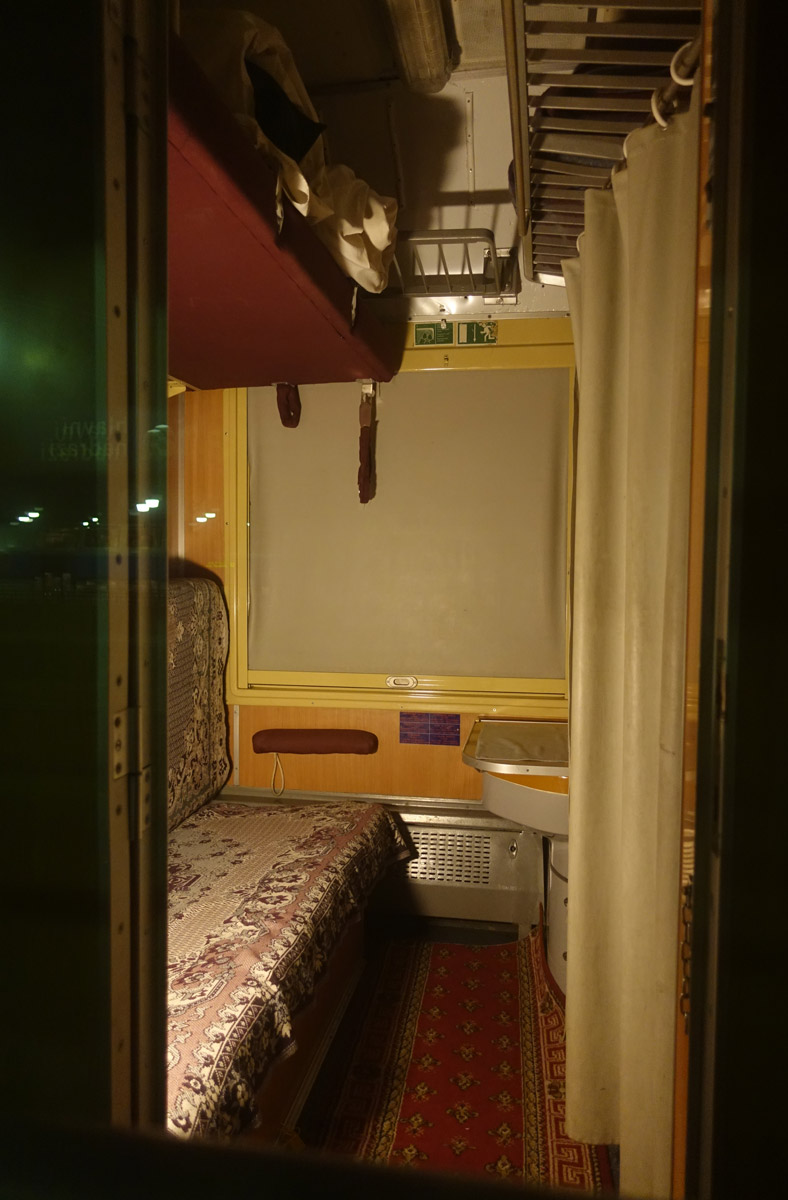
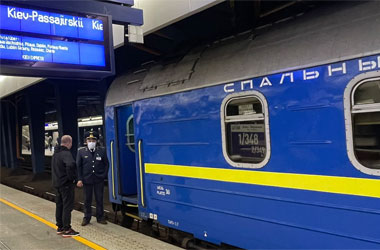
The Kyiv Express has comfortable Ukrainian sleeping-cars with 3-berth compartments, unfortunately no longer offered as single or double. There may be a buffet car serving tea, coffee, beer & snacks, but it's a good idea to take your own supplies of food, water and wine or beer. Late at night, around 00:30, the train is shunted into the gauge-changing shed at Yagodin (on the Ukrainian border) and jacked up to have its wheels changed from standard European (4' 8½") gauge to Russian 5' gauge. You remain on board while this is done, an interesting experience. See Tim Richards excellent blog entry about of the Kyiv Express.
Kyiv ► London
-
Day 1, travel from Kyiv to Warsaw by Kyiv Express leaving Kyiv main station at 19:51, arriving Warsaw Centralna 09:43 next morning.
The Kyiv Express has comfortable Ukrainian sleeping-cars with 3-berth compartments, unfortunately no longer offered as single or double. There may be a buffet car serving tea, coffee, beer and snacks, but it's a good idea to take your own supplies of food, water and wine or beer. Around 4am, the train is shunted into the gauge-changing shed at Yagodin (the Ukrainian border point) and jacked up to have its wheels changed from Russian 5' gauge to standard European (4' 8½") gauge. You remain in your sleeping-berth on board while this is done, an interesting experience. See Tim Richards excellent blog entry about of the Kyiv Express.
-
Day 2, travel from Warsaw to Berlin by EuroCity train, leaving Warsaw Centralna daily at 13:00, arriving Berlin Hbf 18:16.
Alternatively, daily except Saturdays there's a later EuroCity train leaving Warsaw Centralna at 17:00 arriving Berlin Hbf 22:17, giving you some time to explore Warsaw, see Warsaw Centralna station & city information.
The Warsaw-Berlin EuroCity trains are comfortable air-conditioned trains with a trolley refreshment service and a restaurant car serving drinks, snacks and full meals. Treat yourself to a meal in the restaurant: Three courses, a beer and a coffee only come to around €11.
-
Stay overnight in Berlin.
Top choice here is the InterCity Hotel Berlin Hbf (my favourite), only 200m from Berlin Hbf's main entrance, relatively inexpensive with great reviews, or if you're in the money, the excellent 5-star Steigenberger Hotel just outside the station. If you're on a budget, the cheaper 3-star Motel One Berlin-Hbf is behind the station or use www.hostelworld.com. Of course, if you really want to push the boat out, the famous Hotel Adlon Kempinski Berlin is next to the Brandenburg Gate just 17 minutes walk away.
-
Day 3, travel from Berlin to London by train on any departure you like, see the timetable here. For example:
Leave Berlin Hbf at 06:46, change at Cologne Hbf & Brussels Midi onto the 14:52 Eurostar, arriving London St Pancras 15:57.
Leave Berlin Hbf at 08:46, change at Cologne Hbf & Brussels Midi onto the 16:51 Eurostar, arriving London St Pancras 17:57.
Leave Berlin Hbf at 11:04, change at Cologne Hbf & Brussels Midi onto the 18:52 Eurostar, arriving London St Pancras 19:57.
You travel Berlin-Cologne & Cologne-Brussels by ICE, with restaurant car, power sockets at all seats & free WiFi. Then from Brussels to London by Eurostar with cafe-bar, power sockets at all seats & free WiFi. Plus & Premier fares include a meal with wine. Berlin departure times vary.
-
Alternatively, travel from Berlin to London using the European Sleeper as shown here, or the Berlin-Brussels Nightjet sleeper as shown here.
How much does it cost?
How to buy tickets
-
Step 1, book your London-Berlin tickets as shown here.
Booking opens up to 6 months ahead. You print your own ticket or can show it on your phone.
-
Step 2, book your Berlin to Warsaw ticket using the German Railways website int.bahn.de.
Booking opens up to 60 days ahead. I recommend registering when prompted, so you can log in at any time and check or reprint tickets. You print your own ticket or can show it on your phone.
-
Step 3, order a ticket for the Warsaw to Kyiv Kyiv Express from booking.polrail.com.
Polrail is a reliable and highly recommended Polish train ticketing agency. They use the Polish ticketing system so can access all the berths in 1, 2 & 3-berth compartments with booking opening 60 days ahead.
Don't book at the last minute, this train often gets fully-booked 2-3 weeks ahead.
Polrail can arrange ticket collection in Warsaw. Polrail may or may not be able to arrange the return reservation back from Kyiv.
Unfortunately, Polrail can only book eastbound tickets to Kyiv, not the return.
You can buy Kyiv to Warsaw tickets at the Ukrainian Railways website booking.uz.gov.ua/en, see the advice below. You'll need a Ukrainian digital signature to book with Ukrainian Railways, foreigners can get this by uploading their passports and a photo of themselves in the Ukrainian Railways app. The process takes a few minutes and you'll be verified after only a few hours.
-
Step 4, you can buy tickets for trains within Ukraine at the Ukrainian Railways website booking.uz.gov.ua/en (see the advice below). You'll need a Ukrainian digital signature, foreigners can get this by uploading their passports and a photo in the Ukrainian Railways app. The process takes a few minutes and you'll be verified after a few hours.
What's the journey like?
1. London to Brussels by Eurostar
Eurostar trains link London & Brussels in just 2 hours, travelling at up to 300 km/h (186 mph). There are two bar cars, power sockets at all seats and free WiFi. Plus and Premier fares include a light meal with wine (or breakfast, on departures before 10:15). There's a 30-minute minimum check-in as all border formalities are carried out before you board the train. More about Eurostar & check-in procedure. London St Pancras station guide. Brussels Midi station guide.
2. Brussels to Cologne by ICE3neo
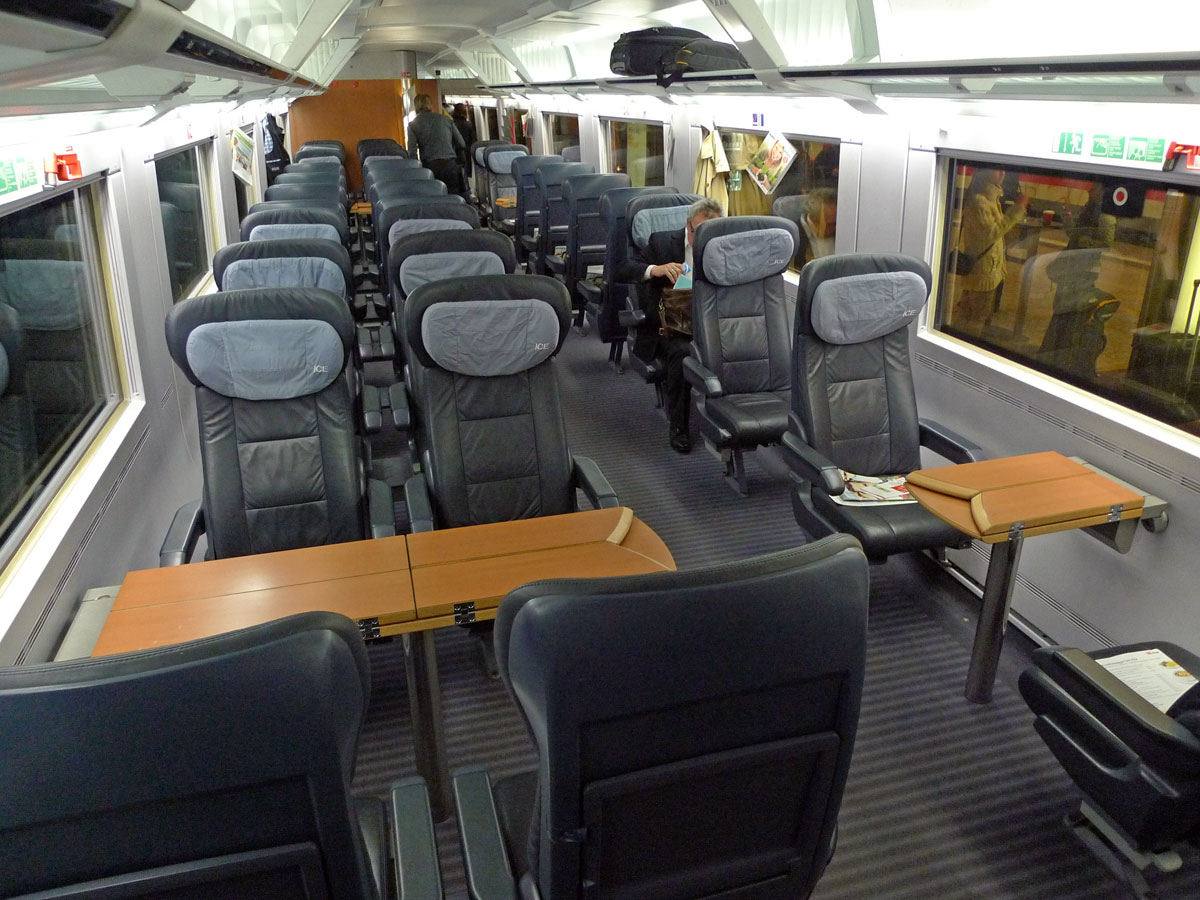
These superb ICE3neos have a restaurant car, power sockets at all seats & free WiFi. In 1st class, food & drink orders are taken at your seat. 50 minutes after leaving Brussels the ICE calls at Liège, where you can admire the impressive station designed by celebrity architect Santiago Calatrava. As you approach Cologne Hbf you'll see the twin towers of Cologne Cathedral on the right, next to the station. More about ICE3 trains. Brussels Midi station guide. Cologne Hbf station guide.

An ICE3neo at Brussels Midi with restaurant car, power sockets at all seats & free WiFi. More about ICE trains. Photo above courtesy of Christian Hunt.


3. Cologne to Berlin by ICE
ICE2 trains have a restaurant car, bar car, power sockets at all seats & free WiFi. In 1st class, bistro orders are taken at your seat. Immediately after leaving Cologne Hbf, the train crosses the Hohenzollern bridge over the Rhine. It passes through the industrial Ruhr via Wuppertal & Hamm. After leaving Hannover, the train passes non-stop through Wolfsburg - look out for the original Volkswagen factory on the left, built in 1938. The train then travels at up to 280 km/h (174 mph) on the high-speed line to Berlin Hbf, where it arrives at the low-level platforms. More about ICE2 trains. Cologne Hbf station guide. Berlin Hbf station guide.

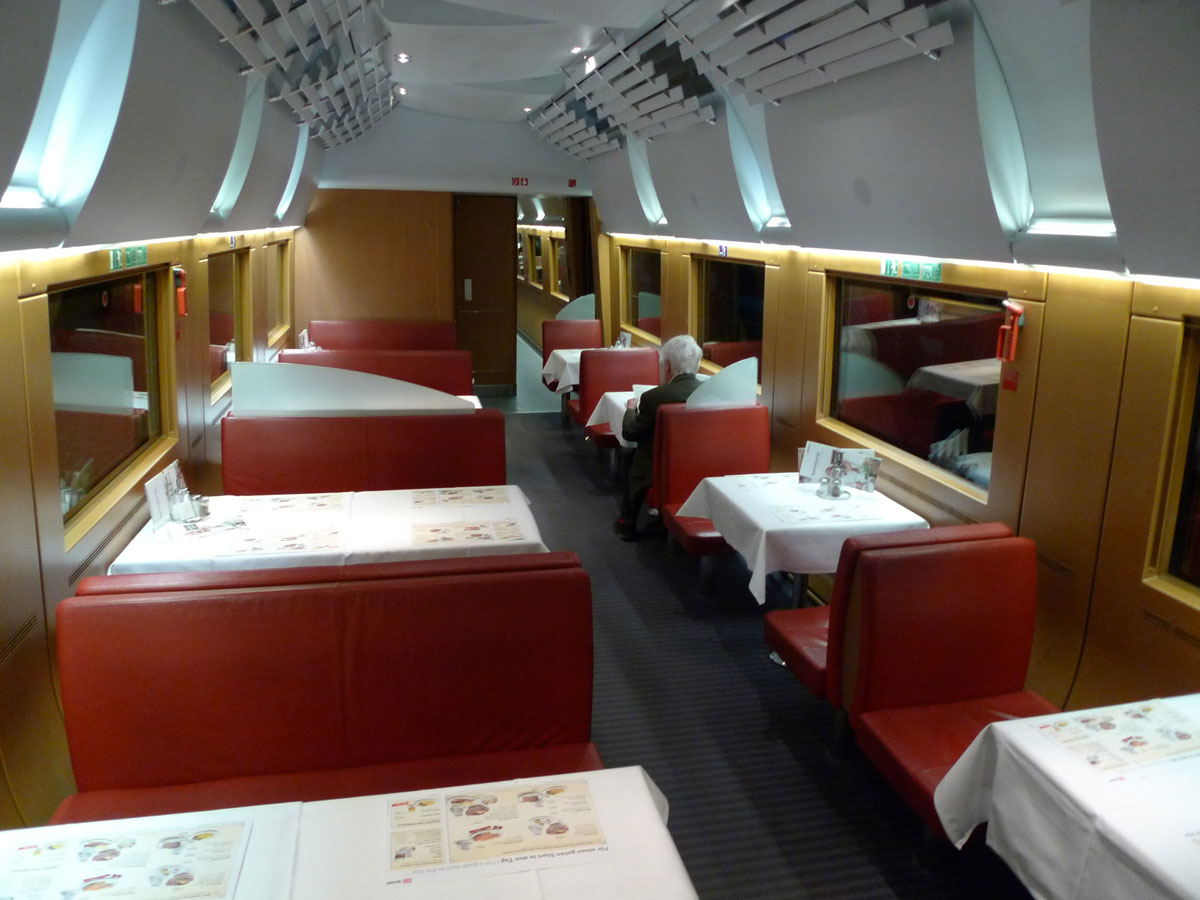
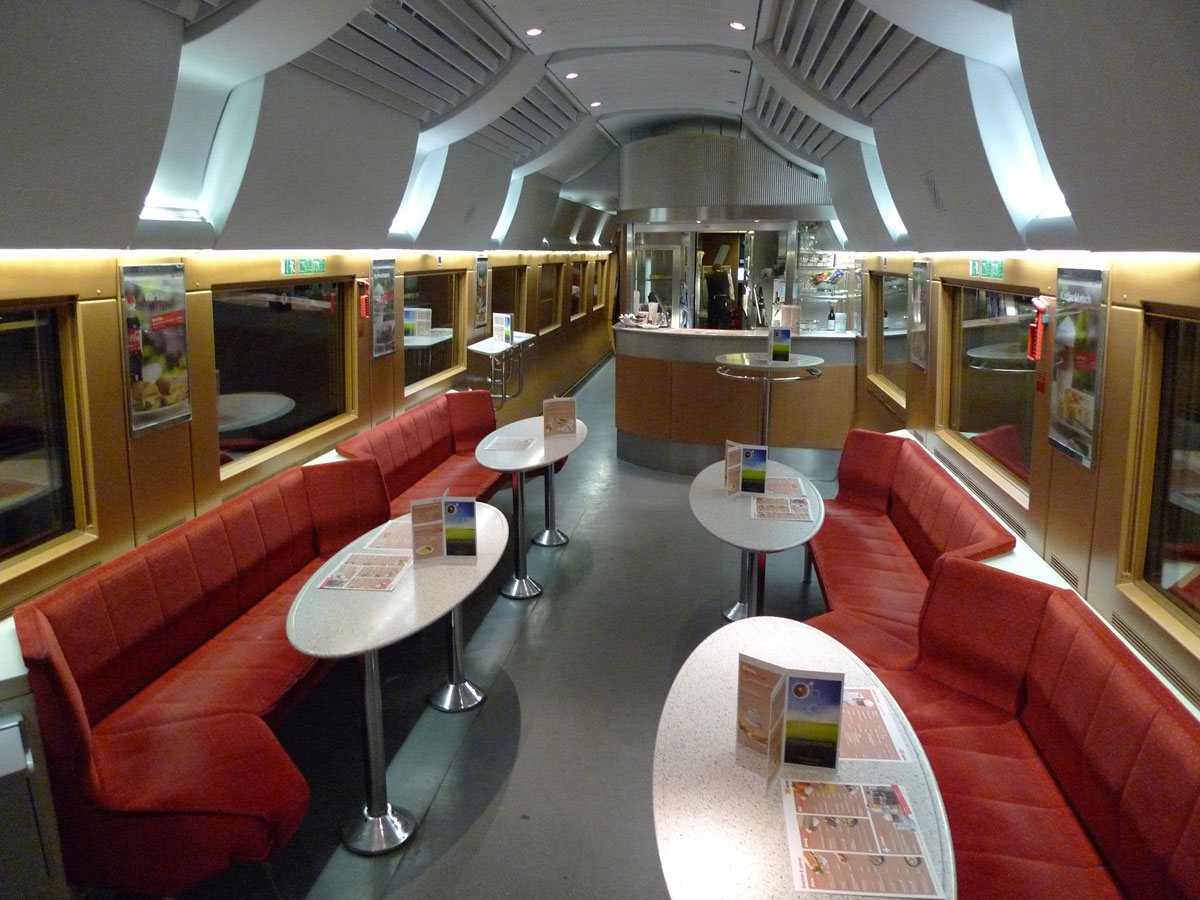
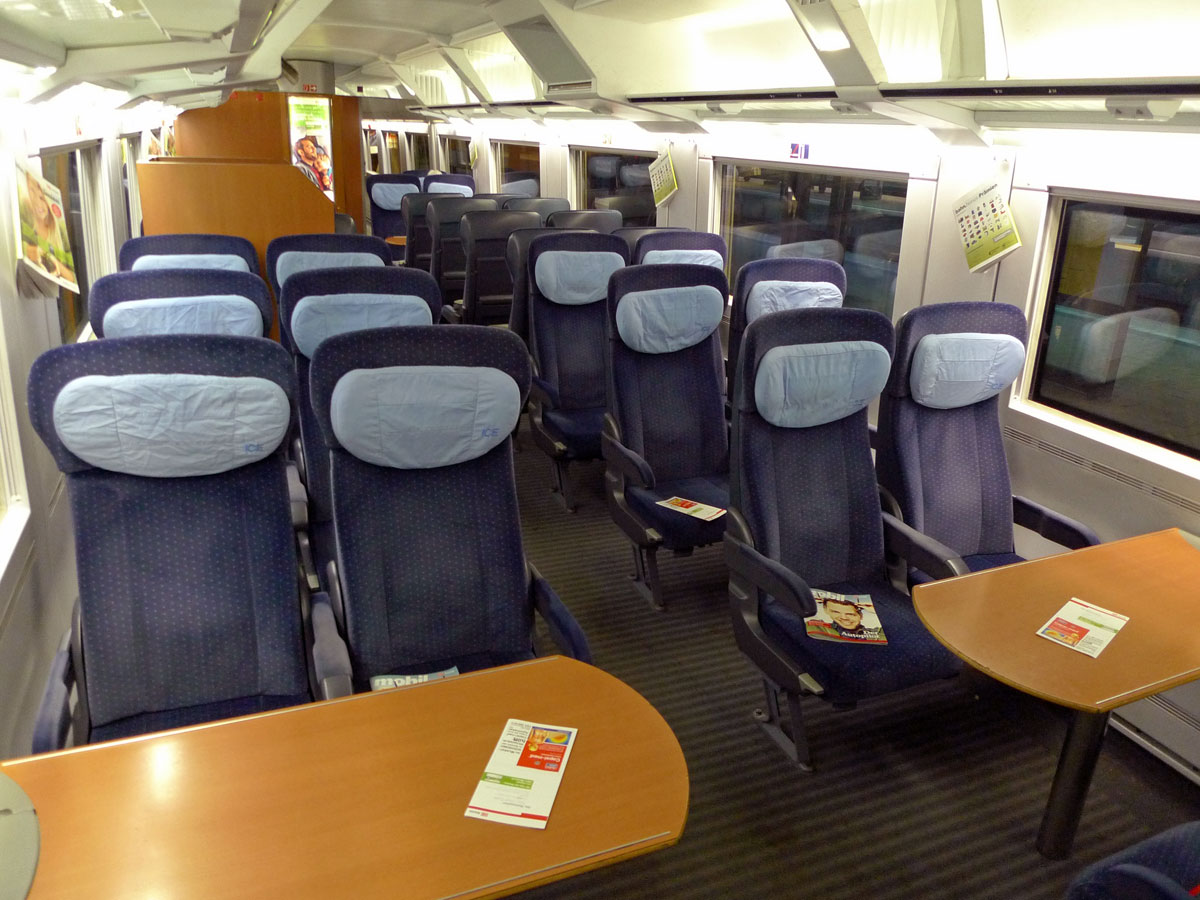

4. Berlin to Warsaw by EuroCity train
These comfortable air-conditioned trains have a restaurant car. See the Berlin-Warsaw EuroCity page for more photos, tips & information.

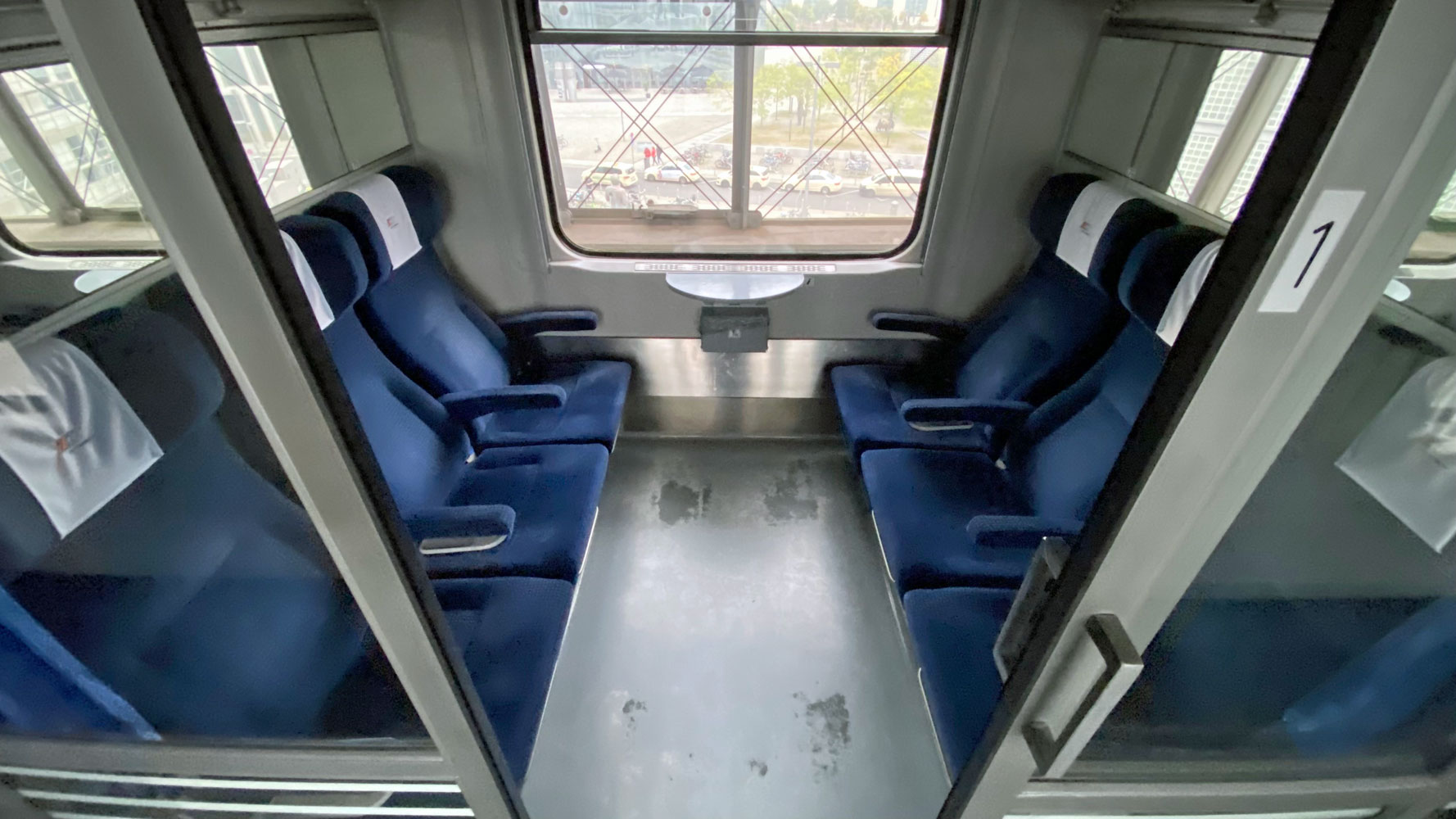
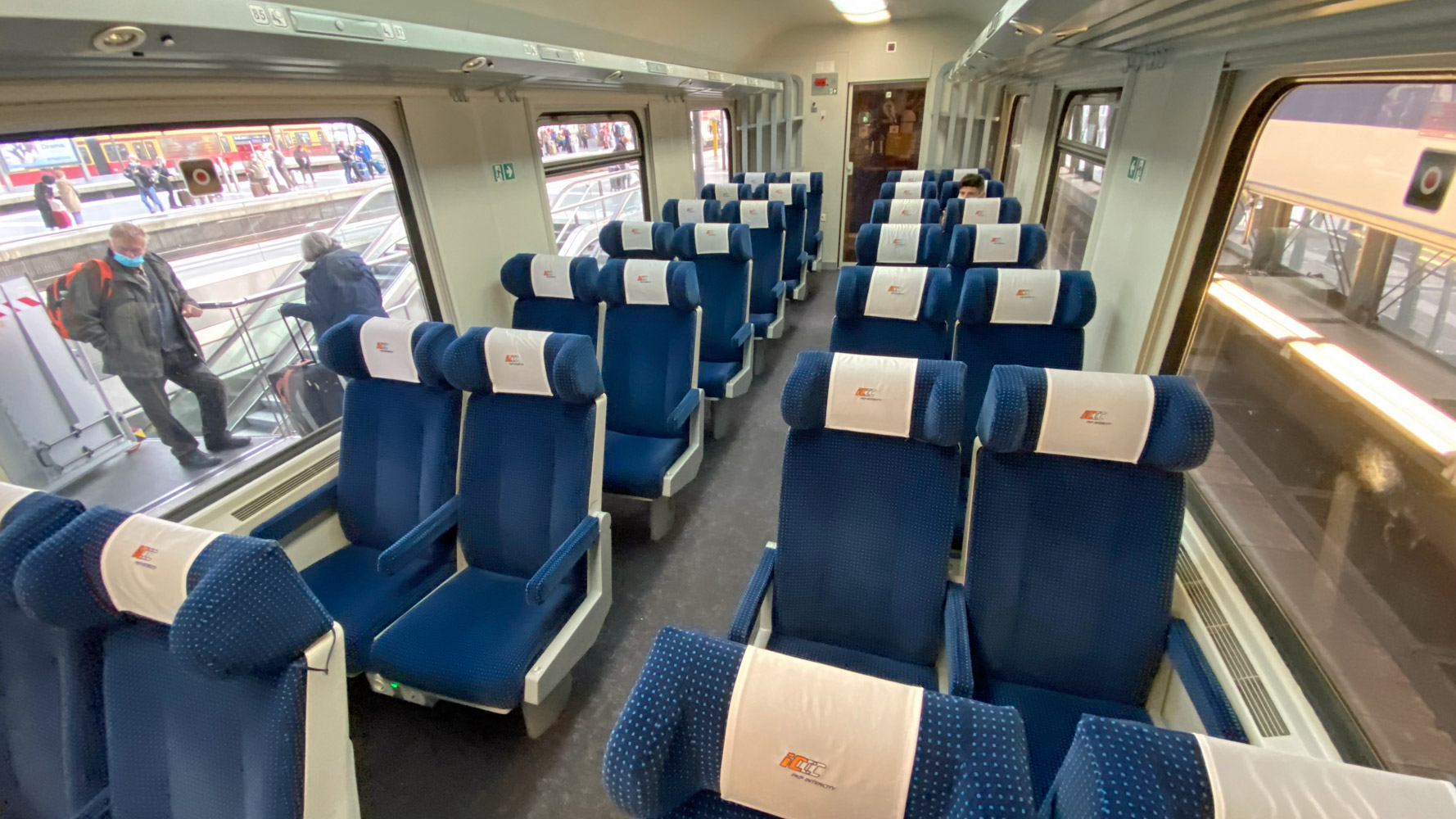
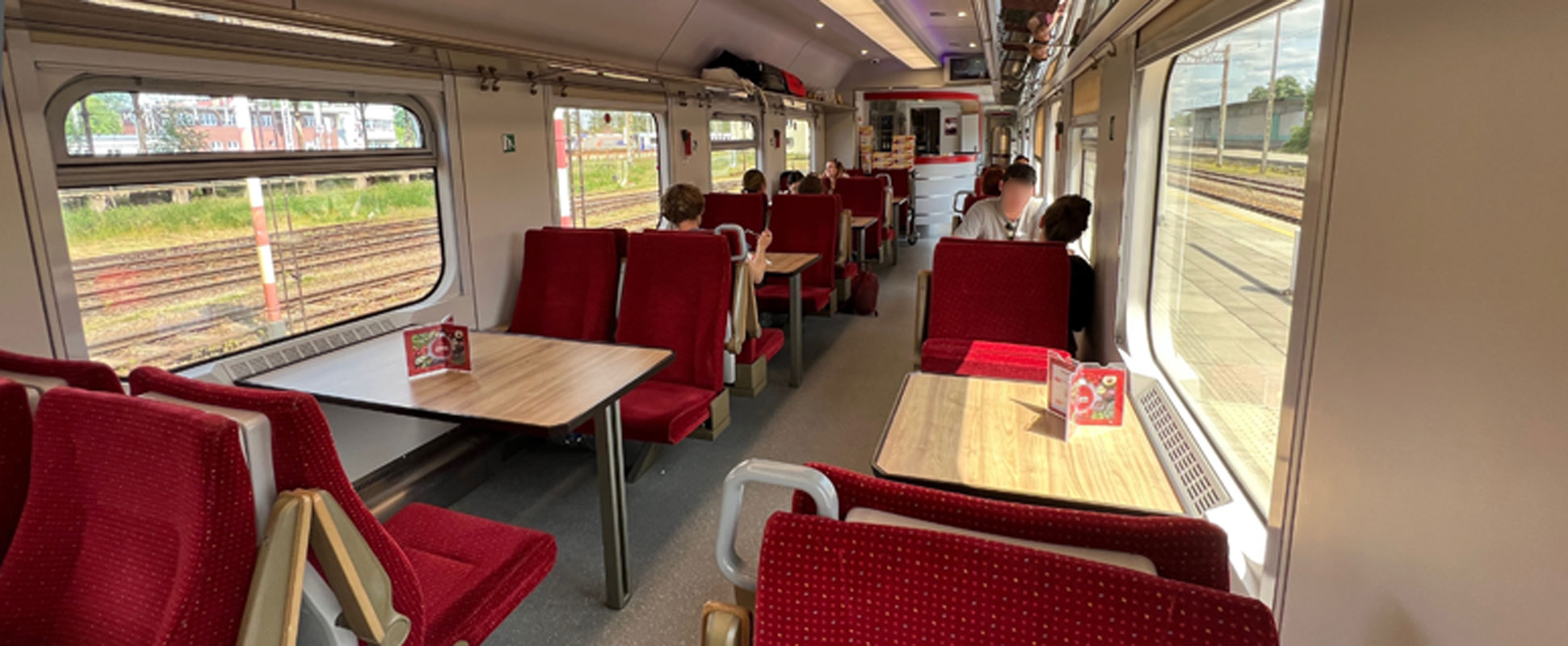
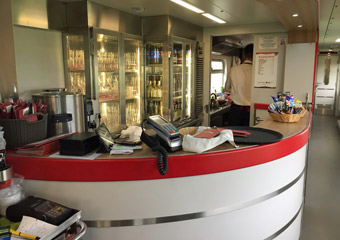
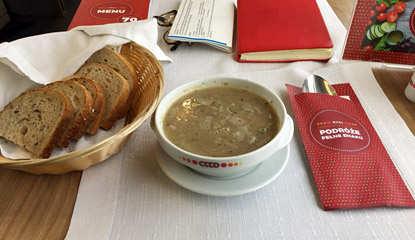
5. Warsaw to Kyiv by Kyiv Express
The Kyiv Express has modernised Ukrainian sleeping-cars with 2-berth & 3-berth compartments. All bedding is supplied, and washrooms and toilets are at the end of the corridor. Berths convert to seats for daytime use. A smartly-uniformed Ukrainian railways sleeper attendant travels with each car. There's no dining-car, so take a picnic and your own supplies of wine or beer.
Option 3, London to Lviv & Kyiv via Krakow
This route is often the most practical as there are plenty of seats and it usually has good availability, even when the direct sleeper trains from Warsaw, Vienna or Budapest to Ukraine are sold out (those sleepers often sell out within hours of reservations opening). And if you use Regiojet between Krakow & Ukraine it can all easily be booked online, with no need for a Ukrainian 'digital signature'.
London ► Lviv & Kyiv
-
Day 1 & 2, travel from London to Krakow as shown on the London to Poland page.
Take a morning Eurostar from London and onward trains to Berlin, stay overnight, then travel to Krakow on day 2.
Or take an afternoon Eurostar from London, a sleeper from Brussels to Berlin, then a EuroCity train to Krakow on day 2.
-
Stay overnight in Krakow.
Hotels next to the station with great reviews include the PURO Hotel or for something inexpensive, the Polonia Hotel. For a longer stay, see suggested hotels in the old town here.
-
Day 3, travel from Krakow to Ukraine by train:
The easiest option is to use the integrated service sold by open-access operator Regiojet as they have an allocation of seats on Ukrainian Railways Przemysl-Lviv-Kiev Intercity train so can sell tickets from Krakow to Lviv & Kiev as one easy online transaction:
Leave Krakow Glowny at 05:05, change at Przemysl (arrive 07:33, depart 09:49), arriving Lviv 12:26 & Kyiv 20:10.
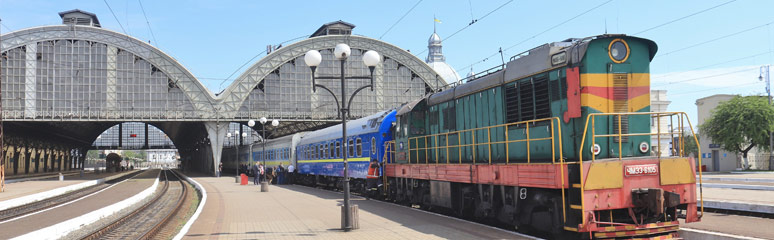
You can check times at www.regiojet.com, booking opens 1 month ahead. The Krakow-Przemysl train is Regiojet's own Prague-Przemysl overnight train, the Ukrainian Przemysl-Lviv-Kyiv train is a smart air-conditioned Intercity train, introduced in 2016 with cafe counter.
-
Alternatively, there are other departures operated by Polish Railways & Ukrainian Railways:
Leave Krakow Glowny at 05:59, change at Przemysl (arrive 09:06, depart 09:35), arriving Lviv 12:27 & Kyiv 19:57.
Leave Krakow Glowny at 09:35, change at Przemysl (arrive 12:10, depart 13:45), arriving Lviv 17:24 & Kyiv 05:01.
Leave Krakow Glowny at 16:38, change at Przemysl (arrive 19:19, depart 20:28), arriving Lviv 00:05 & Odessa 12:55.
Leave Krakow Glowny at 19:15, change at Przemysl (arrive 22:04, depart 23:26), arriving Lviv 02:20 & Kyiv 09:58.
The Krakow-Przemysl trains are comfortable Polish Intercity trains.
The 09:35 Przemysl-Lviv-Kyiv train is a smart air-conditioned Ukrainian Intercity train, introduced in 2016. All the other Ukrainian trains are sleeper trains with platskartny, kupé 4-berth and (usually) spalny vagon 2-berth.
To check times, first check the Ukrainian train at www.uz.gov.ua/en/passengers/timetable. Then check times for a suitable Polish connecting train at Polish Railways www.intercity.pl. Or you can cheat and check times from Krakow to Lviv or Kyiv all in one go using the German Railways all-Europe timetable at int.bahn.de.
Kyiv & Lviv ► London
-
Day 1, travel from Kyiv to Krakow by train:
The easiest option is to use the integrated service run by private open-access operator Regiojet as they have an allocation of seats on Ukrainian Railways Kiev-Lviv-Przemysl Intercity train so can sell integrated tickets as one transaction:
Leave Kyiv at 11:17 or Lviv 18:30, change at Przemysl (arrive 19:50, depart 22:10) arriving Krakow Glowny 00:28.
You can check times at www.regiojet.com, booking opens 1 month ahead. The Kyiv-Lviv-Przemysl train is a smart air-conditioned Ukrainian Intercity train, introduced in 2016 with cafe counter. The Przemysl-Krakow train is Regiojet's own Przemysl-Prague overnight train.
-
Alternatively, there are other departures operated by Polish Railways & Ukrainian Railways:
Leave Odessa at 14:45 or Lviv 03:08, change at Przemysl (arrive 05:53, depart 07:16) arriving Krakow Glowny 09:50.
Leave Kyiv at 22:14 or Lviv 08:34, change at Przemysl (arrive 11:16, depart 11:57) arriving Krakow Glowny 14:58.
Leave Lviv at 13:06, change at Przemysl (arrive 15:21, depart 17:27) arriving Krakow Glowny 20:14.
Leave Kyiv at 12:06 or Lviv 19:25, change at Przemysl (arrive 20:20, depart 22:05), arriving Krakow Glowny 00:41.
The 12:06 Kyiv-Lviv-Przemysl is a comfortable air-conditioned Ukrainian Intercity (IC) train with 1st & 2nd class. All other Lviv-Przemysl trains are Ukrainian sleeper trains, with platskartny, kupé 4-berth and (usually) 2-berth spalny vagon.
Przemysl-Krakow trains are comfortable air-conditioned Polish trains. Times may vary.
To check times, first check the Ukrainian train at www.uz.gov.ua/en/passengers/timetable. Then check times for a suitable Polish connecting train at Polish Railways www.intercity.pl.
-
Stay overnight in Krakow.
Hotels next to the station with great reviews include the PURO Hotel or for something inexpensive, the Polonia Hotel. For a longer stay, see suggested hotels in the old town.
-
Day 2, travel from Krakow to London as shown on the London to Poland page.
You travel from Krakow to Berlin on day 2, stay overnight in Berlin, then travel from Berlin to London on day 3.
Or travel from Krakow to Berlin on day 2, take a sleeper to Brussels, then a Eurostar to London day 3.
How much does it cost?
-
London to Brussels by Eurostar starts at £51 one-way or £78 return in Standard, £98 one-way, £140 return in Plus (1st class).
-
Brussels to Berlin starts at €39.99 each way in 2nd class, €59.99 in 1st class.
-
Berlin to Krakow starts at €27.99 each way in 2nd class, €39.99 in 1st class.
-
Krakow to Lviv starts at €24.80.
Krakow to Kyiv starts at €44.80.
-
All these fares vary by date, check your date online.
How to buy tickets
-
Step 1, book from London to Krakow as shown on the London to Poland page.
-
Step 2, if using the Regiojet service, book tickets from Krakow to Lviv or Kyiv at www.regiojet.com.
This is the easiest option to book, Krakow to Lviv or Kyiv in one easy online transaction. Booking opens 1 month ahead. It sells out close to departure date but there's usually some availability even a week or two ahead, and good availability a 3-4 weeks ahead. You print your own ticket or can show it on your phone. Only 2nd class can be booked, which is fine.
If you want one of the other departures using Polish Railways, buy tickets from Krakow to Lviv or Kyiv through reliable Polish ticketing agency www.polrail.com. Tickets can be collected in Krakow or for an extra fee, sent anywhere worldwide.
Alternatively, you can book the Krakow to Przemysl train at the Polish Railways website www.intercity.pl, then book the train from Przemysl to Lviv or Kyiv at the Ukrainian Railways website, booking.uz.gov.ua/en. In both cases, you print your own ticket.
-
To buy onward tickets from Kyiv to other Ukrainian cities, see below.
Option 4, London to Lviv & Kyiv via Vienna
This is a convenient and comfortable option, but often sells out soon after sales open. It takes 2 nights. See Ukrainian news report showing the new Vienna-Kyiv sleeping-car service. There are just two or three direct Vienna-Kyiv sleeping-cars and they usually leave fully-booked.
London ► Lviv & Kyiv
-
Day 1, travel from London to Vienna using any option shown on the London to Austria page.
For example, you can travel from London to Vienna on high-speed trains in a single day and stay overnight. Or you can take an afternoon Eurostar from London to Brussels and catch the 3-times-a-week Nightjet sleeper train to Vienna.
Either way, you then have the best part of Day 2 to explore Vienna.
-
Day 2, travel from Vienna to Ukraine by direct sleeping-car, leaving Vienna Hbf at 19:08 daily, arriving Lviv 10:40 & Kyiv 17:23 next day.
The train leaves Vienna Hbf at 19:08, travelling via Budapest & Chop, arriving next day at Lviv 10:40 & Kyiv 17:23.
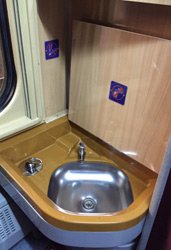
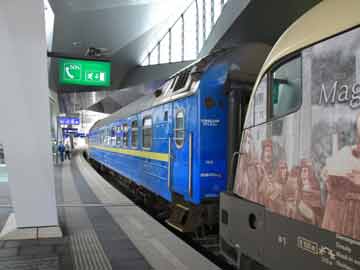
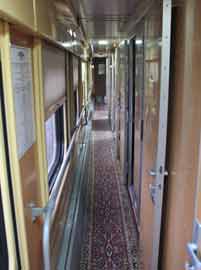
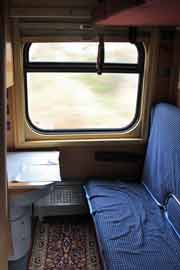
There are usually two direct Ukrainian sleeping-cars with comfortable 1, 2 & 3 berth compartments with washbasin, see the photos below. At Chop on the other side of the border the through sleeping-car is jacked up to have its wheelsets changed from European standard gauge (4'8½") to Russian gauge used in Ukraine (5'). There's no catering so bring your own food & drink.
Kyiv & Lviv ► London
-
Day 1, travel from Kyiv to Vienna by direct sleeping-car, leaving Kyiv at 11:20 & Lviv at 18:09 every day, arriving Vienna Hbf 08:53.
There are usually two direct sleeping-cars with 1, 2 & 3 bed compartments with washbasin, see the photos below. At Chop on the border with Hungary the through sleeping-car is jacked up to have it's wheelsets changed from Russian gauge used in Ukraine (5') to European standard gauge (4'8½").
-
Day 2, travel from Vienna to London using any option shown on the London to Austria page.
For example, you can travel from Vienna to Brussels overnight by 3-times-a-week Nightjet sleeper train then take a morning Eurostar to London (Day 3 from Kyiv).
How much does it cost?
-
For fares between London & Vienna, see the London to Austria page.
-
Booked through oebb.at:
Vienna to Kyiv costs €80.50 in a 3-berth sleeper, €90.50 in a 2-berth sleeper or €152.90 in a single sleeper.
Vienna to Lviv costs €62.10 in a 3-berth sleeper, €70.10 in a 2-berth sleeper or €119.30 in a single sleeper.
-
Booked through Polrail:
Vienna to Kyiv costs around €138 in a 3-berth sleeper €149 in a 2-berth sleeper, or €241 in a single-berth sleeper.
Vienna to Lviv costs around €120 in a 3-berth sleeper €129 in a 2-berth sleeper, or €207 in a single-berth sleeper.
How to buy tickets
-
Step 1, book from London to Vienna as shown on the London to Austria page.
-
Step 2, book the train from Vienna to Lviv or Kyiv at the Austrian Railways website www.oebb.at.
Booking for these direct sleeping-cars opens 20 days ahead. Tickets usually sell out a day or two after booking opens, so book as soon as the 20-day booking period opens. If the ÖBB website says Ticket not available within 20 days it means fully-booked, if it says that more than 20 days ahead it means booking isn't open yet.
Tickets can now be printed out so you can book in either direction, but they cannot be shown on a mobile device.
What's the journey like?
Train travel in Ukraine
 |
 |
||
|
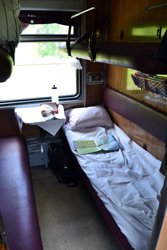
Kupé. Lockable 4-berth compartments. This is an older train - newer coaches have more modern compartments. Courtesy David Smith |
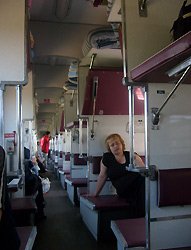
Platskartny. 54 bunks per coach, arranged open-plan in bays of 4 (left of photo) & longitudinal bays of 2 above & below the window (right of photo). Courtesy David Smith |
||
 |
|||
|
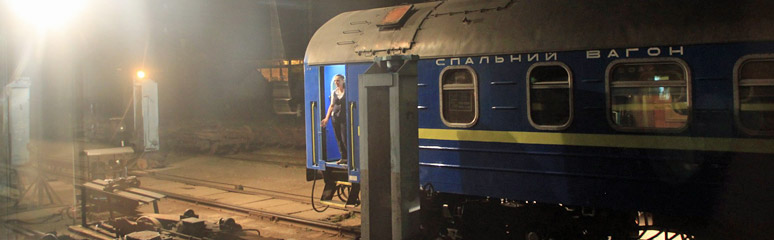
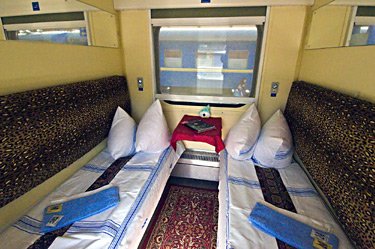
Spalny vagon 2-berth, with two lower berths. This is on the overnight Lviv to Kyiv train. Courtesy of Tim Makins |
|||
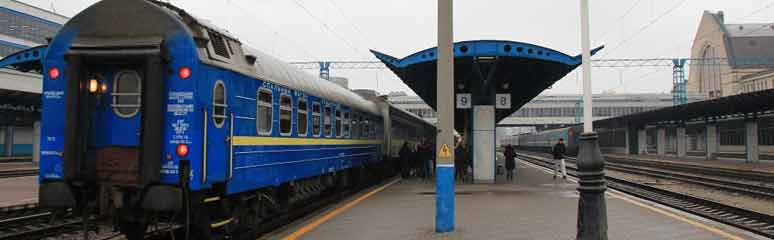
Classic Ukrainian sleeper trains offer the normal 'Russian' range of sleeping accommodation:
-
Spalny Wagon 2-berth compartments (1st class). Some trains have Russian-style compartments with both beds at the lower level, other trains use European-style cars with an upper and lower berth plus a washbasin.
-
Kupé 4-berth compartments (2nd class), 9 compartments per coach. Toilets and washrooms are at the end of the corridor.
-
Platskartny open-plan dormitory cars (3rd class). Bunks are arranged in bays of four on one side of the aisle, in bays of 2 alongside the coach wall on the other side of the aisle, 54 bunks per coach.
Whichever class of travel you choose, each coach is looked after by a pair of attendants called a providnyk (male) or providnytsia (female). The providnyk will check your ticket at the door to the sleeper when you board. Shortly after departure, the providnyk will come round to take your ticket. You may be asked if you would like a glass of black Ukrainian tea ('chai') - this costs about 10 Hyrvnia, about 30p/€0.35. Bedding (two sheets, pillowcase and towel) is then handed out in sealed packs - blankets and mattresses will already be stacked in your compartment. After a few journeys, you will become quite proficient at making up your bed!
A samovar with unlimited free hot water is available at the end of the corridor - pack some tea or coffee, sugar, cuppa soups or water-based drinking chocolate and bring your own mug. Most long distance trains have a restaurant car serving drinks, snacks, and inexpensive full meals - reckon on less than £6 for two courses and a couple of bottles of beer.
There is no need to worry about security on Ukrainian trains, it's the way Ukrainians themselves travel, including families and women travelling alone. Just use the same common sense that you would use anywhere, use the locks on your compartment door at night and don't leave valuables unattended. In addition to the normal lock on the compartment door, spalny vagon and kupé compartments have a security latch which stops the door opening more than an inch or two, and which cannot be released from outside. There's also a safe place for your bags at night - if you have a bottom bunk, there is a metal box underneath the bunk which you can only get to by lifting up the bunk - in other words, for anyone to get to your bags, they will have to shift you off your bunk first!
Fast InterCity+ trains
Fast air-conditioned day trains branded InterCity+ (IC+) link a number of Ukrainian cities, in addition to the traditional overnight sleeper trains. These InterCity+ trains have 1st & 2nd class and a cafe-bar. For example:
-
Kyiv to Lviv: There are two fast intercity+ trains, one early morning and another early evening taking as little as 4h59, fare around 590 UAH in first class, about €18. There's also an afternoon IC train (without the '+'), which consists of older stock but with a modernised interior. There are several classic sleeper trains taking almost 8 hours, the best sleeper to take is train 91 (Kyiv-Lviv) & 92 (Lviv-Kyiv) which has 2-berth (lux) sleepers and 4-berth (kupé) sleepers.
-
Kyiv to Odessa: There's one fast InterCity+ (IC+) train leaving Kyiv late afternoon and taking 6h56, fare around 670 UAH in 1st class, about €21. There's also a classic overnight sleeper with 2-berth (lux) and 4-berth (kupé) sleepers.
To check train times use the Ukrainian Railways website booking.uz.gov.ua/en.
How to buy tickets
-
Booking opens 45 days or now sometimes 60 days in advance for any journey within, or originating within, Ukraine.
-
It's now easy to buy tickets online, as shown below. Alternatively, you can buy tickets in person at any Ukrainian railway station. If your Ukrainian or Russian isn't up to scratch, write down your requirements, using the Cyrillic (Russian) script if you can. Alternatively, to avoid the queues and any language hassles, you can book rail tickets through travel agencies, for example those located in the lobbies of certain major hotels.
 |
|
|
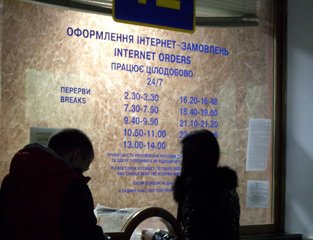
The internet ticket collection window at Kyiv station. Note the break times, so don't leave it till the last minute to collect tickets & find them closed! Though for many front-rank trains you'll now get a print-at-home e-ticket, so no need to collect. Courtesy of David Aspa. |
Buy at booking.uz.gov.ua/en
-
You can book Ukrainian train tickets direct from Ukrainian Railways (UZ, www.uz.gov.ua) at booking.uz.gov.ua/en.
You may need a Ukrainian digital signature to book with Ukrainian Railways. Foreigners can get this by uploading their passports and a photo of themselves in the Ukrainian Railways app. The process takes a few minutes and you'll be verified after a few hours.
-
It has a few quirky translations, but it's the cheapest way to buy tickets as there are minimal fees. Remember that Kyiv in Ukrainian is Kyiv. Suite / First-Class Sleeper means beds in 2-berth Spalny Vagon sleepers. Coupe / Coach With Compartments means beds in 4-berth kupé sleepers. Berth/Third-Class Sleeper means Platskartny open-plan bunks. InterCity trains are clearly marked in the search results.
-
At the end of the booking you might get a print-at-home e-ticket for some trains which you can just print and board the train, or for other trains you might get a voucher which must be exchanged for a ticket at the station before departure, for example in Kyiv main station there's a collection counter at window 12, hall 4 in the old wing of the station, with a self-service collection machine installed there too. Just read the confirmation page carefully to see what you have to do once you have made your booking.
-
Several seat61 correspondents have successfully used this to book tickets, using UK or other non-Ukrainian credit cards. Feedback if you use this service would be appreciated!
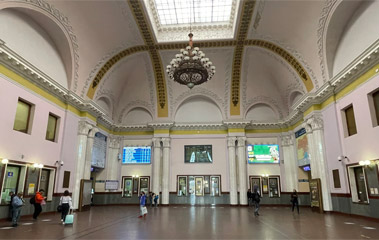
Kyiv station
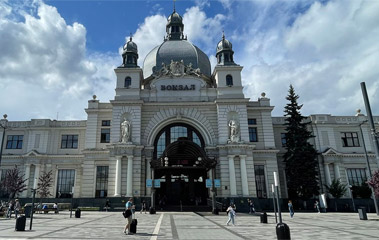
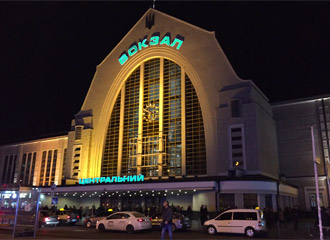
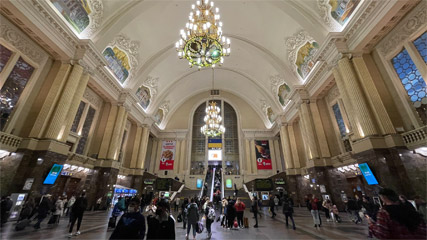
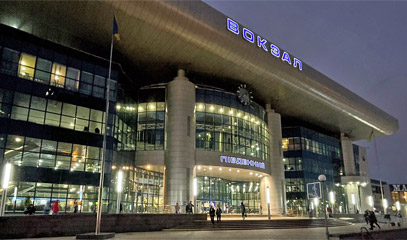
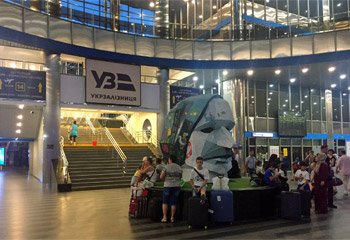
Kyiv has one main central station, usually known as plain Kyiv, officially Kyiv Passazhyrsky, often abbreviated to Kyiv-Pas, see map showing location. It's one big central station but it has two terminal buildings, one each side of the tracks. The classic station building on the northern side of the tracks was built in 1949. The terminal on the southern side (sometimes misleadingly referred to as Kyiv southern station) is a striking glass-and-steel building dating from 2002. You'll find all the usual main station facilities at Kyiv-Pas. The metro station for Kyiv-Pas is called Kyiv Vokzalna.
Ferries from Ukraine
Various ferries used to run between Istanbul and Odessa, appearing and disappearing. They may or may not be operating, further feedback always appreciated!
Istanbul - Odessa ferry: www.ukrferry.com
-
Sails twice a week between Istanbul (= Haydarpasa, on eastern side of the Bosphorus) and Odessa (= Chernomorsk, just south of the city), a 23 hour voyage across the Black Sea.
-
Departure from Odessa on Tuesdays & Fridays, usually evening. Departure from Haydarpasa on Thursdays & Sundays, usually midday. You can check this at www.ukrferry.com although it takes a bit of effort. The English selector is top left.
-
The company is Ukrferry and the vessels are the Vilnius Seaways & Kaunas Seaways with a range of cabins available, fares from $90 with bunk in a shared 6-berth, deluxe private cabins also available.
-
This ferry is operating in 2017 and taking foot passengers, you can contact them to check the current status. Feedback appreciated!
-
Traveller Silvan Wyss took this ferry in July 2017:
"I booked the ferry some weeks in advance and paid 2580 UAH (€85). The online booking tool on www.ukrferry.com works quite smoothly and some moments after payment I had the confirmation in my spamfolder. Foot passengers have to check-in in an office building some kilometres from the actual port in Chornomorsk and the time for that seems to be 2pm no matter when the ship actually leaves. After some waiting me and around 15 fellow passengers were brought to the port by minibus. Here I had to go through customs and passport checks which included some waiting in not very welcoming rooms without windows. Finally at around 5pm I arrived in my cabin which I shared with another passenger, with the scheduled departure at 9pm.
During the 27 hour trip the restaurant served four meals without any choice, you just have to eat what they cook but this was perfectly OK. Apart from that there is a duty-free shop selling spirits and a bar selling drinks and some crisps at some times during the sailing. The cabin was nice with a small but very clean washroom. All information aboard the ferry, whether written or spoken is in Russian only. Foreigners sometimes really had to fight for some info in English.
While the actual cruise could be described as "boring", sailing through the Bosphorus late in the evening was very nice. Turkish immigration was rather weird with some officers entering the ship and controlling the passports in the bar area. After some more waiting time, foot passengers were then guided out of the ship and finally left alone in the middle of the desert of Haydarpasa port. Not that nice at around 1am. I decided to walk to Kadiköy, other travellers may prefer a taxi here.
Did I like it? - Well, yes. the journey itself was very nice. However, all the procedures before and after are very time consuming with little or no information and medium friendly staff. After all, it seems as if foot passengers are rather tolerated than actually welcome.
Would I recommend it? - Yes! To everyone who has the time and wants to experience something different.
 Definitely
invest in a good guidebook. For the serious
independent traveller the best guidebook is probably the Lonely Planet
or Rough Guide.
Definitely
invest in a good guidebook. For the serious
independent traveller the best guidebook is probably the Lonely Planet
or Rough Guide.
 Buy
Lonely Planet Ukraine online at Amazon.co.uk
Buy
Lonely Planet Ukraine online at Amazon.co.uk
European Rail Timetable & maps

 The
European Rail Timetable
(formerly the Thomas Cook European Timetable)
has train & ferry times for every country in Europe plus
currency & climate information. It is essential
for regular European train travellers and an inspiration for armchair
travellers. Published since 1873, it had just celebrated 140 years of
publication when Thomas Cook decided to pull the plug on their entire publishing
department, but the dedicated ex-Thomas Cook team set up a private venture and
resumed publication of the famous European Rail Timetable in March 2014.
You can buy it online at
www.amazon.co.uk (UK addresses) or
www.europeanrailtimetable.eu (shipping worldwide).
More information
on what the European Rail Timetable contains.
The
European Rail Timetable
(formerly the Thomas Cook European Timetable)
has train & ferry times for every country in Europe plus
currency & climate information. It is essential
for regular European train travellers and an inspiration for armchair
travellers. Published since 1873, it had just celebrated 140 years of
publication when Thomas Cook decided to pull the plug on their entire publishing
department, but the dedicated ex-Thomas Cook team set up a private venture and
resumed publication of the famous European Rail Timetable in March 2014.
You can buy it online at
www.amazon.co.uk (UK addresses) or
www.europeanrailtimetable.eu (shipping worldwide).
More information
on what the European Rail Timetable contains.
Rail Map Europe is the map I recommend, covering all of Europe from Portugal in the west to Moscow & Istanbul in the east, Finland in the north to Sicily & Athens in the south. Scenic routes & high-speed lines are highlighted. See an extract from the map. Buy online at www.europeanrailtimetable.eu (shipping worldwide) or at www.amazon.co.uk (UK addresses).
Suggested hotels in Ukraine
In Lviv
In Lviv, look no further than the classic & excellently-located George Hotel. Wonderful - and cheap by western standards, doubles from £36.
For something upmarket and still inexpensive go for Lviv's Grand Hotel, also classic and well located, around £90 a double.
In Kyiv
The Ibis Kyiv Station is inexpensive, gets great reviews and is just 190m from the southern exit from Kyiv Pass railway station. You may of course want to take advice on the safest areas to stay in Kyiv.

Travel insurance & other tips
|
|
|
|
|


Always take out travel insurance
You should have travel insurance with at least £1m or preferably £5m medical cover from a reliable insurer. It should cover trip cancellation and loss of cash & belongings up to a reasonable limit. An annual policy is usually cheapest even for just 2 or 3 trips a year, I have an annual policy with Staysure.co.uk myself. Just don't expect travel insurance to bail you out of every missed connection, see the advice on missed connections here. Here are some suggested insurers, I get a little commission if you buy through these links, feedback always welcome.
 www.staysure.co.uk
offers enhanced Covid-19 protection and gets 4.7 out of 5 on
Trustpilot.
www.staysure.co.uk
offers enhanced Covid-19 protection and gets 4.7 out of 5 on
Trustpilot.
www.columbusdirect.com is also a well-know brand.
 www.staysure.com/ie if you live in Ireland.
 If you live in the USA try
Travel Guard USA.
If you live in the USA try
Travel Guard USA.
|
|

Get an eSIM with mobile data package
Don't rely on WiFi, download an eSIM with a European mobile data package and stay connected. Most newer mobile phones can download a virtual SIM including iPhone 11 & later, see device compatibility list. There's no need to buy a physical SIM card! Maya.net is a reliable eSIM data retailer with a 4.5 out of 5 Trustpilot rating and a range of packages including unlimited data.
|
|

Get a VPN for safe browsing. Why you need a VPN
When travelling you may use free public WiFi which is often insecure. A VPN encrypts your connection so it's always secure, even on unsecured WiFi. It also means you can select the geographic location of the IP address you browse with, to get around geoblocking which a surprising number of websites apply. See VPNs & why you need one explained. ExpressVPN is a best buy with a 4.7 out of 5 Trustpilot ranking which I use myself - I've signed up as an ExpressVPN affiliate, and if you go with expressvpn.com using this link you should see a special deal, 3 months free with an annual subscription. I also get some commission to help support this site.
|
|

Get a Curve card for foreign travel
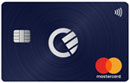
Most banks give you a poor exchange rate then add a foreign transaction fee on top. A Curve MasterCard means no foreign transaction fees and gives you the mid-market exchange rate, at least up to a certain limit, £500 per month as I write this. The money you spend on your Curve card goes straight onto one of your existing debit or credit cards. And you can get a Curve card for free.
How it works: 1. Download the Curve app for iPhone or Android. 2. Enter your details & they'll send you a Curve MasterCard - they send to the UK and most European addresses. 3. Link your existing credit & debit cards to the app, you can link up to two cards with the free version of Curve, I link my normal debit card and my normal credit card. 4. Now use the Curve MasterCard to buy things online or in person or take cash from ATMs, exactly like a normal MasterCard. Curve does the currency conversion and puts the balance in your own currency onto whichever debit or credit card is currently selected in the Curve app. You can even change your mind about which card it goes onto, within 14 days of the transaction.
I have a Curve Blue card myself, it means I can buy a coffee on a foreign station on a card without being stung by fees and lousy exchange rates, just by tapping the Curve card on their card reader. The money goes through Curve to my normal debit card and is taken directly from my account (in fact I have the Curve card set up as payment card on Apple Pay on my iPhone, so can double-click my phone, let it do Face ID then tap the reader with the phone - even easier than getting a card out). I get a little commission if you sign up to Curve, but I recommend it here because I think it's great. See details, download the app and get a Curve card, they'll give you £5 cashback through that link.
|
|

Carry an Anker powerbank
Tickets, reservations, hotel bookings and Interrail or Eurail passes are often now held on your mobile phone. You daren't let it run out of power, and you can't always rely on the phone's internal battery or on being near a power outlet. I always carry an Anker powerbank which can recharge my phone several times over. Buy from Amazon.co.uk or buy from Amazon.com.
Touring cities? Use hill walking shoes!
One of the best things I've done is swap my normal shoes for hill-walking shoes, in my case from Scarpa. They're intended for hiking across the Pennines not wandering around Florence, but the support and cushioning for hiking works equally well when you're on your feet all day exploring foreign cities. My feet used to give out first and limit my day, now the rest of me gives up before they do!