

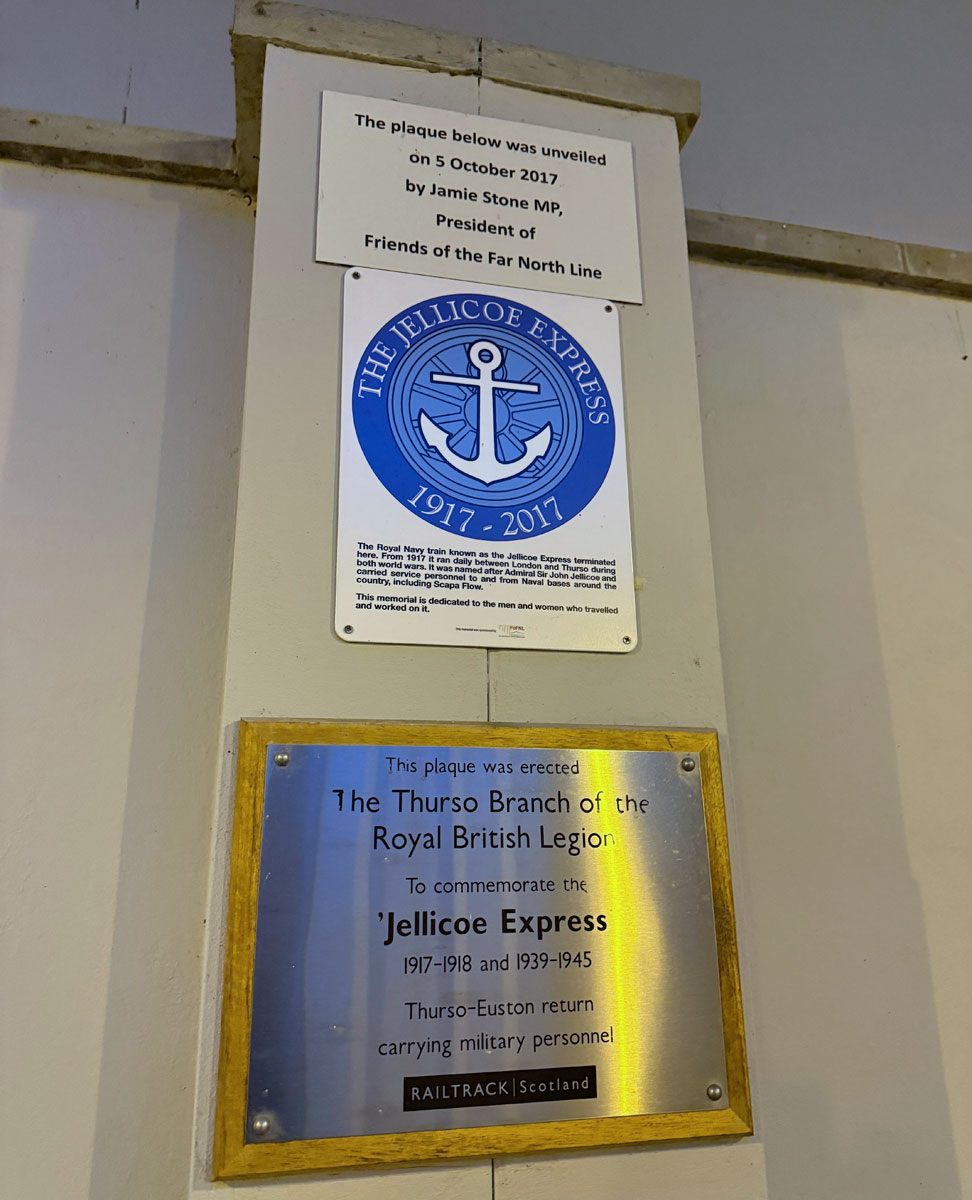
 Plaque at Thurso station |
On the trail of the Jellicoe Express
There's no need to fly! Travel the scenic and sustainable way, by train to Thurso, Britain's most northerly railway station, then by ferry from Scrabster to Stromness on Orkney with Northlink Ferries. This page explains how.
You'll be travelling in the footsteps of the wartime London to Thurso Naval Special, better known as the Jellicoe Express. This was a direct train that linked London and Thurso during both world wars, carrying military personnel to and from the naval base at Scapa Flow in Orkney. Covering 717 miles, it was the longest-ever scheduled British train. You'll see plaques commemorating the Jellicoe Express at Thurso station. More about the Jellicoe Express.
 Step 2, take the Far North Line to Thurso
Step 3, walk or taxi from Thurso to
Scrabster
Step 4, Scrabster to Stromness by
ferry
Bus X1 from Stromness to Kirkwall
Watch the video: To Orkney by train & ferry
Summary timetable
This summary shows the Caledonian Sleeper between London & Inverness, but you can also use the daytime Highland Chieftain as explained below.
An additional Inverness<>Orkney train/ferry combination is possible May-September when the lunchtime ferry operates.
This isn't the only way to Orkney, there's an alternative ferry route from Aberdeen to Kirkwall.
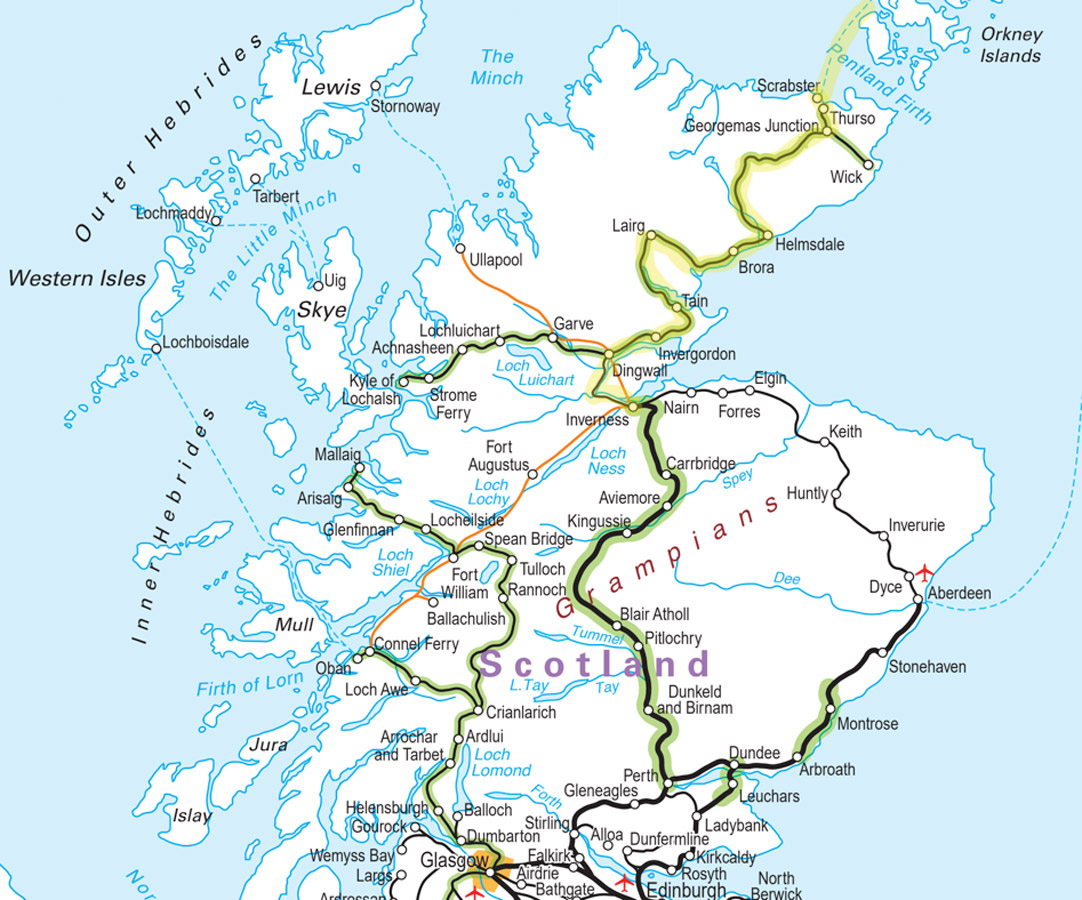
Route map
Step 1, travel to Inverness
London or Birmingham to Inverness by Caledonian Sleeper
Every night except Saturday night, the famous Caledonian Sleeper leaves London Euston around 21:00, picking up at Birmingham International and Crewe, arriving Inverness at 08:45 next morning. Southbound, it leaves Inverness at 20:45 Monday-Friday, 20:20 Sundays, arriving London Euston at 08:00. Some rooms have shower & toilet, the Caledonian Double rooms even feature a double bed. Read more about the Caledonian Sleeper here.
Buy sleeper tickets at www.sleeper.scot.
When the sleeper arrives in Inverness, if you've a Club or Caledonian Double room you can use the Caledonian Sleeper lounge until 10:30, just before the Far North Line train to Thurso leaves. The lounge is just across the road from Inverness station's main exit. It has toilets & showers, and offers complimentary tea, coffee, biscuits and soft drinks. Southbound, you can use it for 2h before the sleeper leaves.
Or take a daytime train from London, York, Newcastle...
From London, LNER's Highland Chieftain leaves London Kings Cross around 12:00, York around 14:00 & Newcastle around 15:00, arriving Inverness around 20:00. It runs from London to Edinburgh with plenty to see on the way, then continues over the scenic Highland Line to reach Inverness. Southbound, the Highland Chieftain leaves Inverness daily at around 07:55 for Newcastle, York & London, reaching London Kings Cross around 16:00. Check current train times and buy tickets at www.lner.co.uk or www.thetrainline.com. See rail network map.
You'll need to stay overnight in Inverness: The Royal Highland Hotel is inexpensive and right next to the station, handy for arrival and departure. Built by the Highland Railway in 1856 as the station hotel, it features a Victorian grand staircase said to have inspired the grand staircase on RMS Titanic.
Or take a daytime train Edinburgh or Glasgow...
On Mondays-Saturdays you can leave Edinburgh Waverley at 08:38 or Glasgow Queen Street at 10:08, change at Inverness, reaching Thurso in time for the evening ferry to Orkney. This means taking the later 14:00 train from Inverness to Thurso so you'll need to pre-book a taxi to Scrabster, see steps 2 & 3 below. Check current train times and buy tickets at www.scotrail.co.uk or www.thetrainline.com.
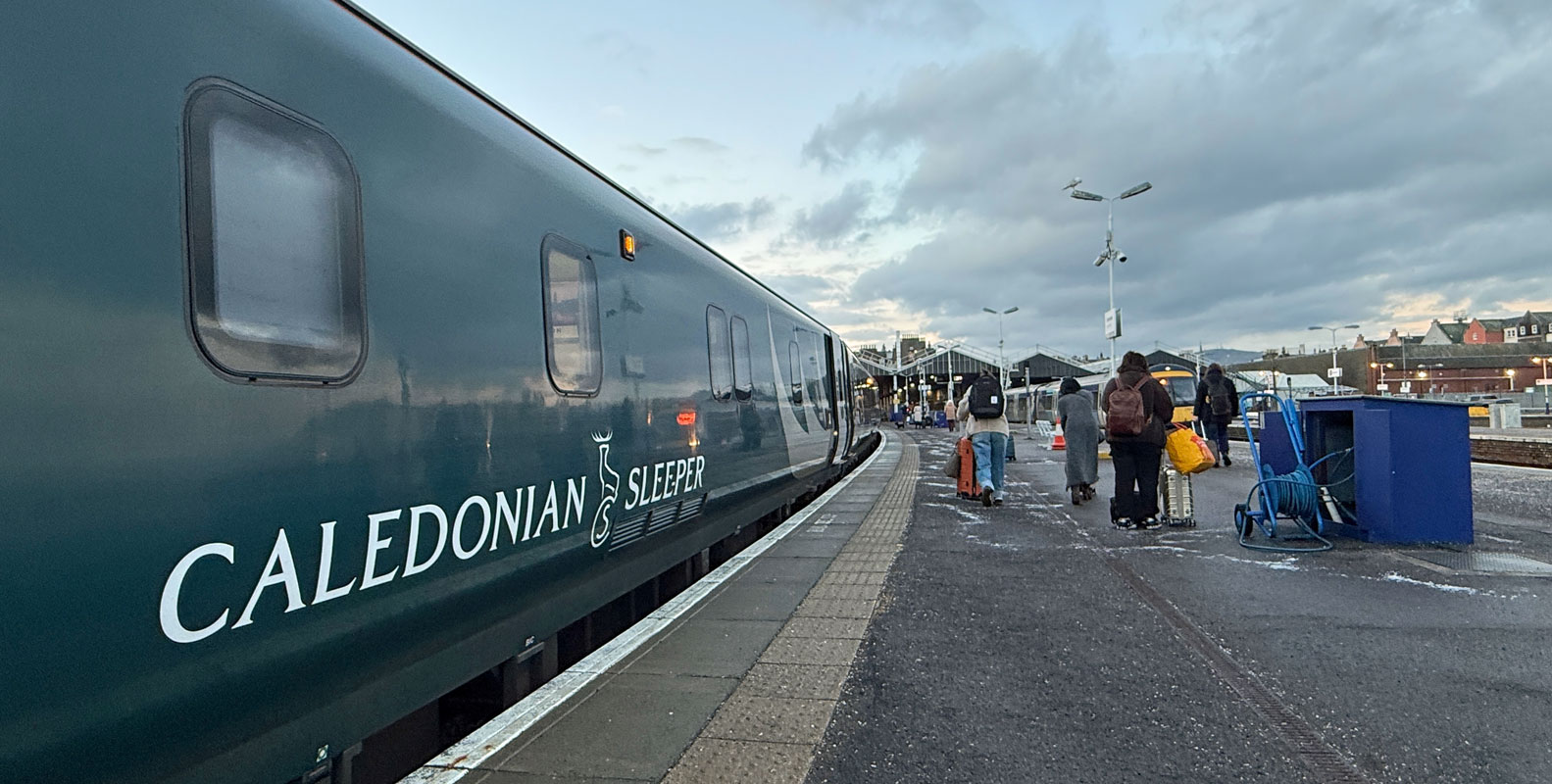
Above, the Caledonian Sleeper from London, arrived in Inverness right on time. The sleeper always uses platform 1.
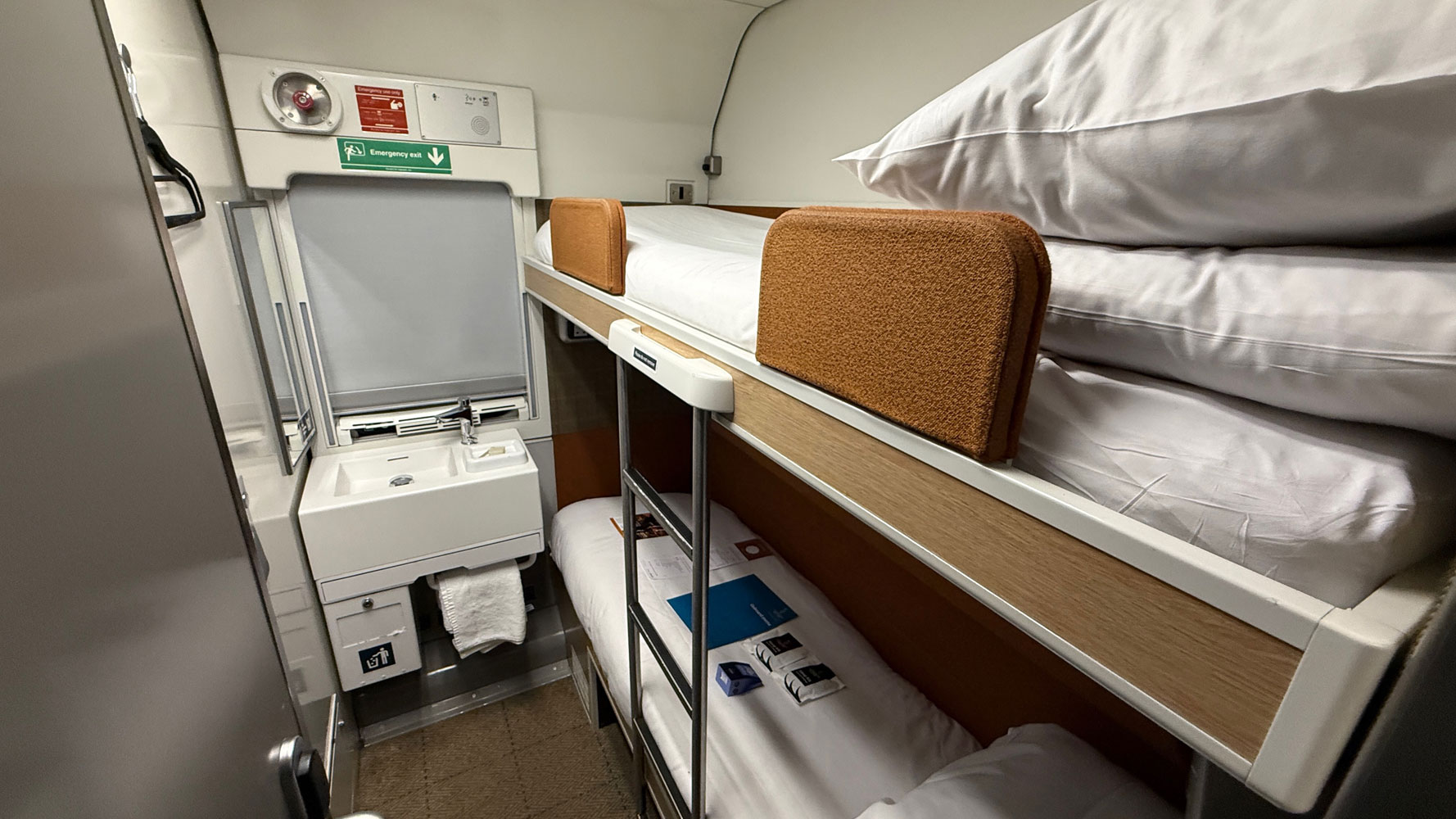
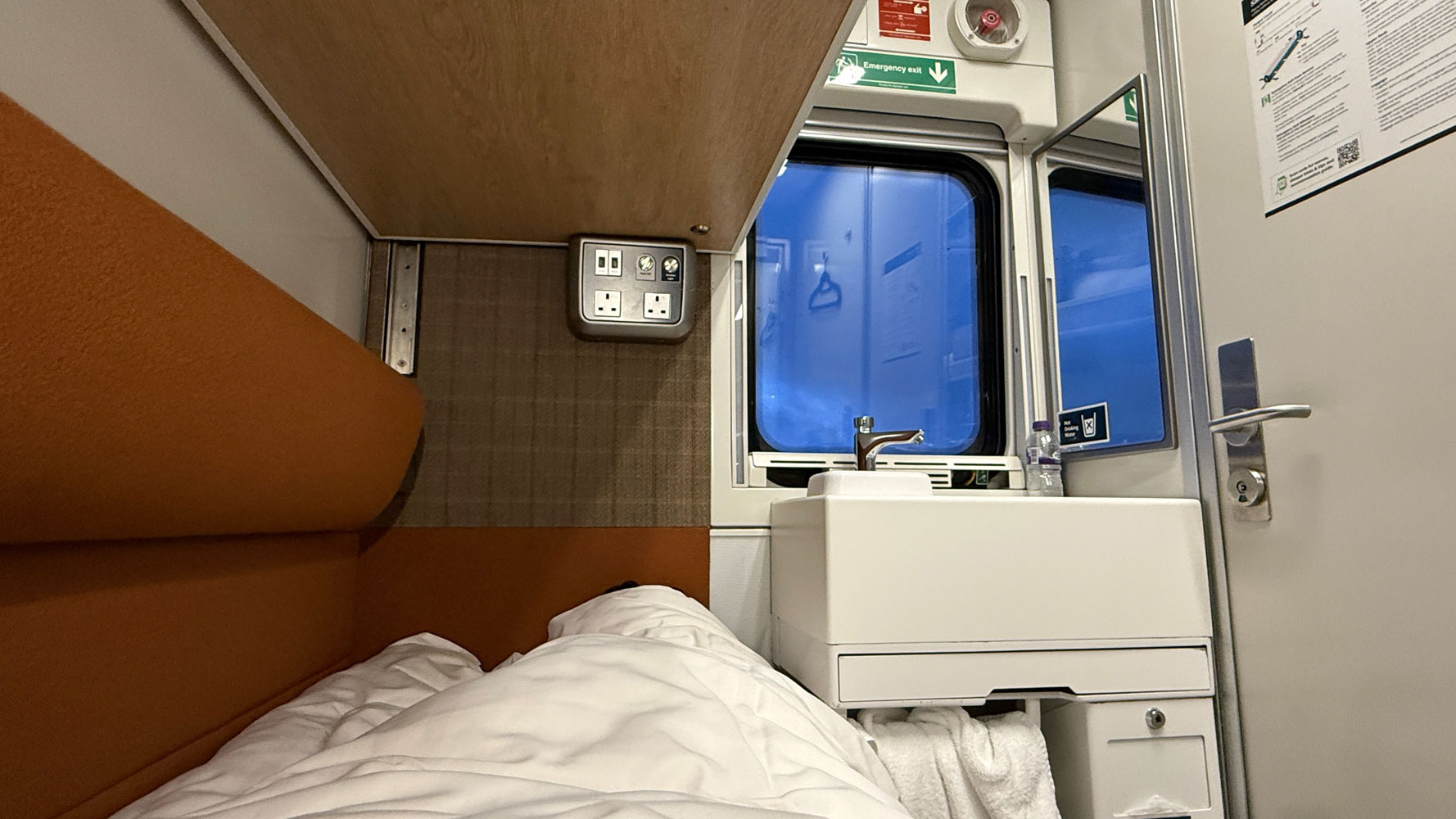
Above, a 1 or 2 berth Club room on the Caledonian Sleeper to Inverness.
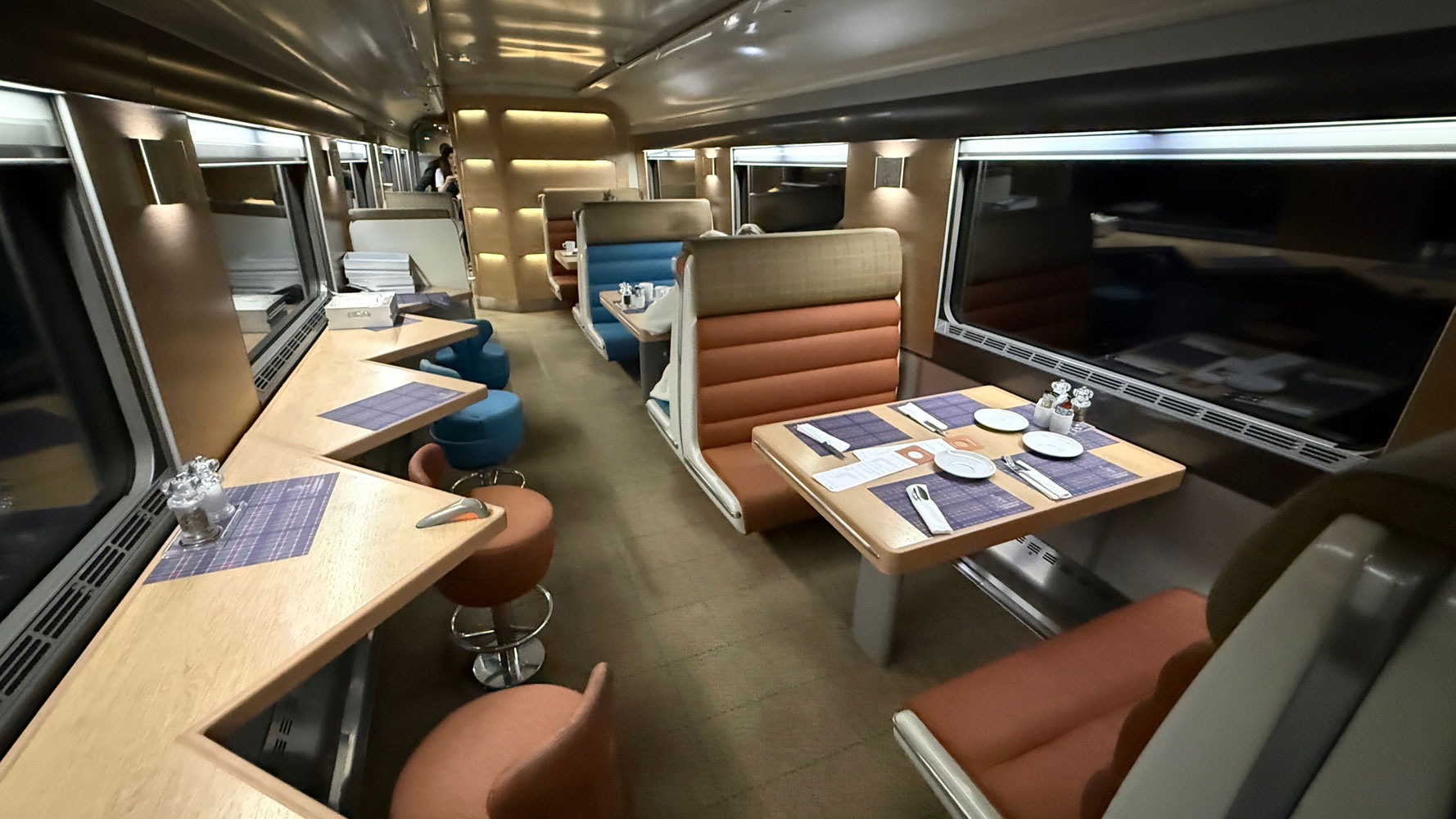
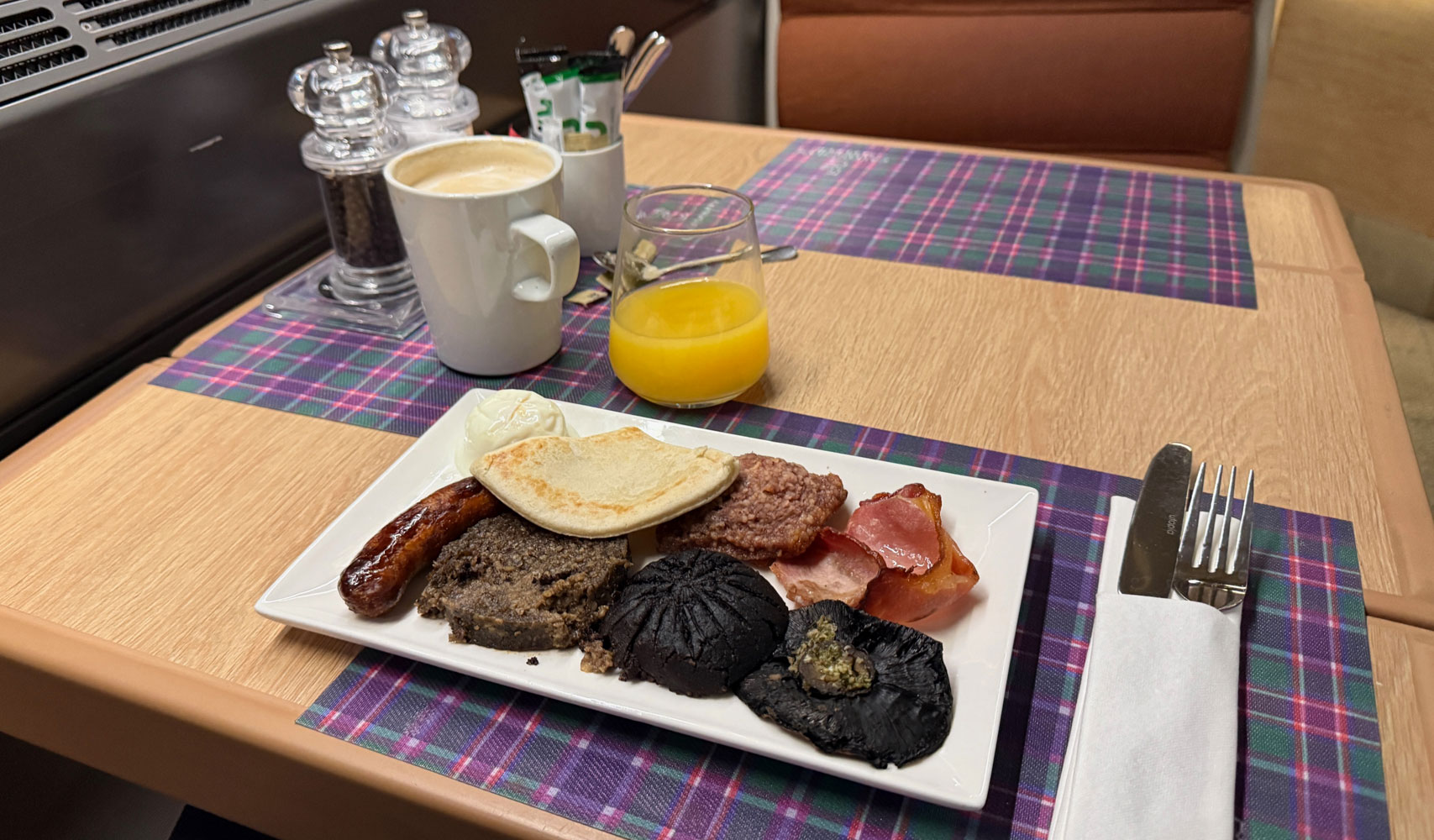
Above left, the sleeper's club car, I recommend the haggis, neeps 'n tatties. Above right, a Scottish breakfast next morning.
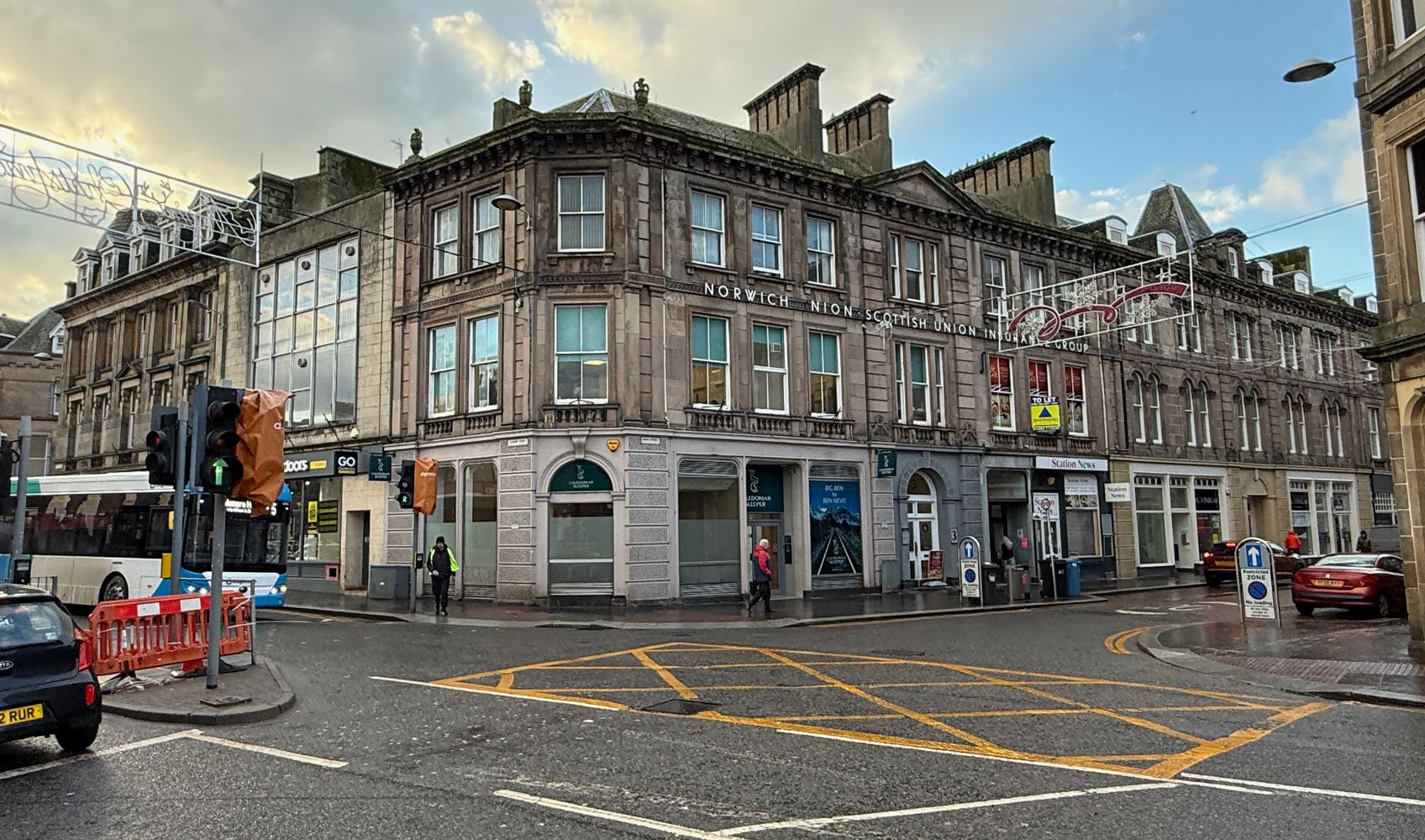
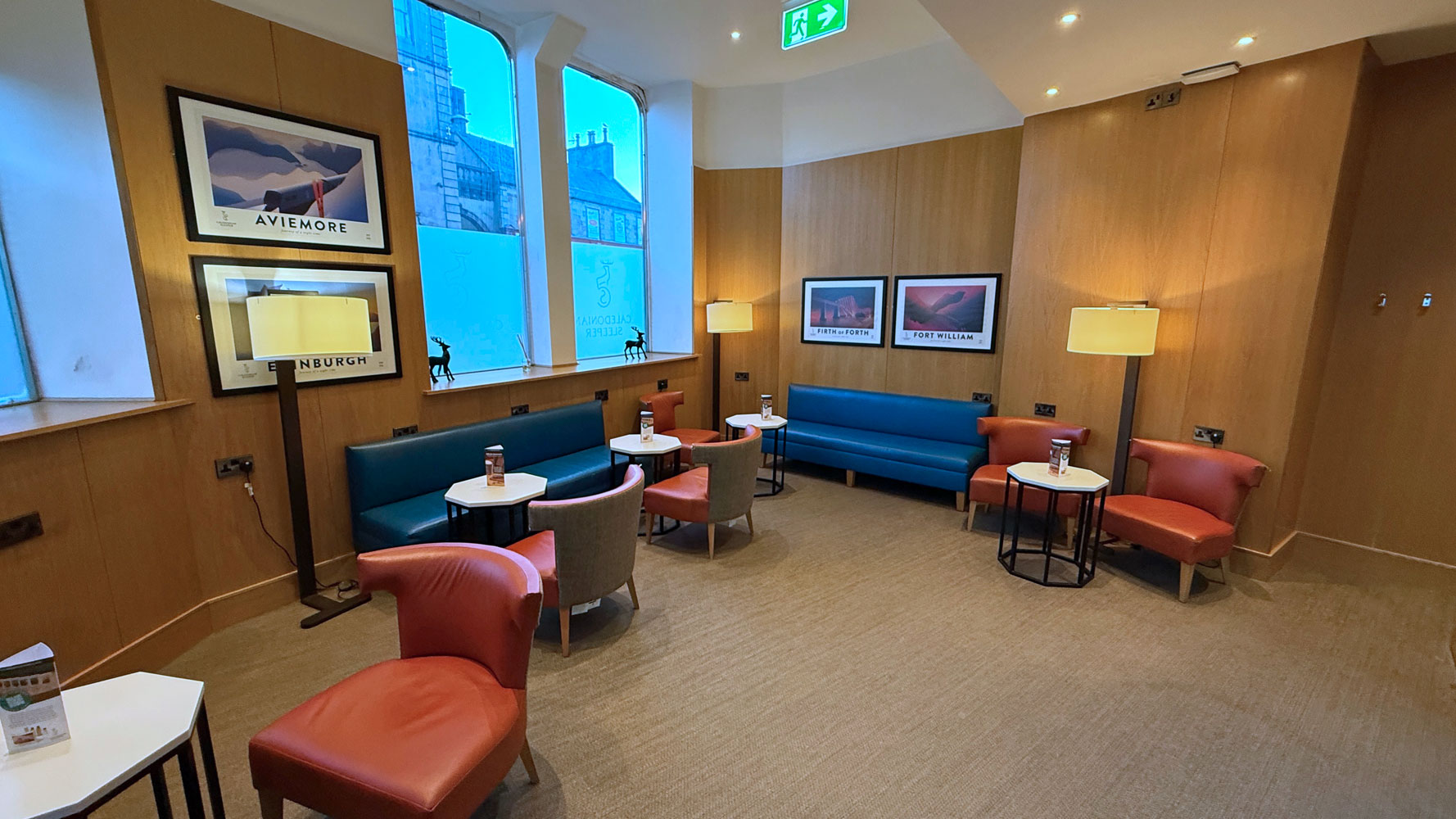
Above left, the Caledonian Sleeper lounge is in this building across the road (and to the left) from the station exit. Above right, the lounge is open to passengers in Club & Caledonian Double rooms, it can be used on arrival until just before the train to Thurso leaves. Tea, coffee, WiFi, biscuits & soft drinks. There are showers & toilets.
Step 2, take the Far North Line to Thurso
The Far North Line is Britain's most northerly branch line, completed in 1874. Trains run the 154 miles from Inverness to Thurso four times a day Monday-Saturday, once a day on Sundays. It's a comfortable and scenic ride.
A train leaves Inverness at 10:41 Monday-Saturdays, arriving Thurso 14:24, in plenty of time to connect with the evening ferry to Orkney.
A later train leaves Inverness at 14:00 Monday-Saturday, arriving Thurso 17:50, if you take this train you'll need to pre-book a taxi to Scrabster (see step 3).
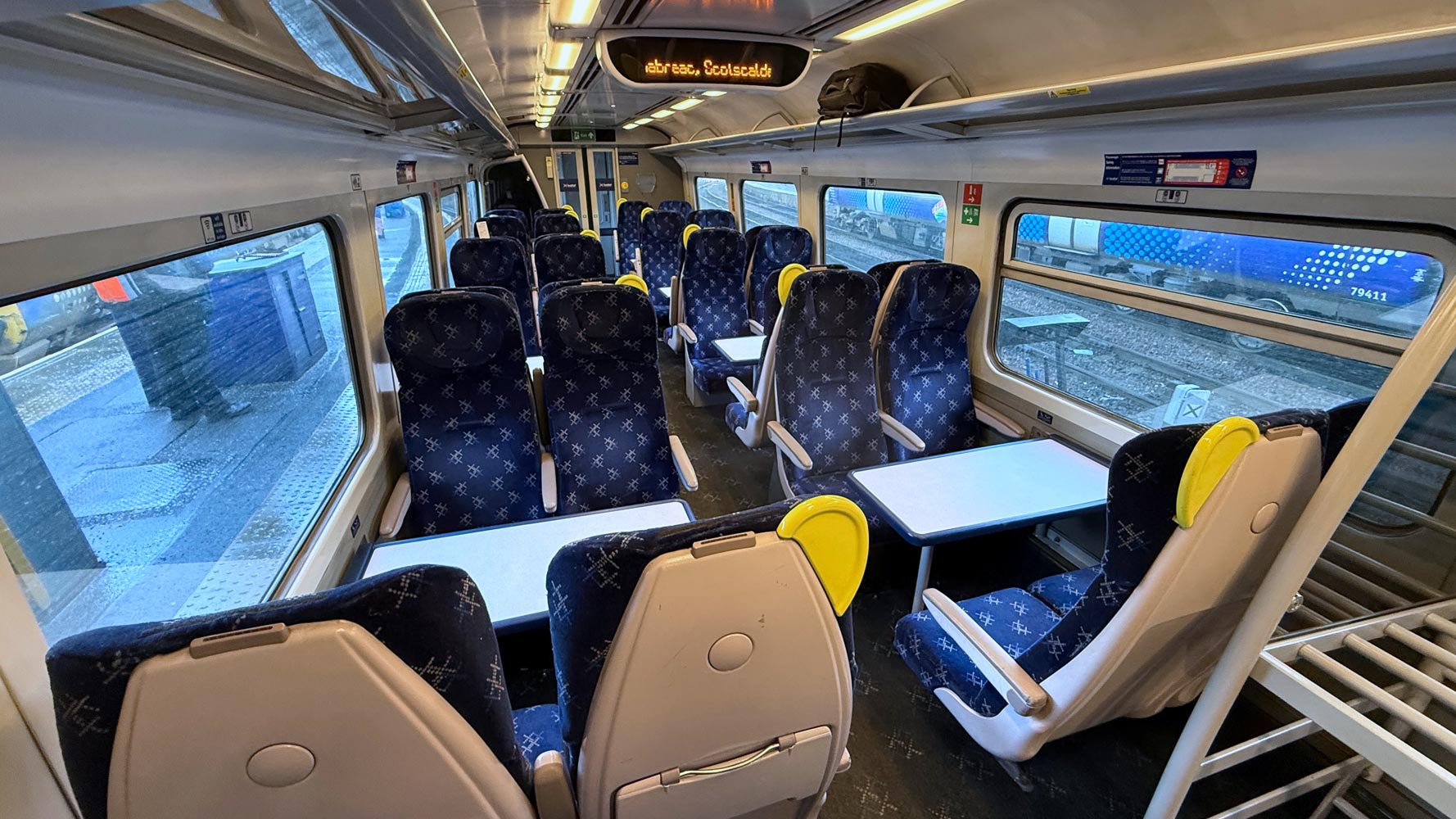
These trains are an air-conditioned 2-car units with comfortable seats, tables, toilet, luggage racks, and (usually) a refreshment trolley, although I'd play safe and take your own supplies. For the best views, sit on the right hand side of the train going north from Inverness. Going south from Thurso, you should also sit on the right hand side as the train changes direction at Georgemas Junction.
I recommend downloading this window-gazer's guide at the Friends of the Far North Line website, also see www.fnlcrp.co.uk. More about the Far North Line.
Buy tickets at www.scotrail.co.uk or www.thetrainline.com.
Tip: You can buy a fully-flexible train+ferry combined ticket from Inverness to Stromness for £46.05 Anytime one-way or £79.30 one month Anytime return by running an Inverness to Stromness enquiry at www.brfares.com and clicking Buy. It won't include a reservation on the ferry, but you can just turn up and there should always be places. The ticket is collected from the ticket machines at any main station, although cannot be collected on Orkney. There are no time restrictions on Anytime fares.
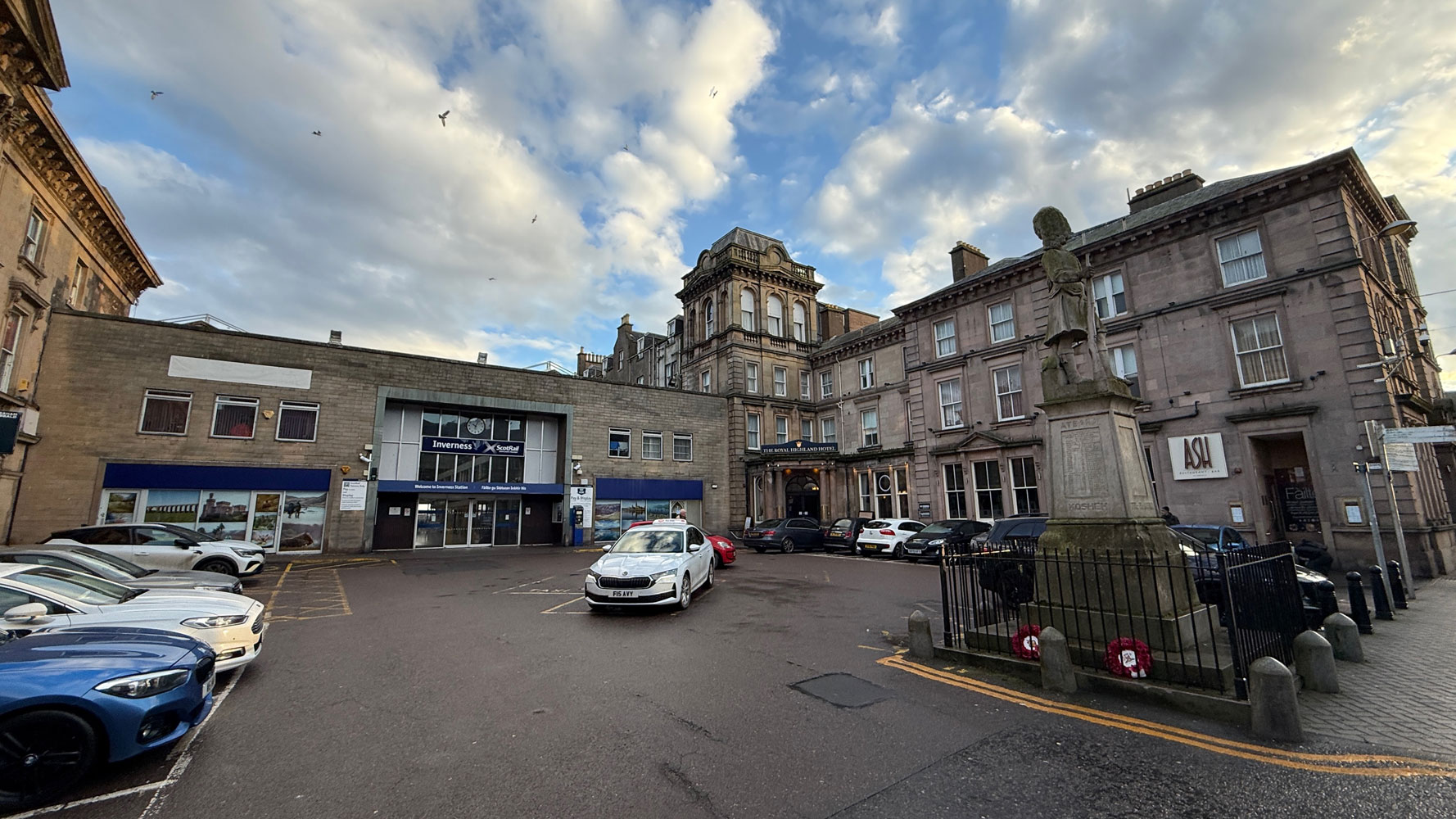
Above, Inverness station and to the right, the Royal Highland Hotel with a staircase that allegedly inspired that on RMS Titanic.
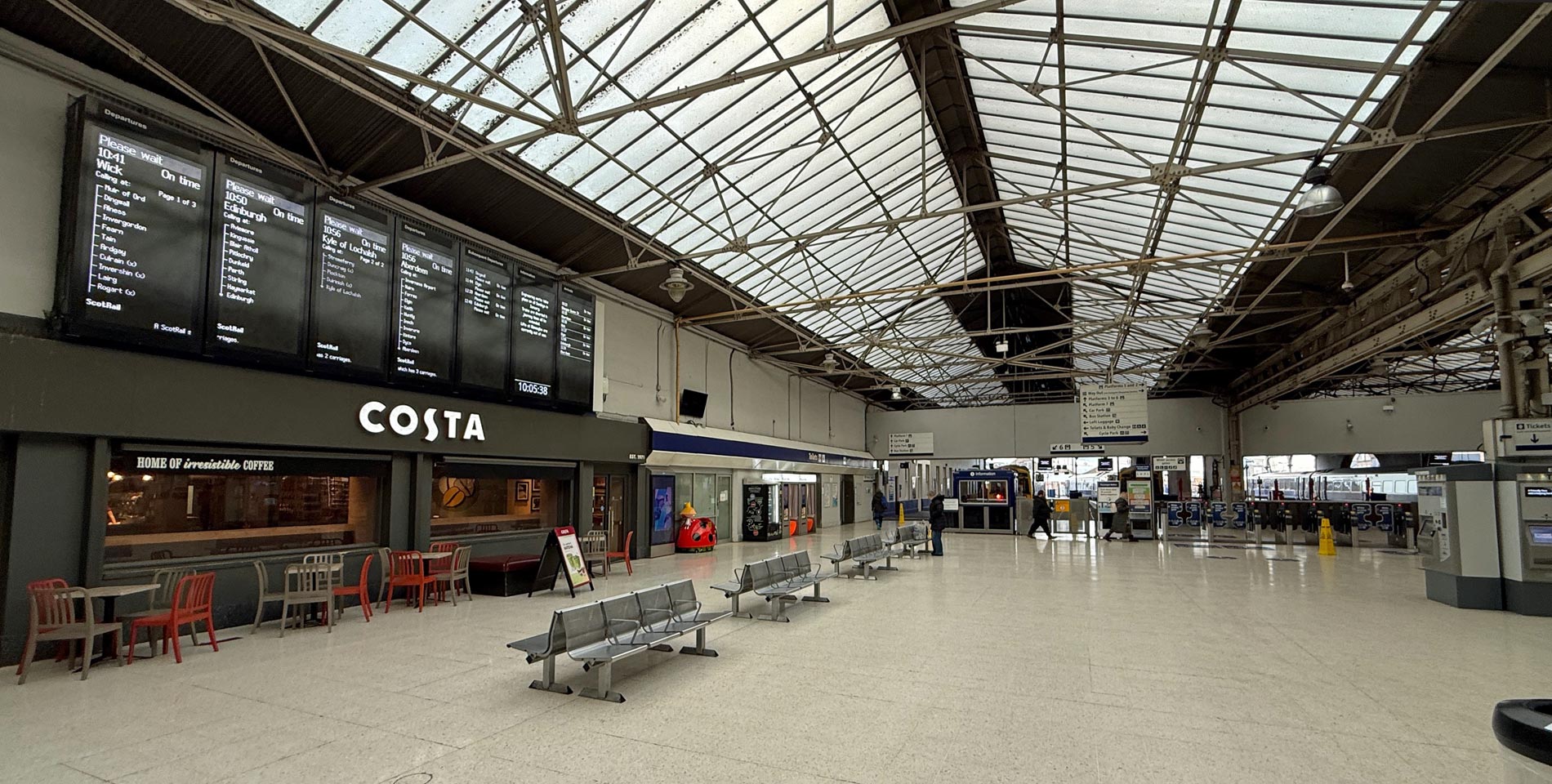
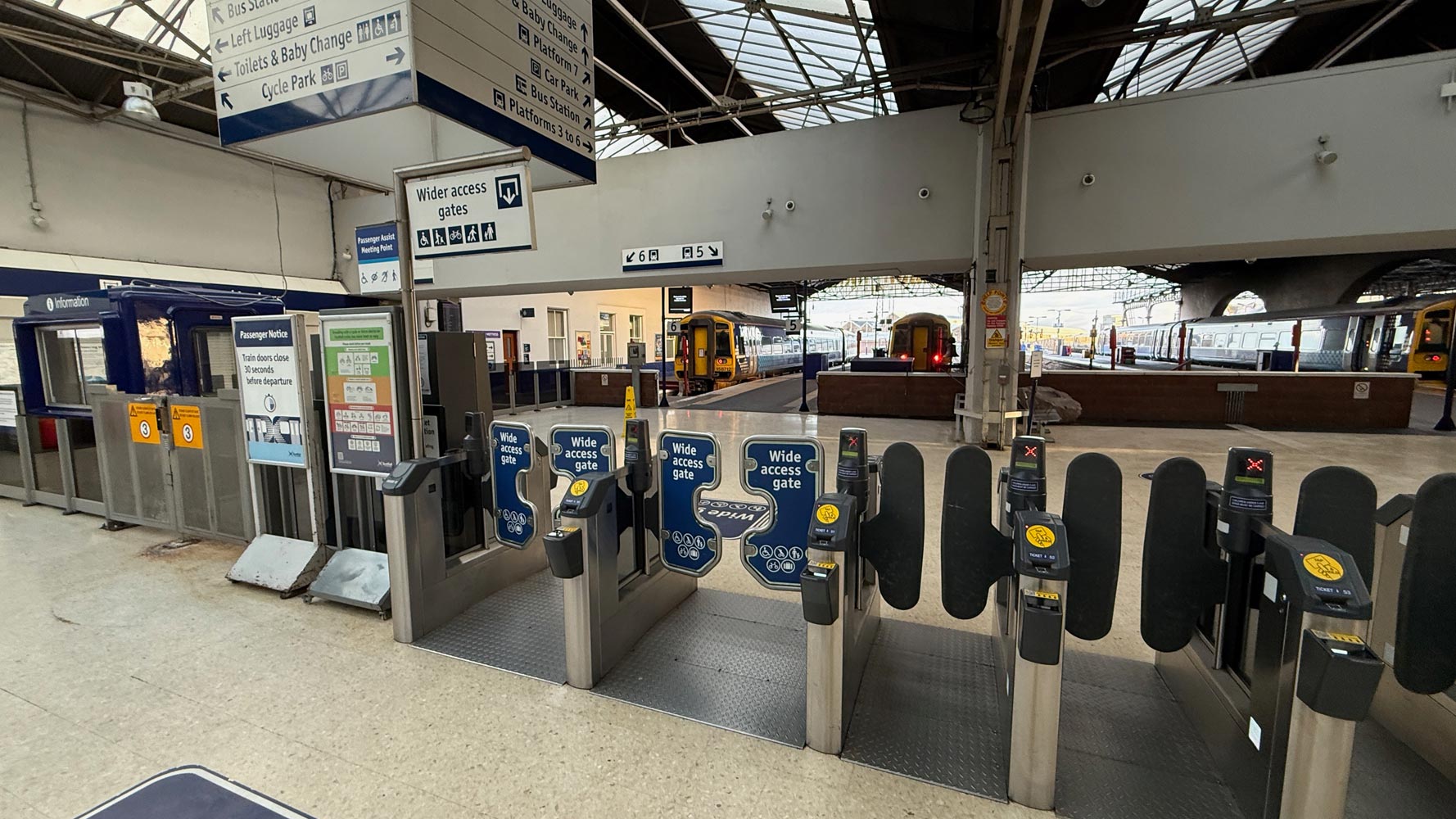
Inverness station, concourse and ticket gates.
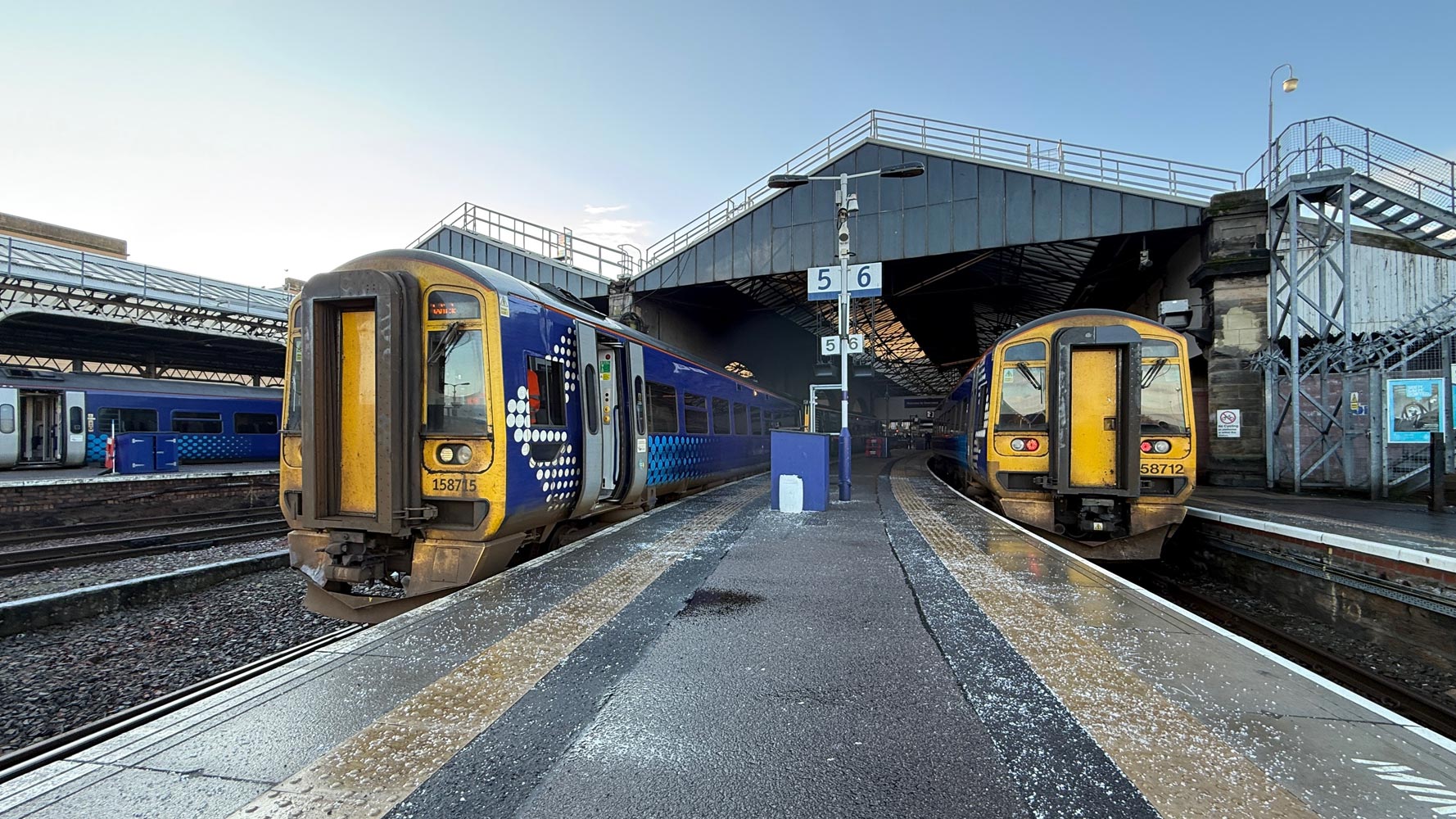
Above, the 10:41 to Thurso is ready to leave. Far North Trains typically leave from platforms 5, 6 or 7.
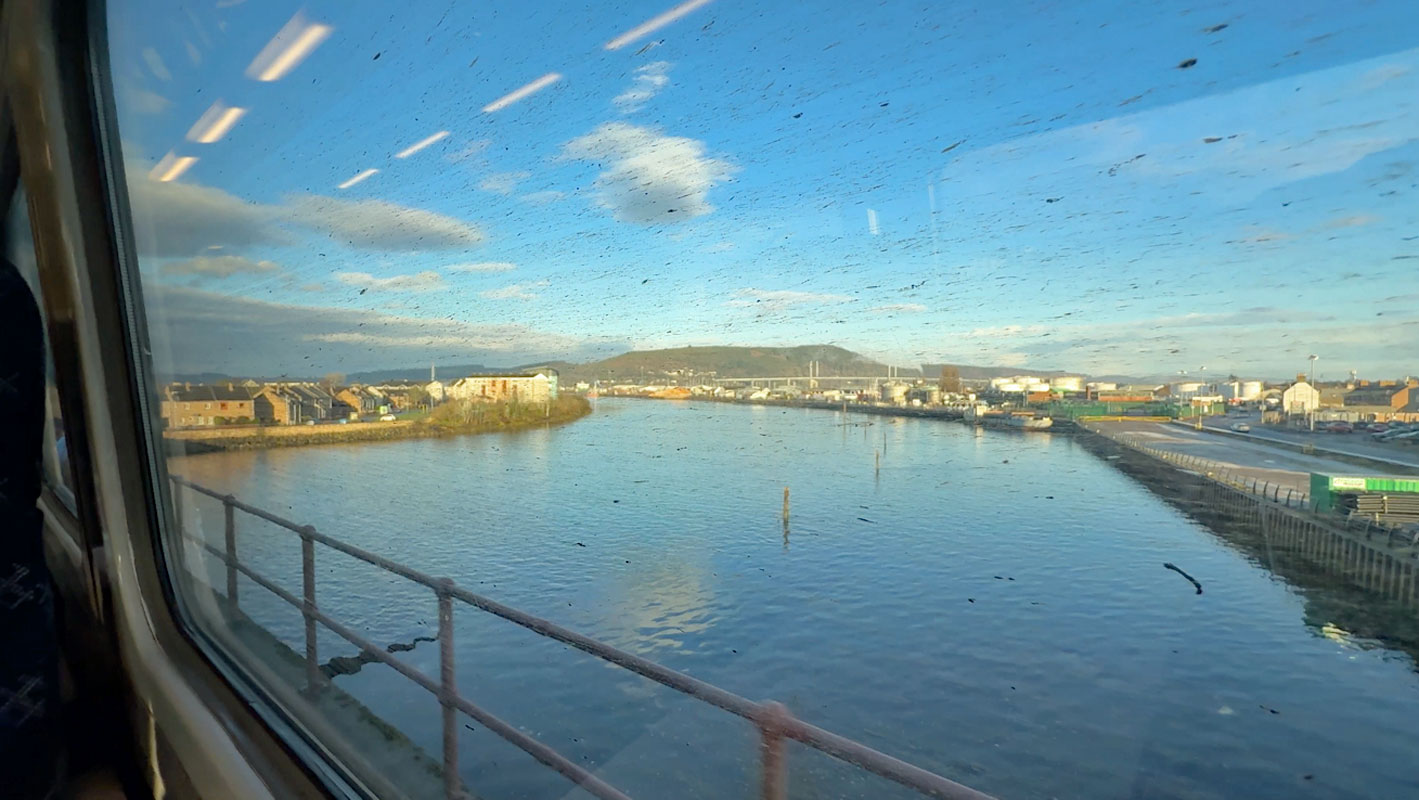
Soon after leaving Inverness station, the train crosses the River Ness (above right).
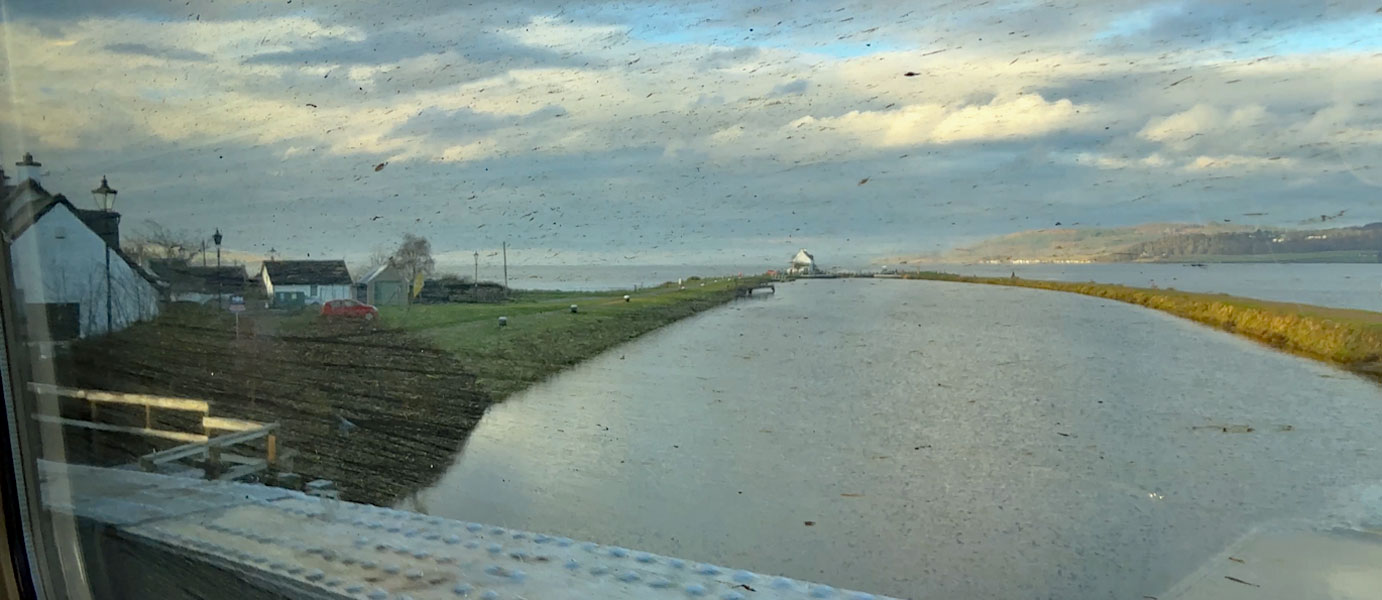
Shortly after crossing the Ness, the train crosses the Clachnaharry Swing Bridge over the Caledonian Canal, speed limit 10 mph.
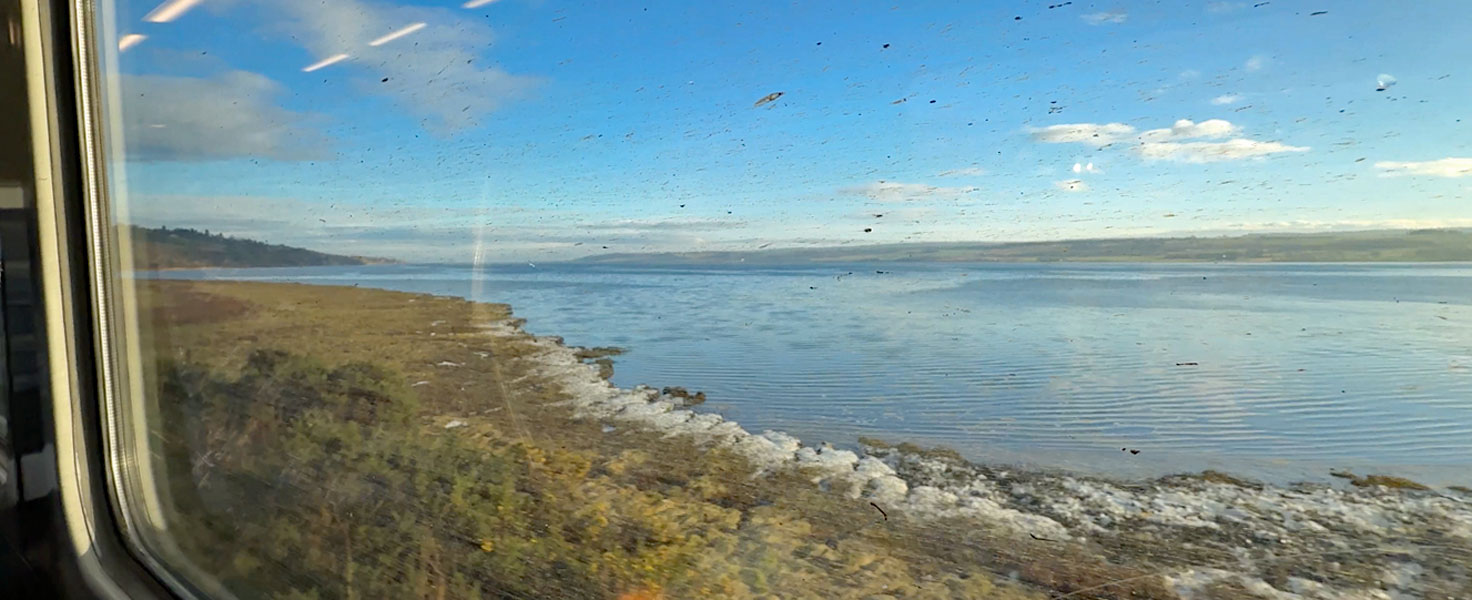
The train runs along the Beauly Firth to Muir of Ord and Dingwall, where the line to Kyle of Lochalsh diverges to the west. It then runs along Cromarty Firth.
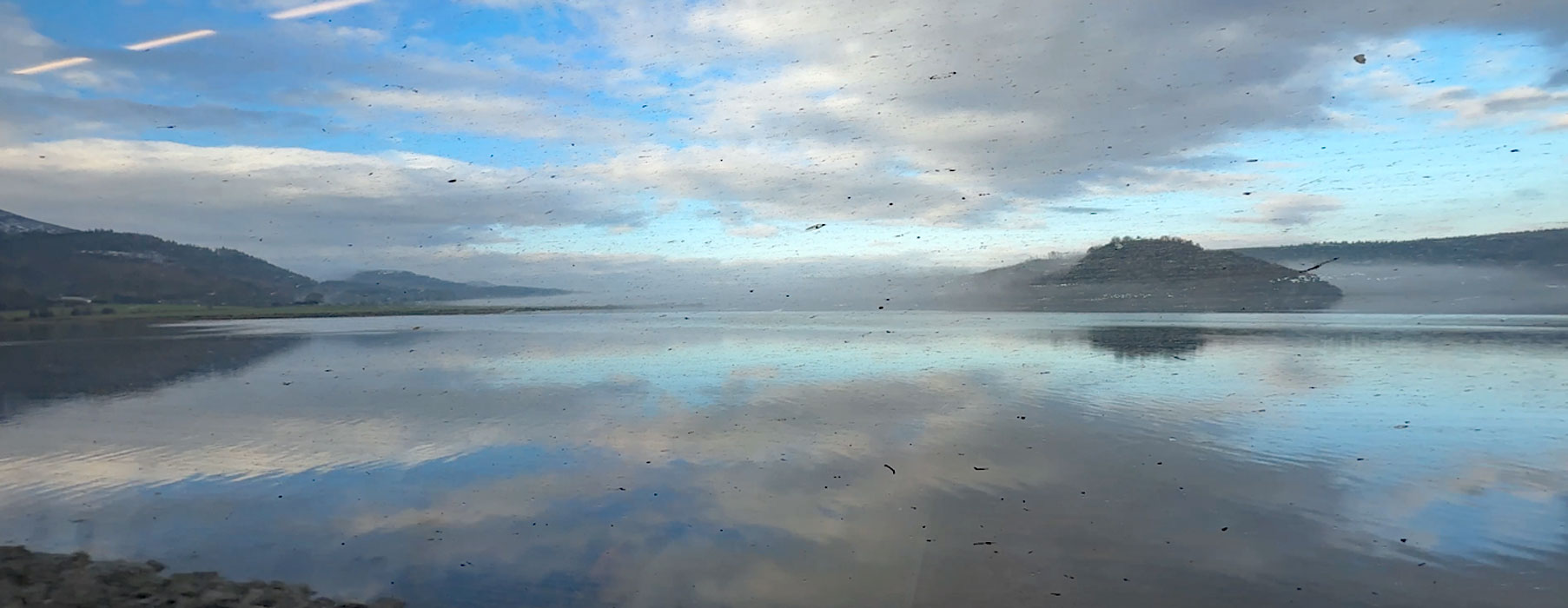
Above, the January Sun gives way to mist. At Dornoch Firth, the A9 road crosses on a modern road bridge infamously built without provision for the railway. The trains have to head inland to go around the end of the firth.
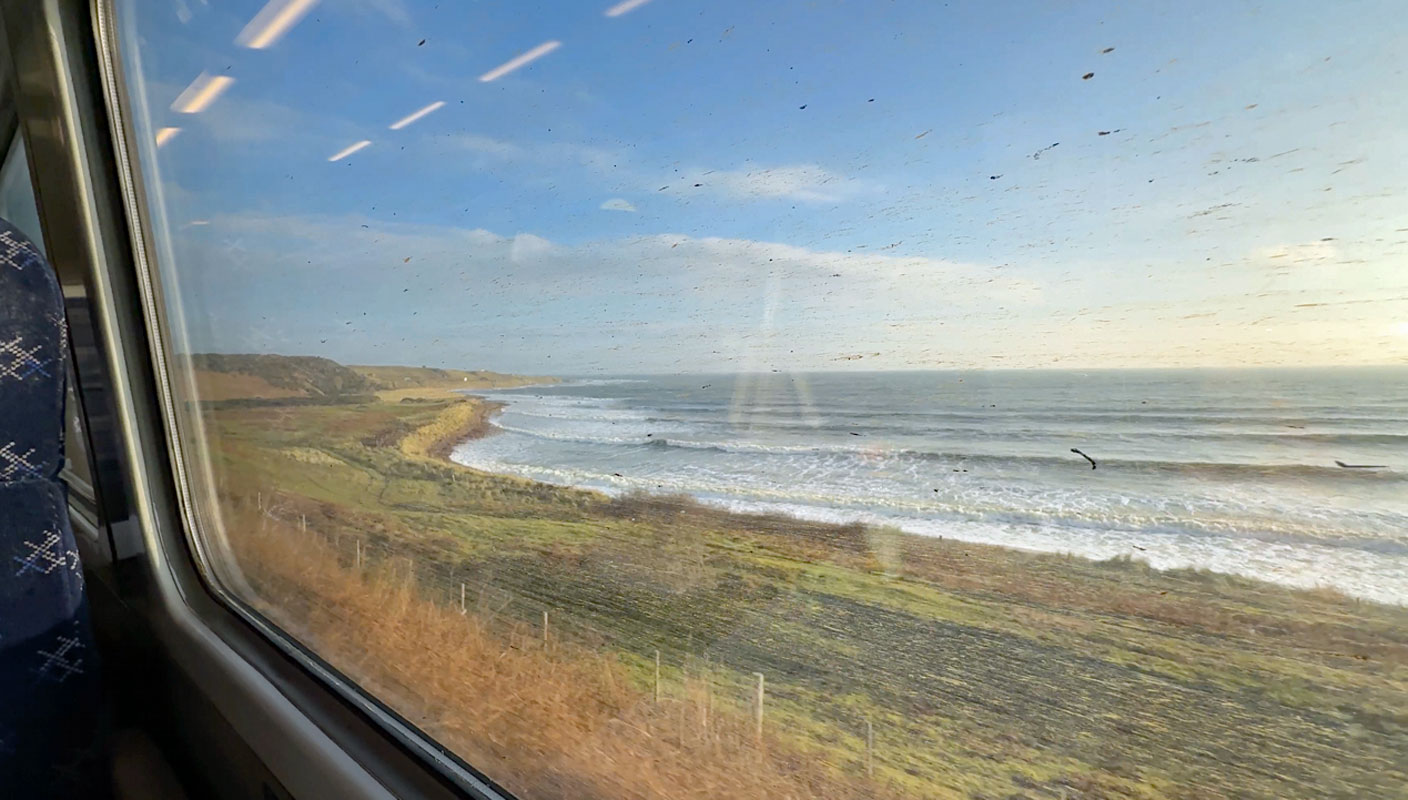
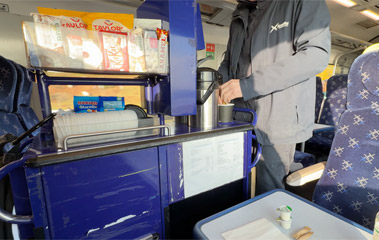
Above left, running alongside the North Sea. Above right, a welcome visit from the refreshment trolley.
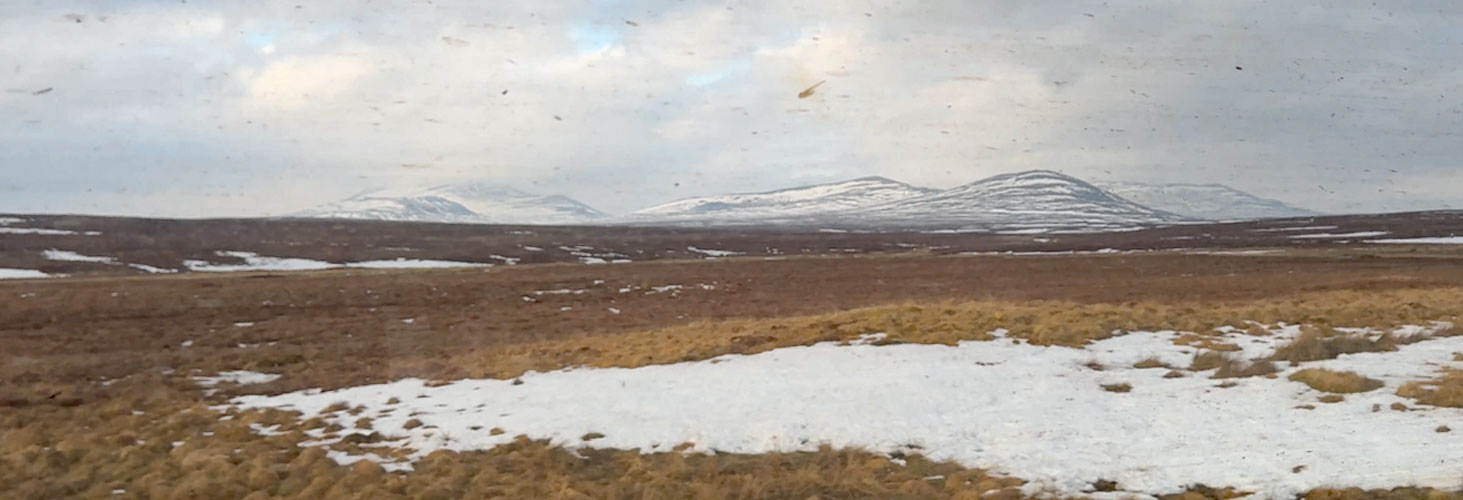
Above, snow-swept hills approaching Georgemas. At Georgemas Junction, the train changes direction and heads for Thurso. Trains on the Far North Line used to split at Georgemas Junction, one portion going to Thurso and another to Wick. Since 2000, trains run from Inverness to Georgemas Junction, then to Thurso, then back through Georgemas Junction to Wick. Similarly, Southbound trains run Wick-Georgemas-Thurso-Georgemas-Inverness.
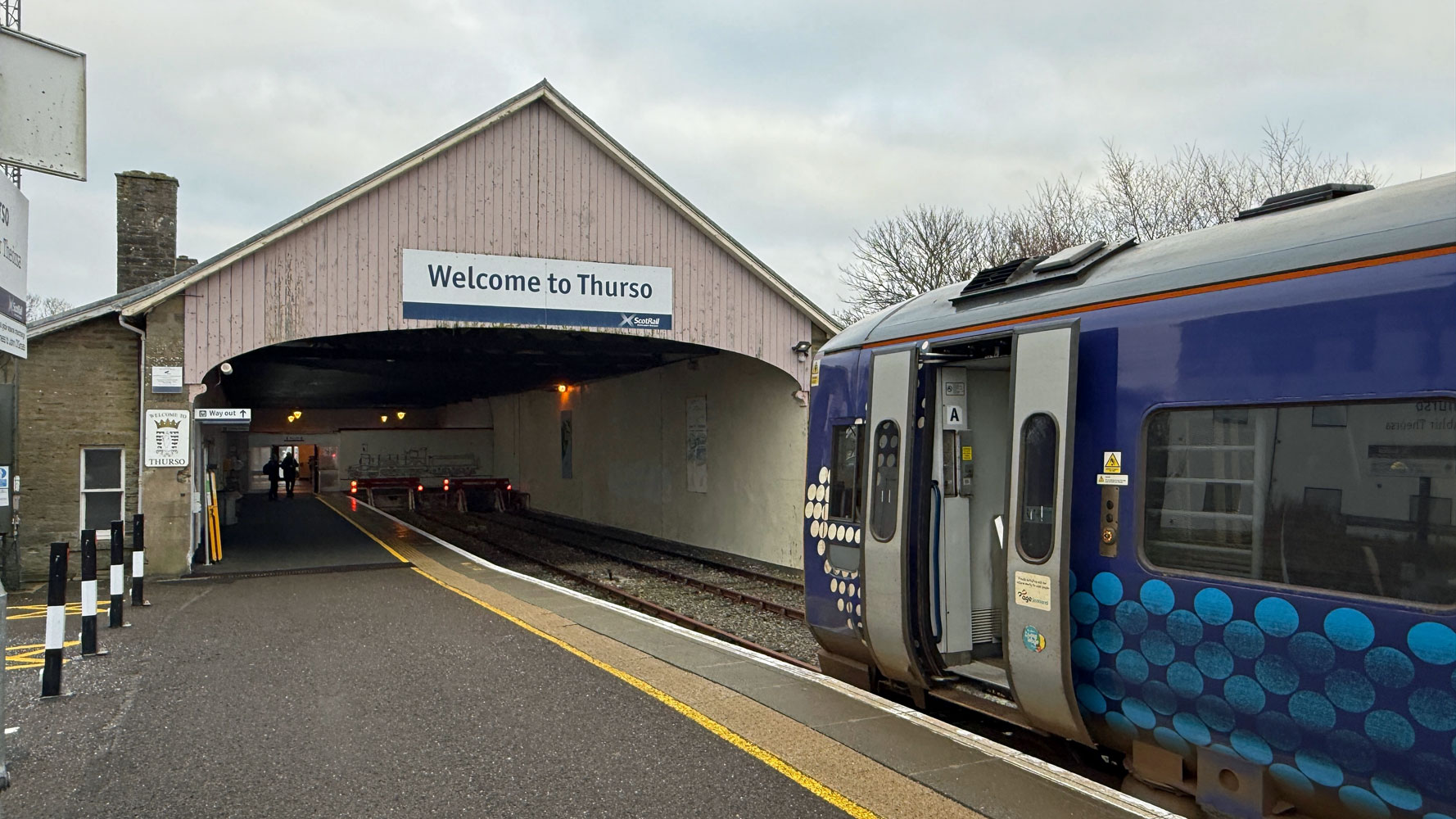
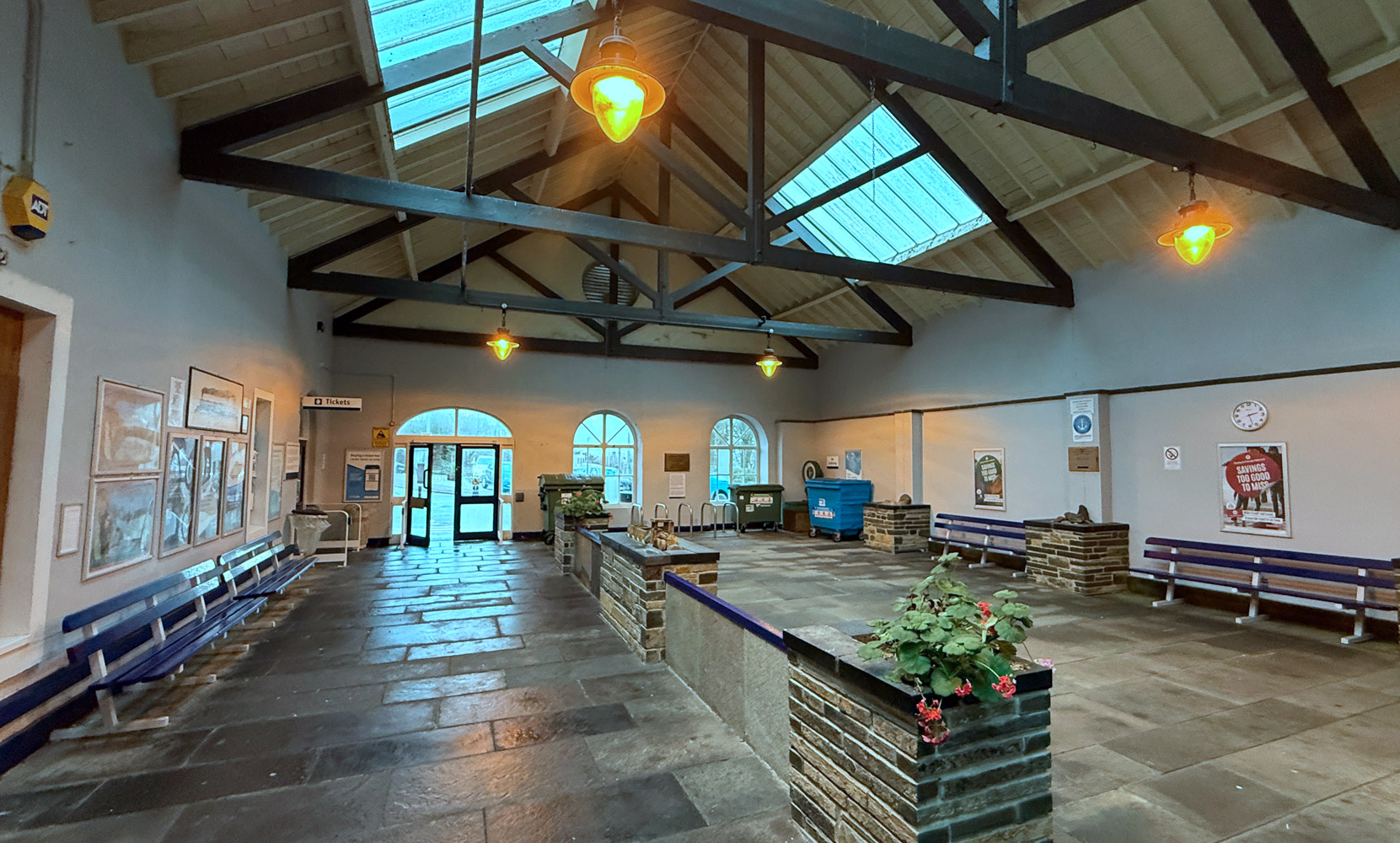
The train arrives at Thurso. Here it pauses for a minute or two before returning to Georgemas Junction and continuing to Wick.
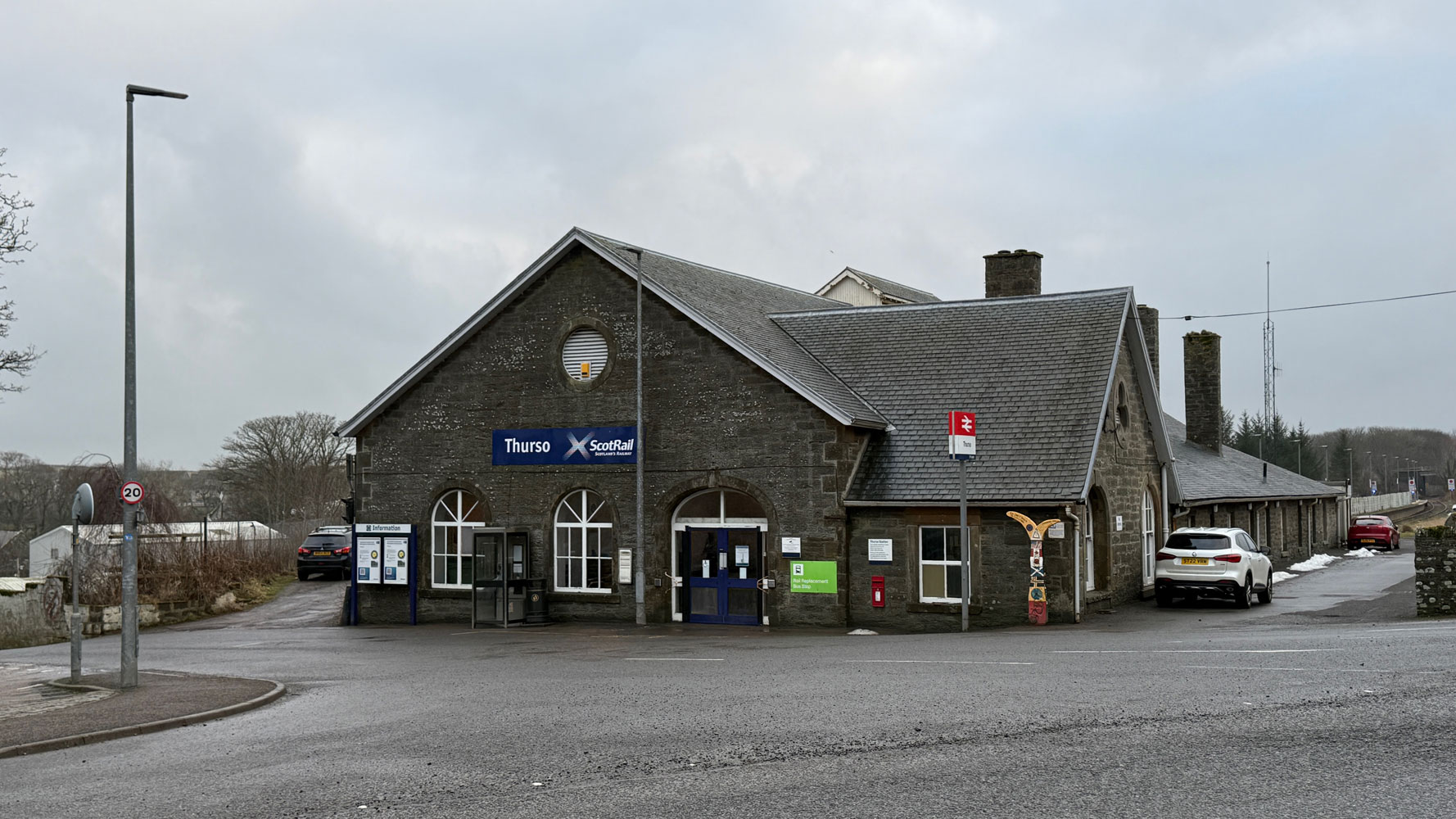
Thurso, Britain's most northerly railway station. Above right, plaques commemorating the Jellicoe Express in the main hall.
Step 3, walk or taxi from Thurso to Scrabster
In Thurso, it's a 55-minute 2.6 mile walk from the station to the ferry terminal at Scrabster. It's an easy and scenic walk, even with a bag. Google tells you to walk along the main road but it's nicer to use the cliff path, marked Victoria Walk on the map. If you took the late morning train from Inverness, you have plenty of time.
Or take a taxi, but you won't find any waiting so you should pre-book: Try Highland Taxis (www.highland.taxi) or Ormlie Taxis (www.ormlietaxis.com).
There's not a lot at Scrabster other than the harbour, freight docks, fishing boats, lifeboat and the Northlink Ferries terminal, but you can kill time if you need to with a pint or two at the Ferry Inn, see location map. The Ferry Inn has accommodation if you need to stay in Scrabster.
Foot passengers check in at the new Northlink Ferries terminal at the far end of the harbour area. Ignore the old Northlink Ferries terminal building just beyond the Ferry Inn, keep going to the furthest pier!
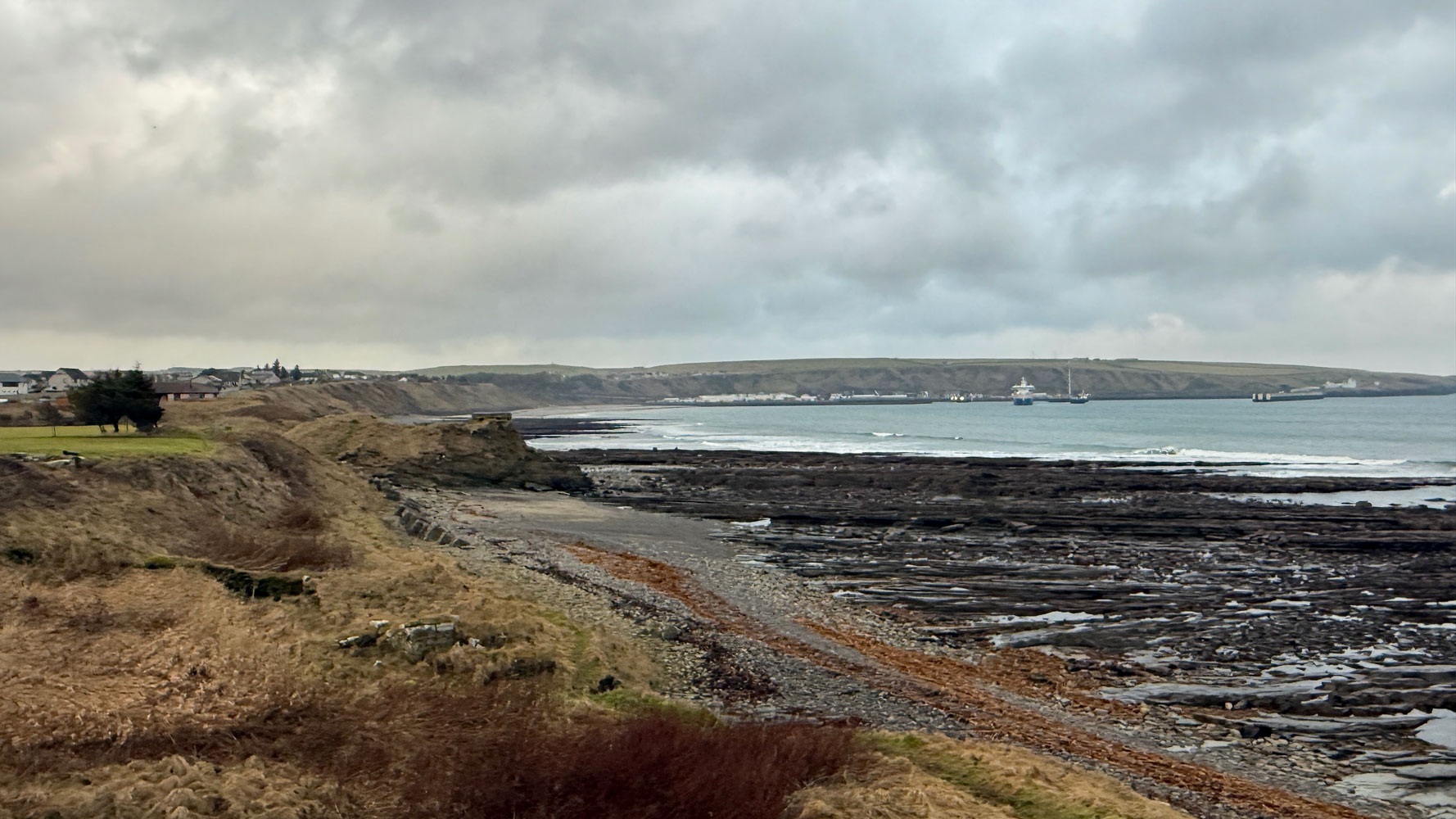
Above, walking from Thurso to Scrabster. I've just left Thurso on the cliff walk, you can see Scrabster in the distance, 2 miles away.
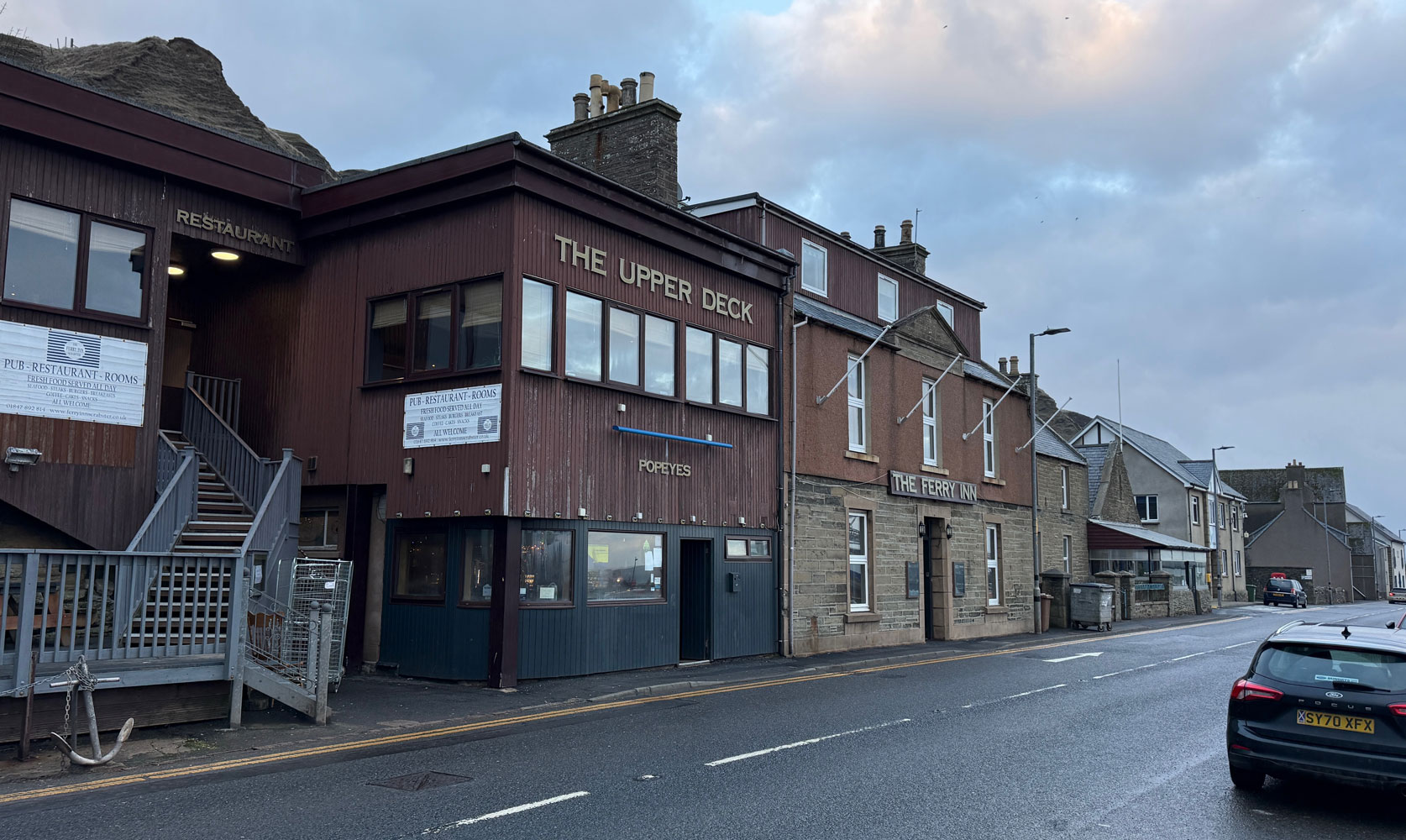
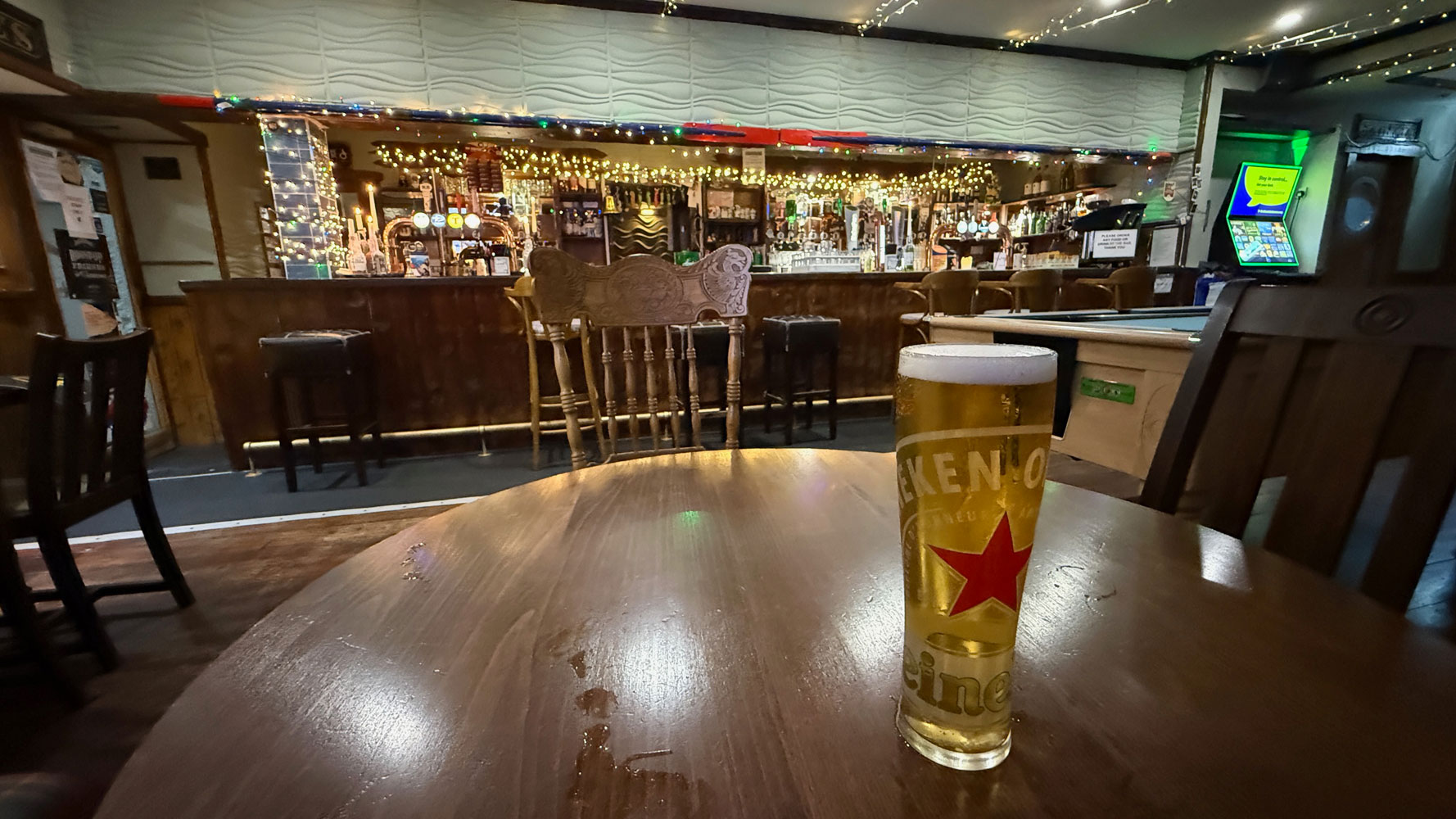
The Ferry Inn at Scrabster, the place to stop for a pint and wait for the ferry. They also offer accommodation.
Step 4, Scrabster to Stromness by ferry
The ferry from Scrabster to Stromness in Orkney sails morning and evening, with an additional lunchtime sailing in summer. The crossing takes just 1h30. If you take the 10:41 train from Inverness, you'll make the 19:00 ferry arriving Stromness at 20:30. From May to September you can also take the 07:00 train from Inverness to connect with the 13:15 sailing from Scrabster arriving Stromness 14:45. Book the ferry at www.northlinkferries.co.uk.
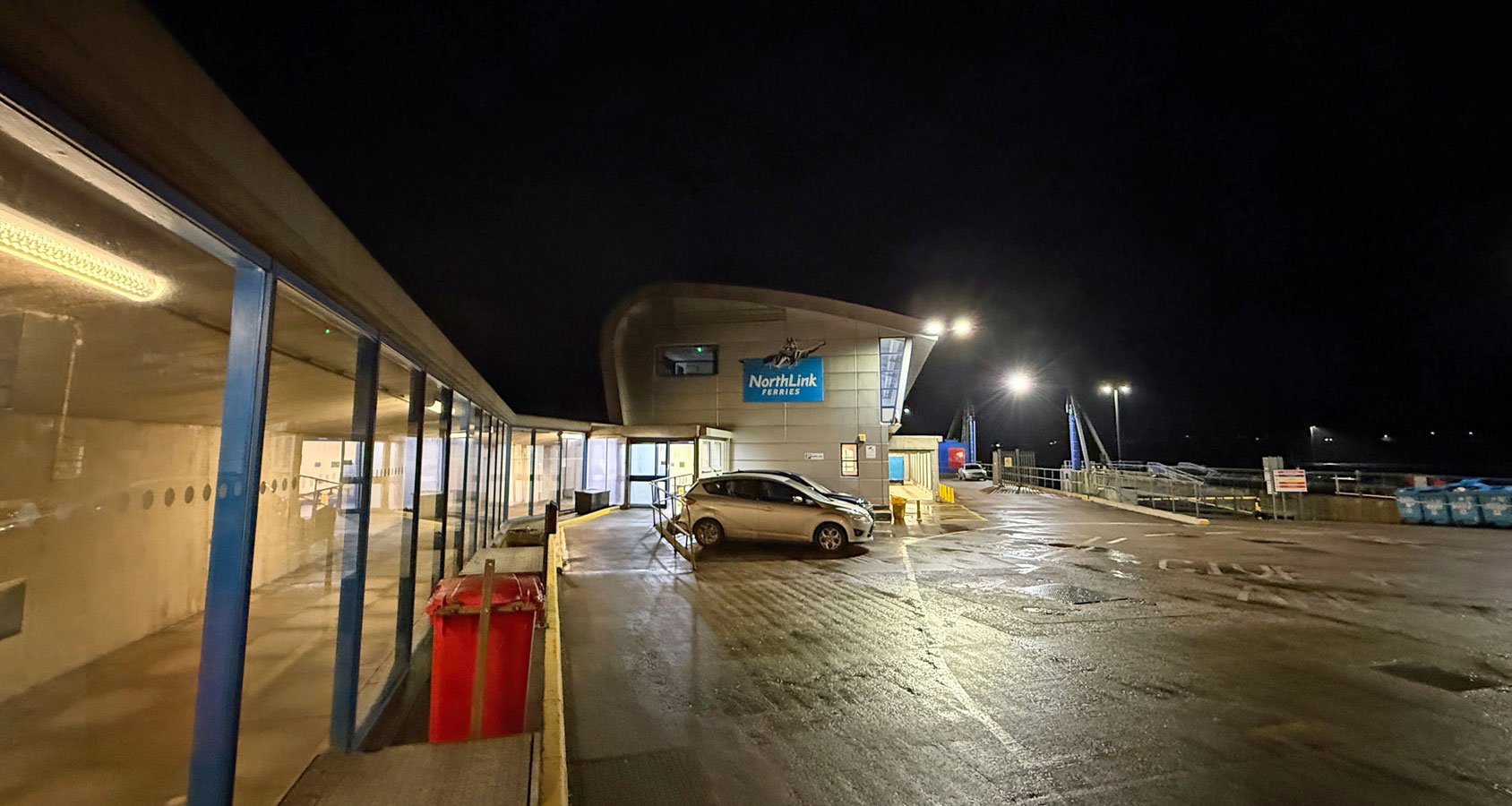
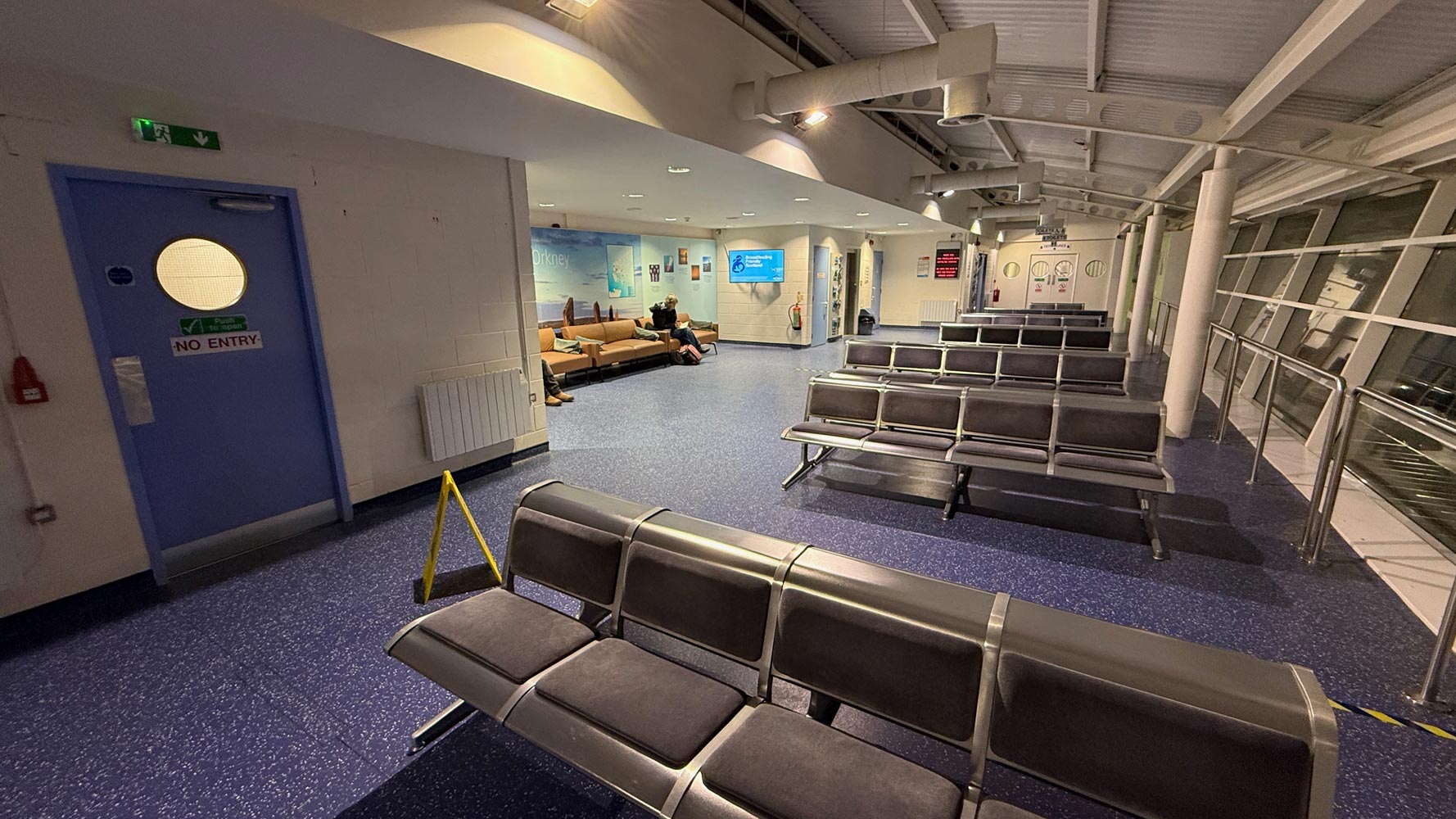
The Northlink Ferries terminal at Scrabster, 2.6 miles from Thurso station.
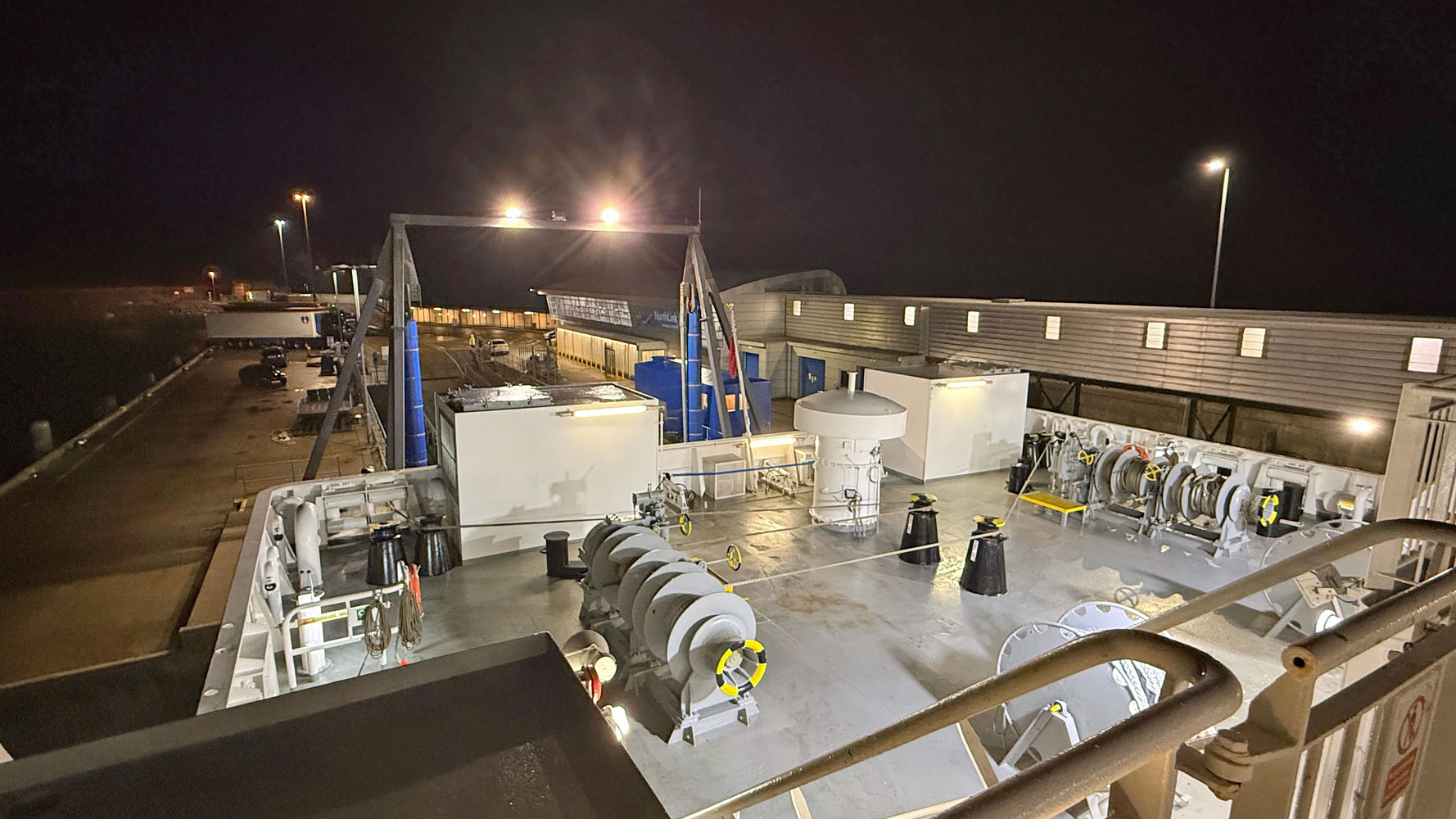
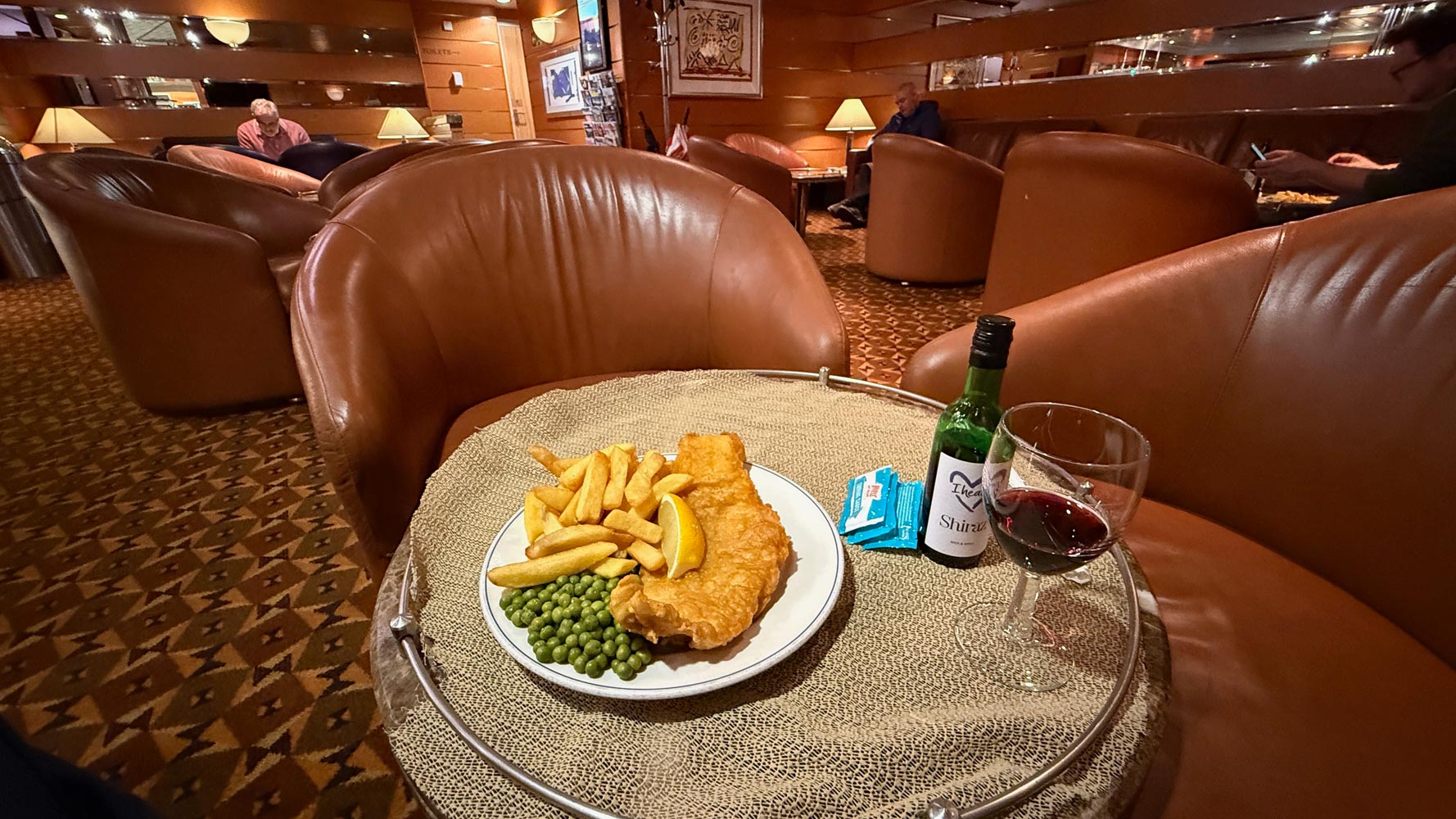
Above left, open deck aft on Northlink Ferries m/v Hamnavoe at Scrabster. Above right, in the Magnus lounge main dishes can be served at your seat.
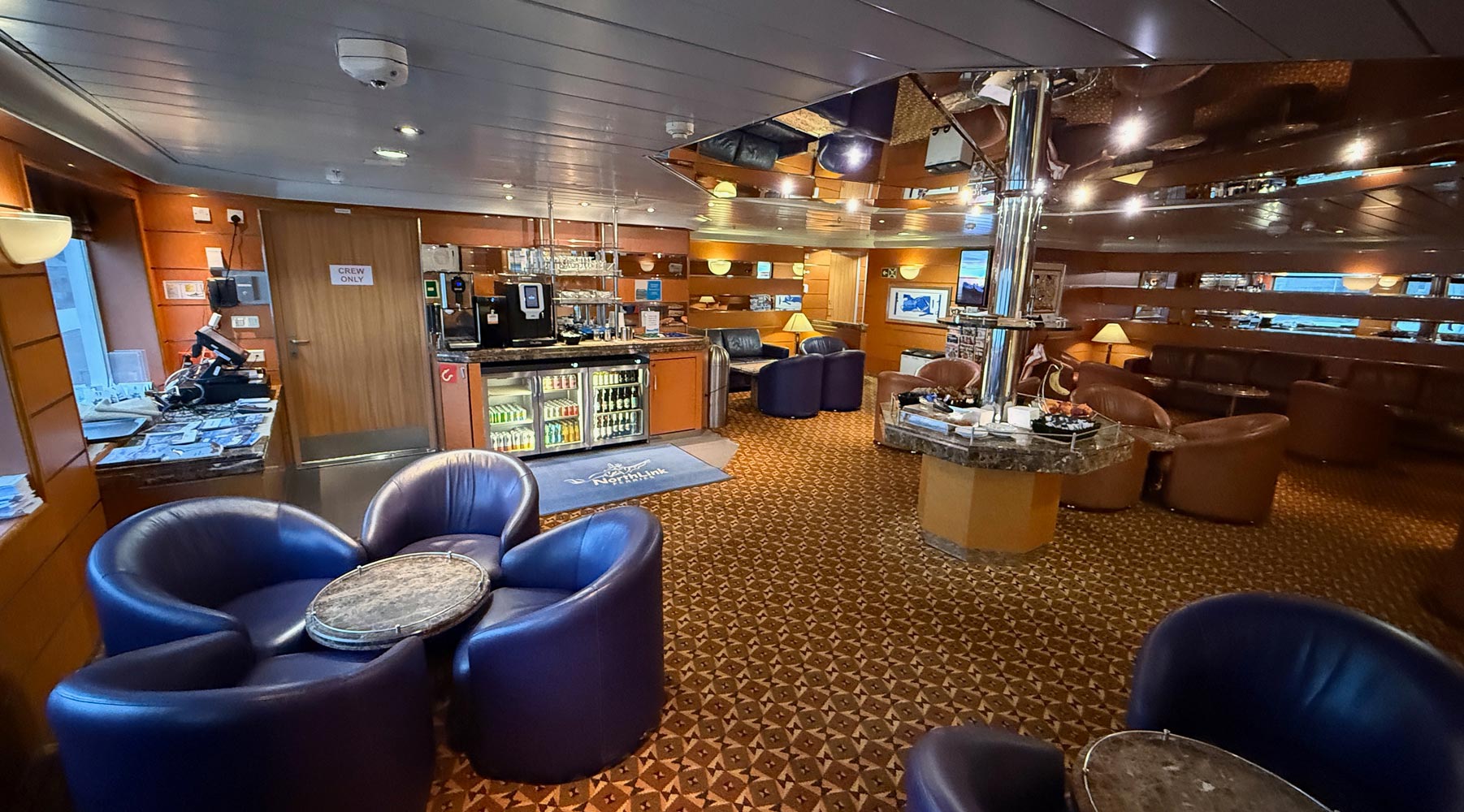
Above, the premium Magnus Lounge on the ferry offers complimentary drinks, snacks and Danish pastries. Highly recommended!
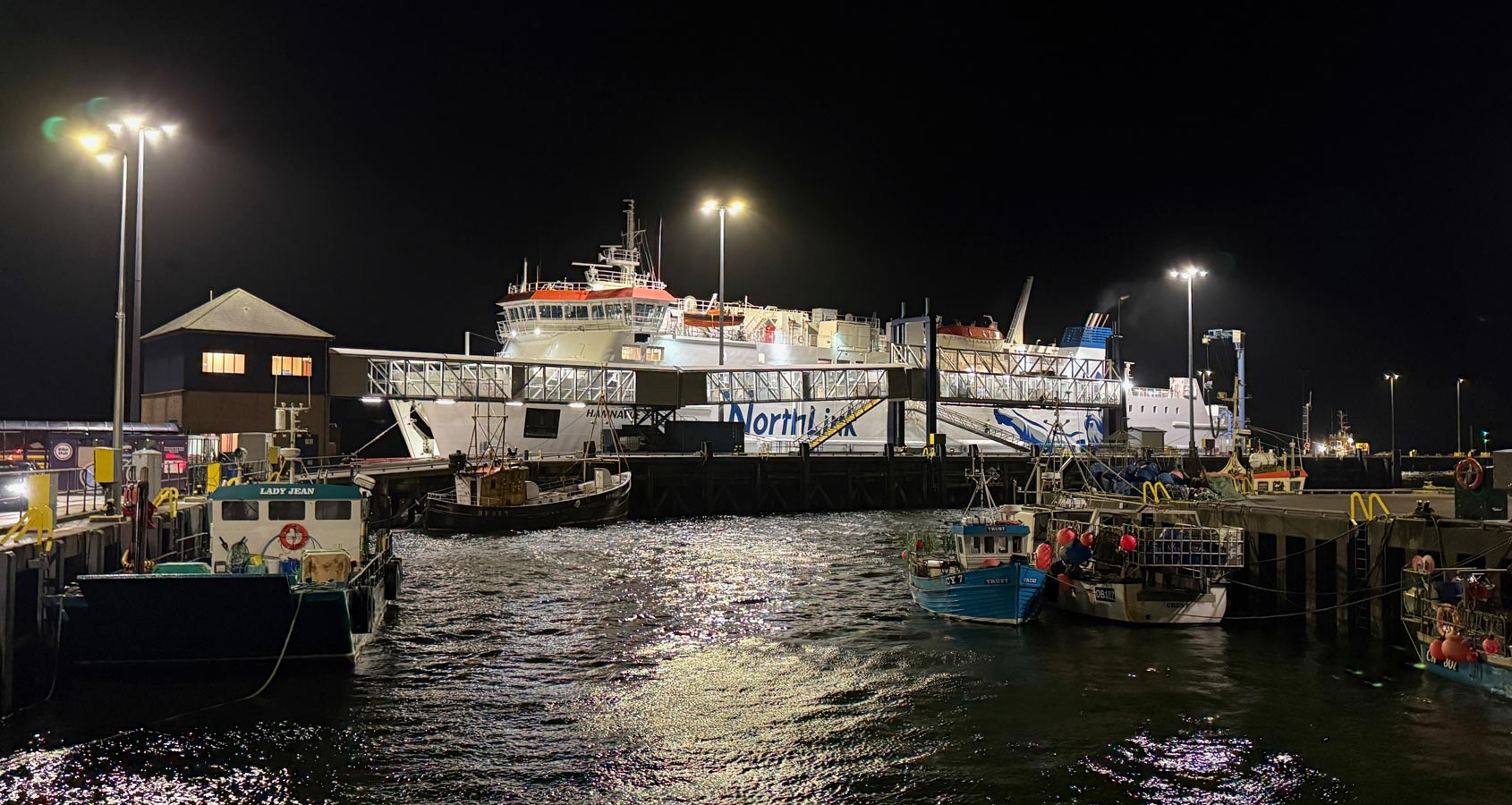
Above, the m/v Hamnavoe arrived at Stromness.
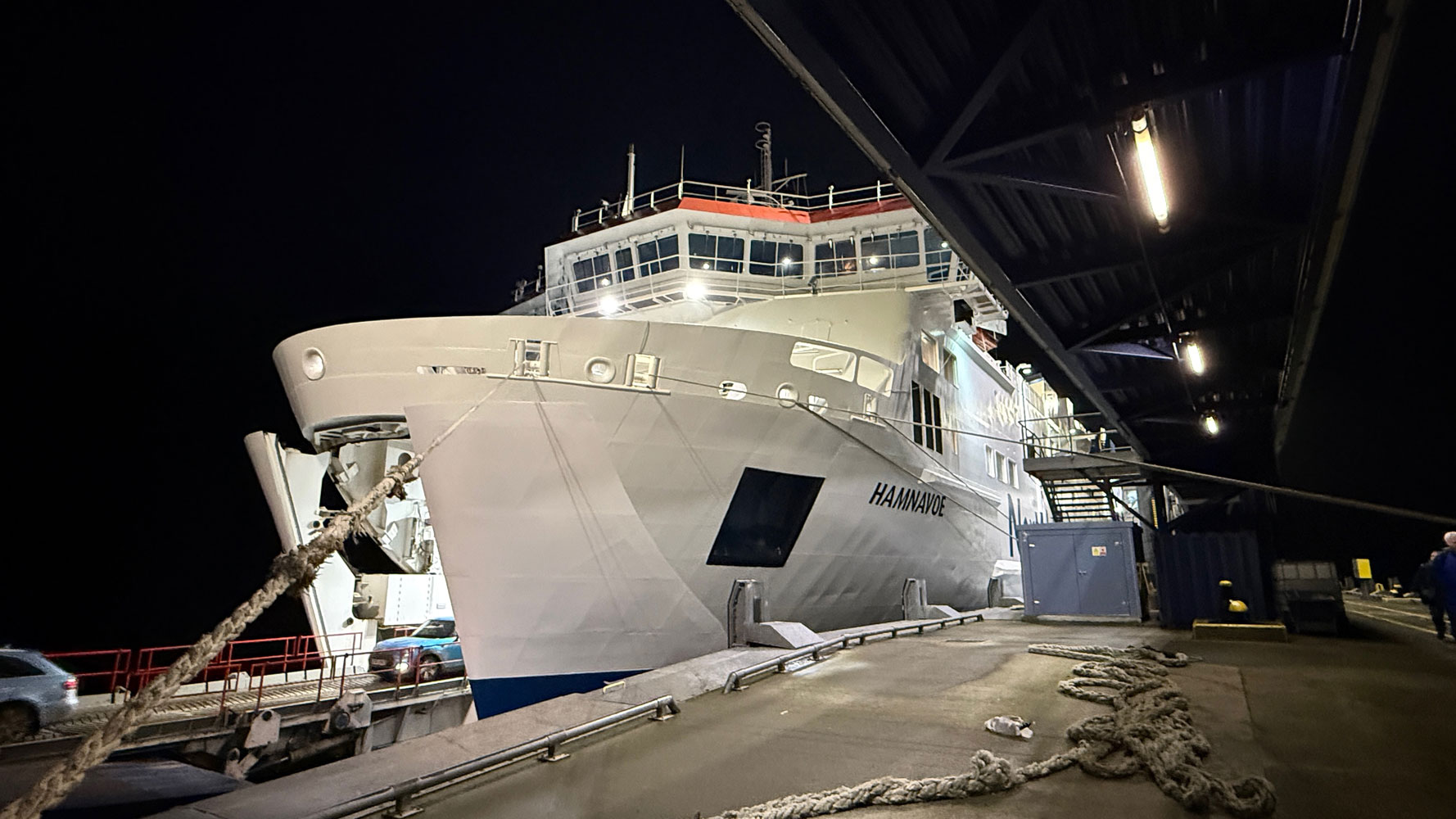
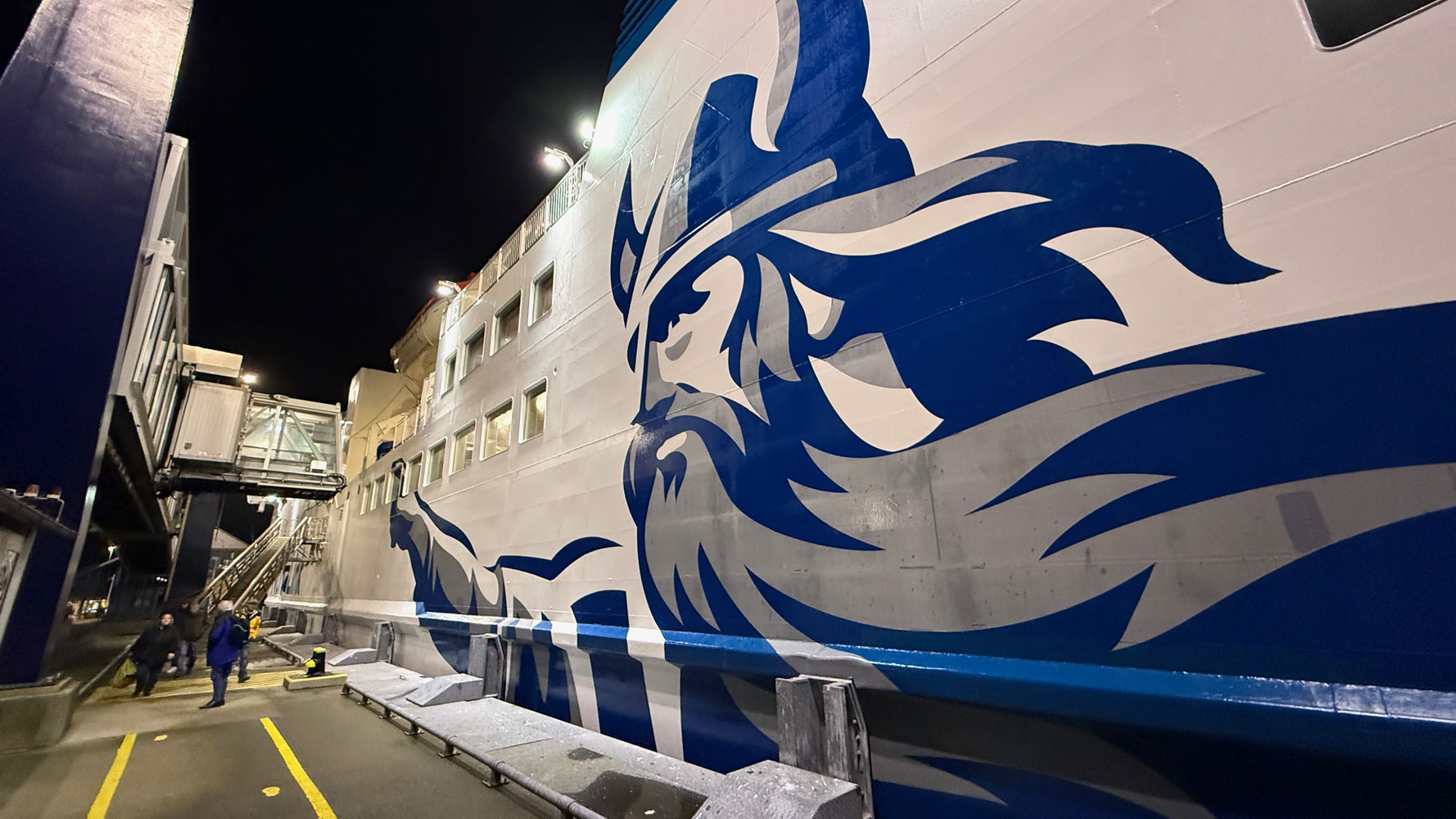
Foot passengers disembark via the gangway and can walk into Stromness town in 2 minutes.
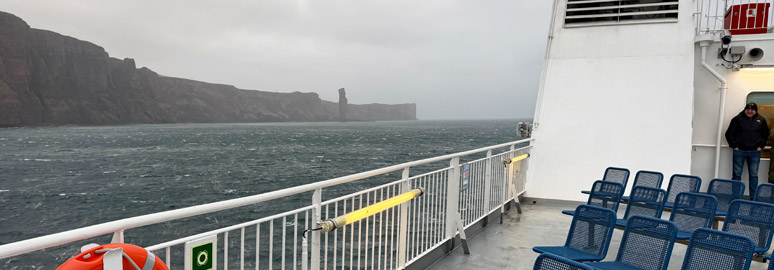
In January, it was dark when the evening ferry sailed. But the ferry passes right by the famous Old Man of Hoy, seen here on my return crossing.
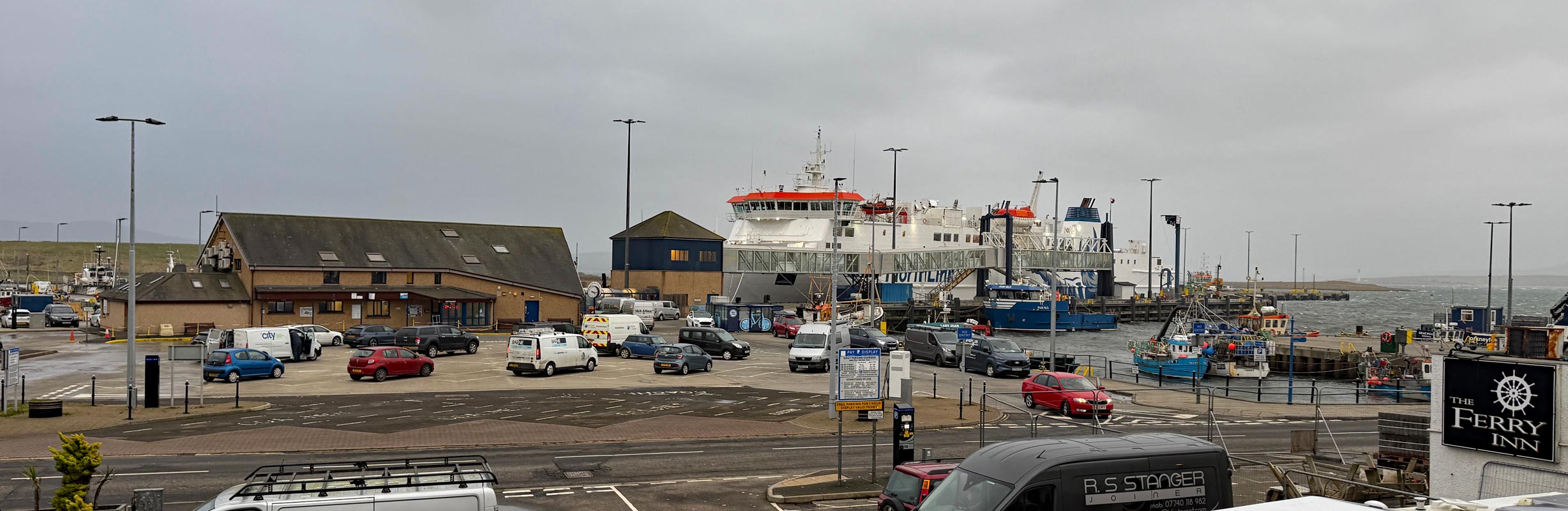
Above, Stromness ferry terminal in daylight. Taken from the main street in Stromness, 2 minutes' walk from the Royal Hotel.
Suggested hotels in Stromness
Northlink Ferries 'Bed & Breakfast': If you're leaving Stromness on the early-morning 06:30 ferry to Scrabster, you can reserve a cabin aboard the m/v Hamnavoe and stay on board the night before, boarding from 21:30 to 23:30. This is Northlink Ferries 'Bed & Breakfast' service, see www.northlinkferries.co.uk.
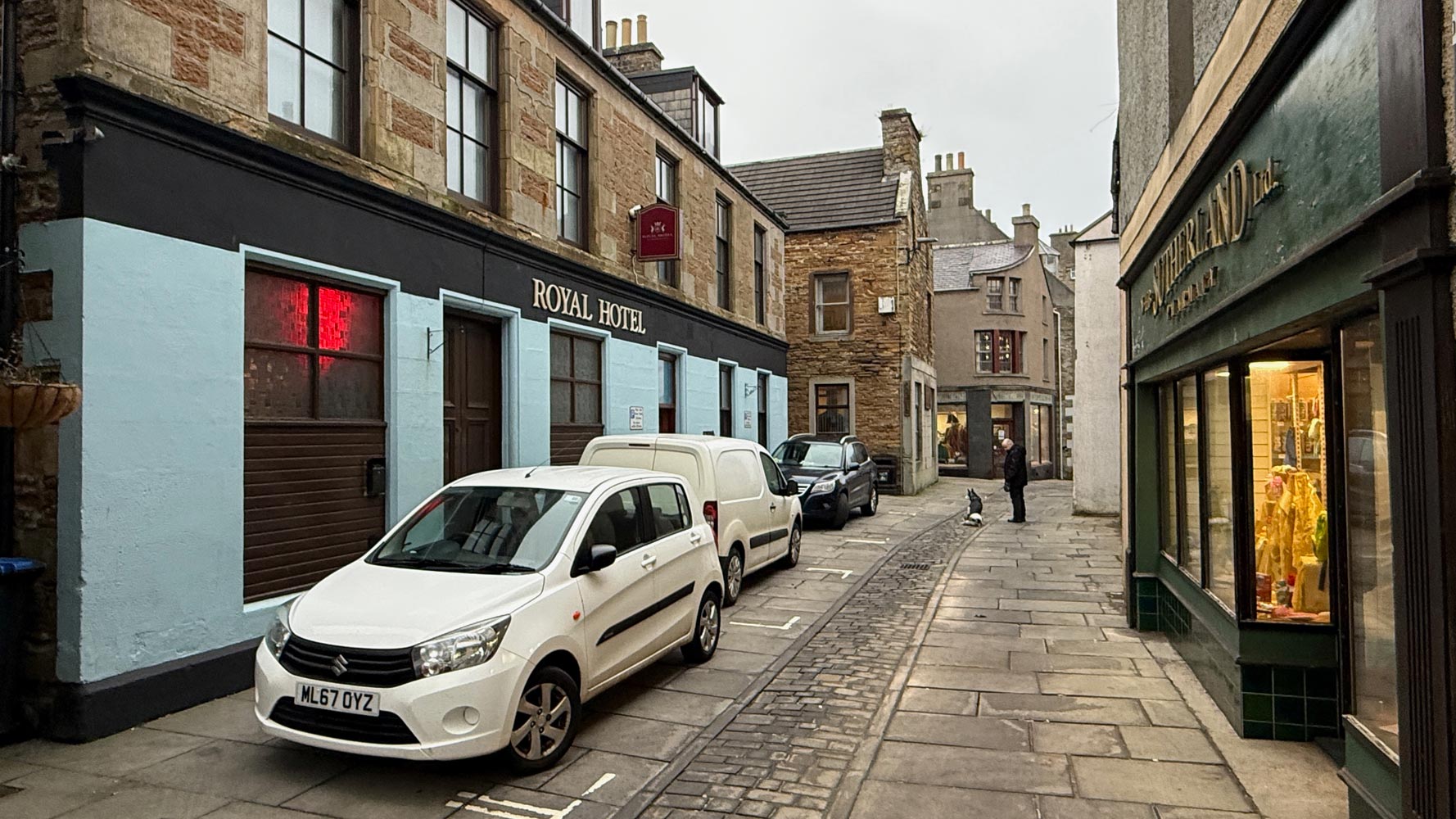
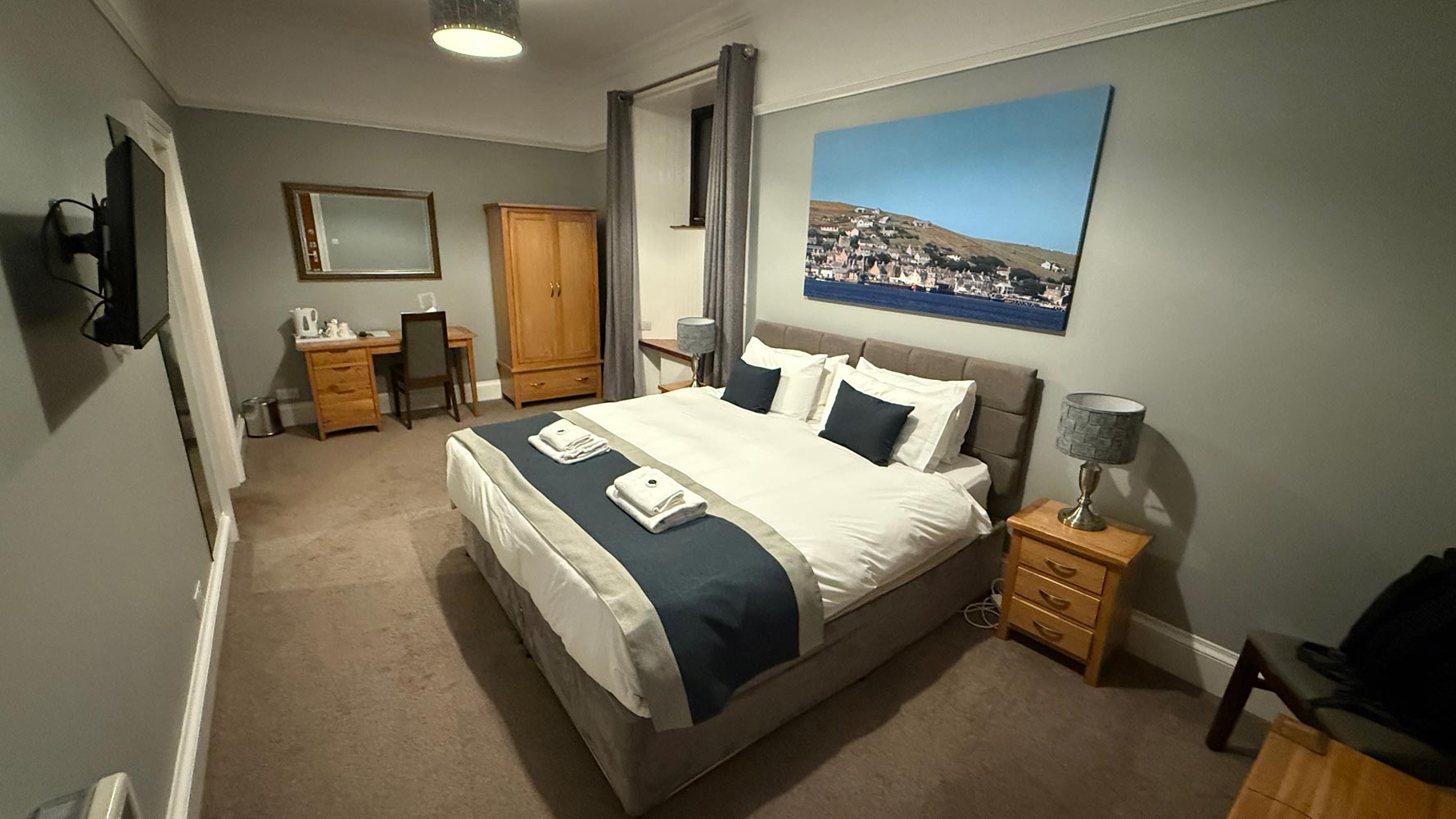
Royal Hotel, Stromness: I can recommend the clean & comfortable Royal Hotel on the main street in the centre of Stromness, just 4 minutes walk from Stromness ferry terminal. It does a superb Scottish cooked breakfast. Sadly, the once-grand Stromness Hotel has become run-down with poor reviews and was closed when I was there, but you'll see this impressive building as you walk to the Royal.
Bus X1 from Stromness to Kirkwall
Bus route X1 link Stromness ferry terminal and Kirkwall every half-hour (April-October) or every hour (November-March) through the day, see www.orkney.gov.uk/...kirkwall-and-stromness/ (please let me know if that link changes). This is route X1, the principal bus route on Orkney. You pay the driver using any contactless bank card, easy! In Stromness, the bus stop is right outside the main exit from the Northlink Ferries terminal. In Kirkwall, buses arrive at/leave from the bus travel centre.
Bus X1 calls at Stenness Garage, from where (if you're reasonably fit) you can walk to the Stones of Stenness & Ring of Brodgar. Bus X1 continues beyond Kirkwall to St Margaret's Hope, passing over Churchill Barrier number 1 and stopping near the Italian Chapel.
From April to October, one bus per hour is extended beyond Stromness, so it runs St Margaret's Hope-Kirkwall-Stromness-Ring of Brodgar-Skara Brae and vice versa.
To check bus times & prices use www.stagecoachbus.com/plan-a-journey.
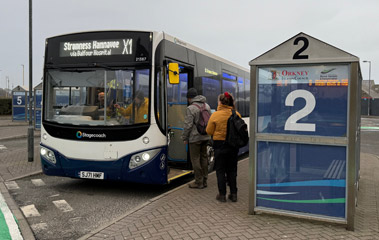
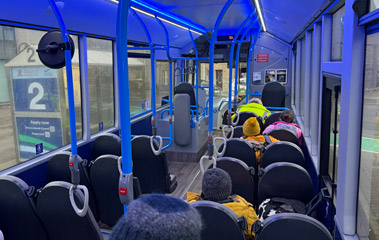
Above, an X1 bus to Stromness at Kirkwall's bus travel centre.
Suggested hotels in Kirkwall
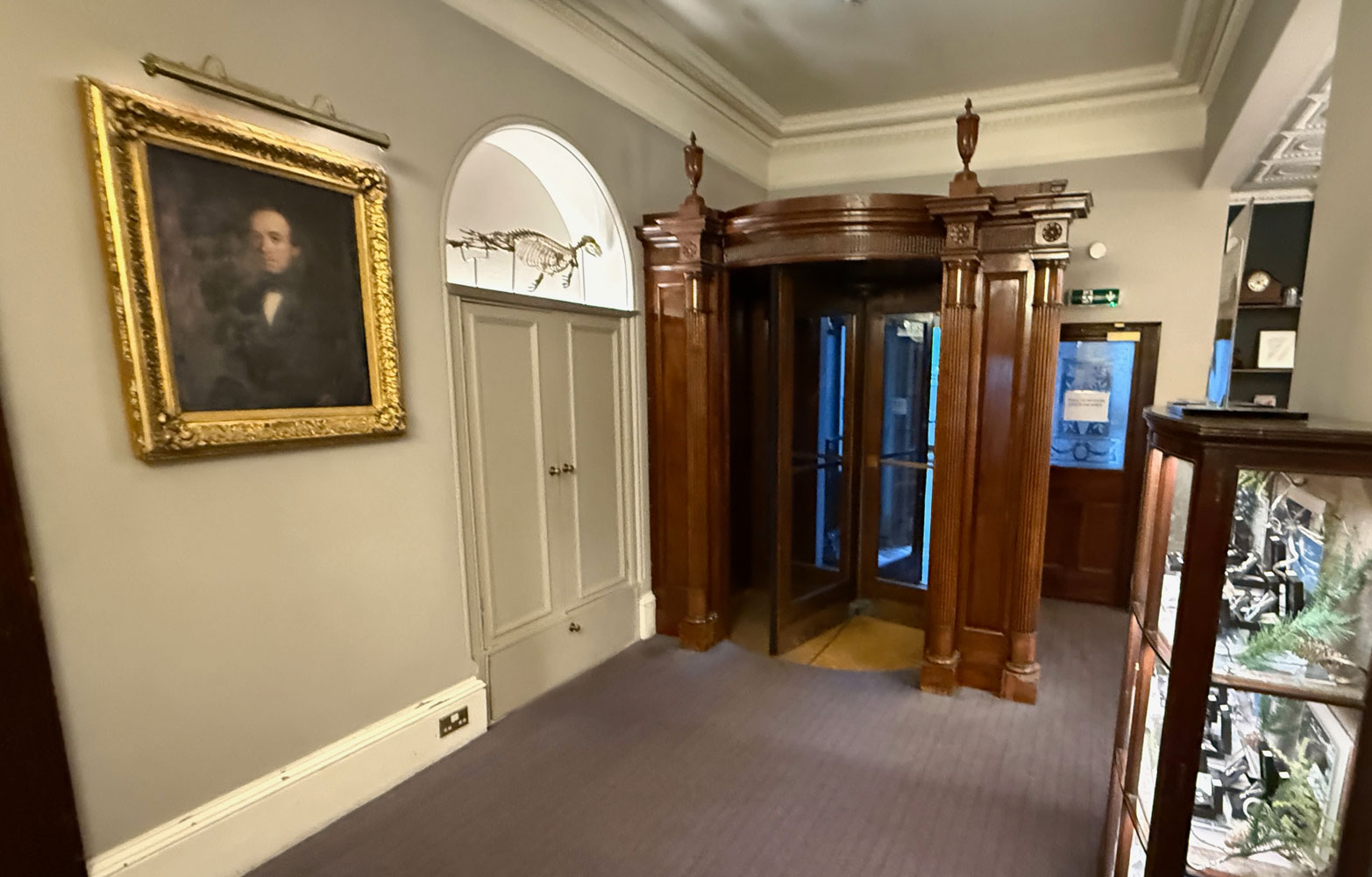
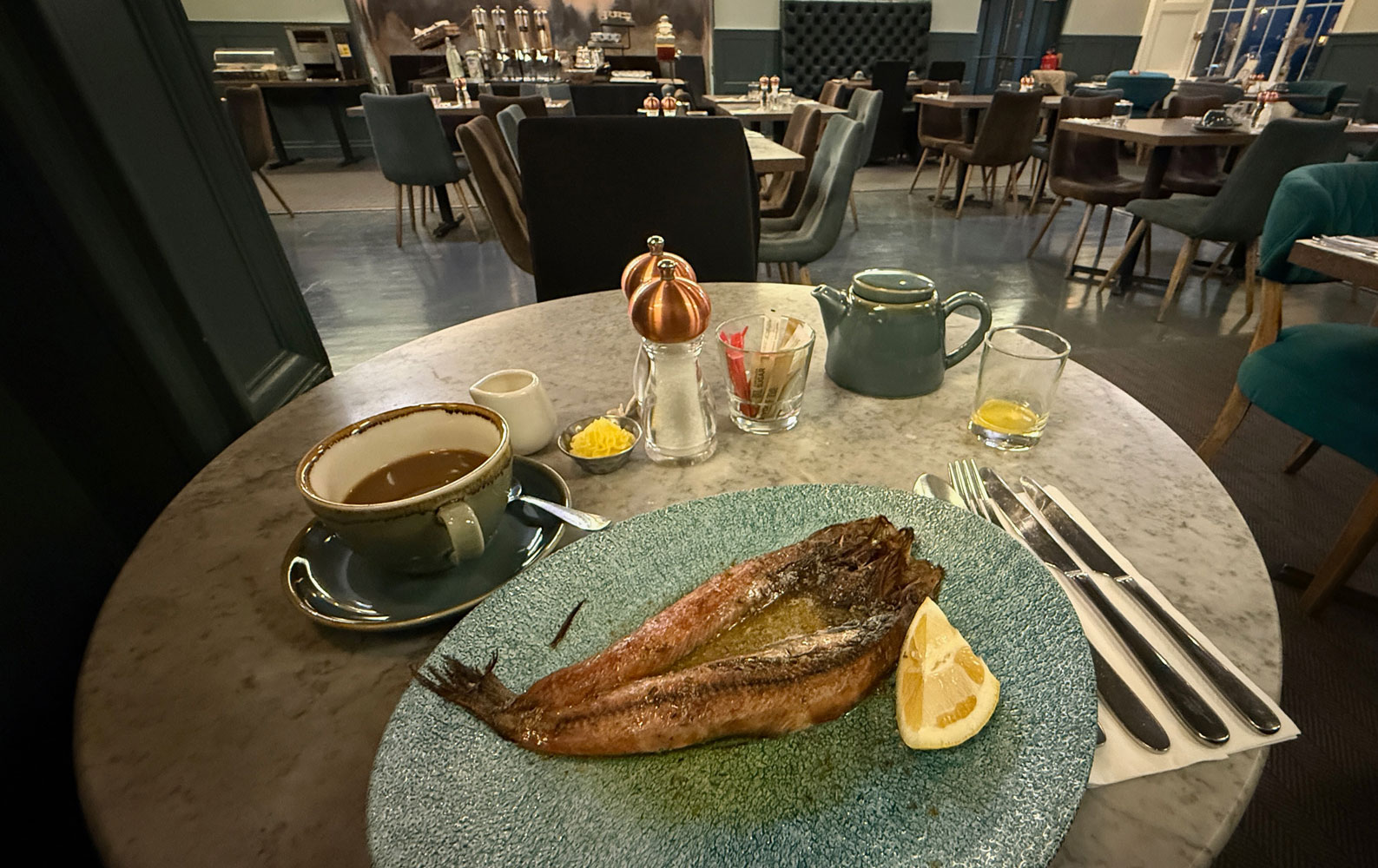
Kirkwall Hotel, Kirkwall: On the harbour-front road in the centre of Kirkwall, the Kirkwall Hotel is a 5-minute walk from the Travel Centre where the bus from Stromness arrives, a 7-minute walk from St Magnus Cathedral. A hotel I can personally recommend, with character, comfortable rooms, and excellent local kippers on the menu for breakfast.
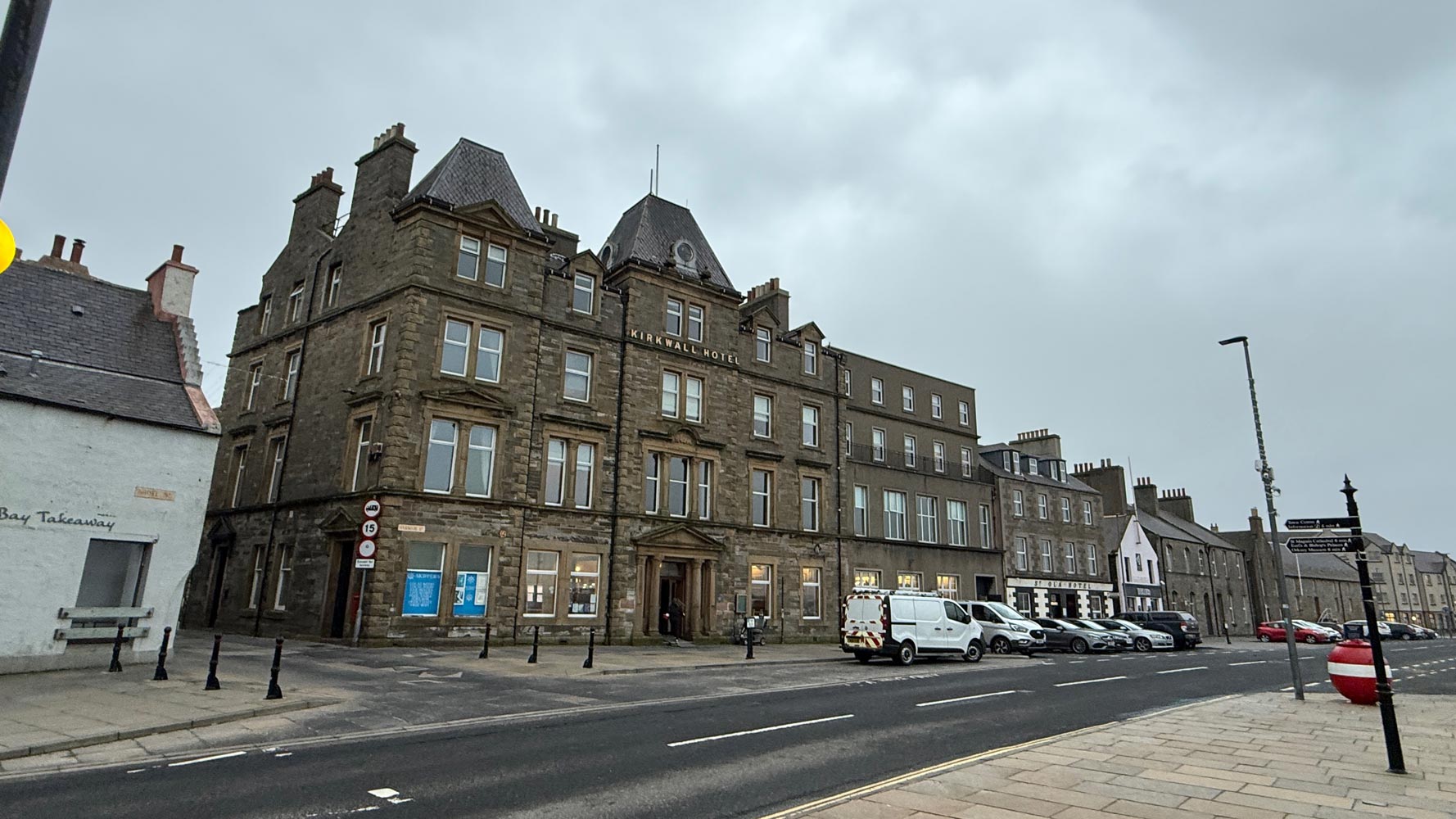
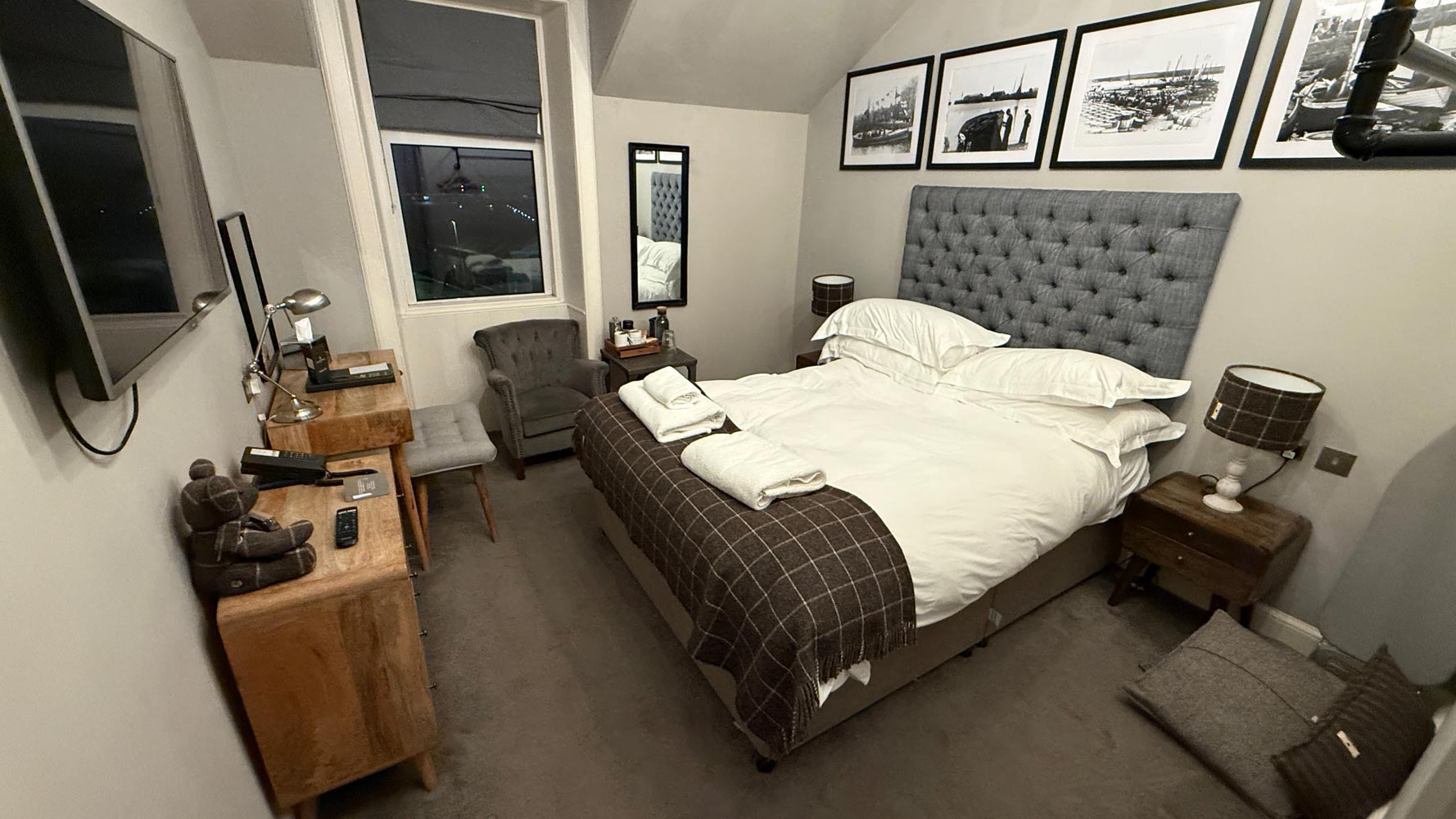
Below left, the hotel's classic revolving door. Below right, the perfect breakfast kipper.
Things to see in Orkney
Orkney (always now used in the singular) is different from the rest of Scotland's highlands & islands. Ruled by Viking earls of Norway until the late 15th century, you'll find no kilts or Gaelic here - there's a reason a Norseman features on the side of the ferry that brings you here! Orkney consists of some 70 islands, 20 of which are inhabited, and the main island is referred to (with wonderful 'Fog in the Channel, Continent cut off' vibes) as The Mainland. Stromness and Kirkwall are on the Mainland. These photos were taken on a private tour organised with jporkney.co.uk.
St Magnus Cathedral, Kirkwall
In the centre of Kirkwall, Orkney's capital, St Magnus Cathedral is unlike any other in Great Britain. Construction started in 1137, when Orkney was still part of the Kingdom of Norway, although mason's marks suggest craftsmen were employed who'd previously worked on cathedrals in the north of Britain. The cathedral is named after the Viking Earl and martyr St Magnus, whose remains were found in 1919 in a box hidden behind a stone in a pillar near the choir. St Magnus' remains were placed back in the pillar in 1926. The cathedral is also unusual in being owned by the local council, not the Church. Entry is free. More about St Magnus Cathedral. Story of Viking Earl & martyr St Magnus.
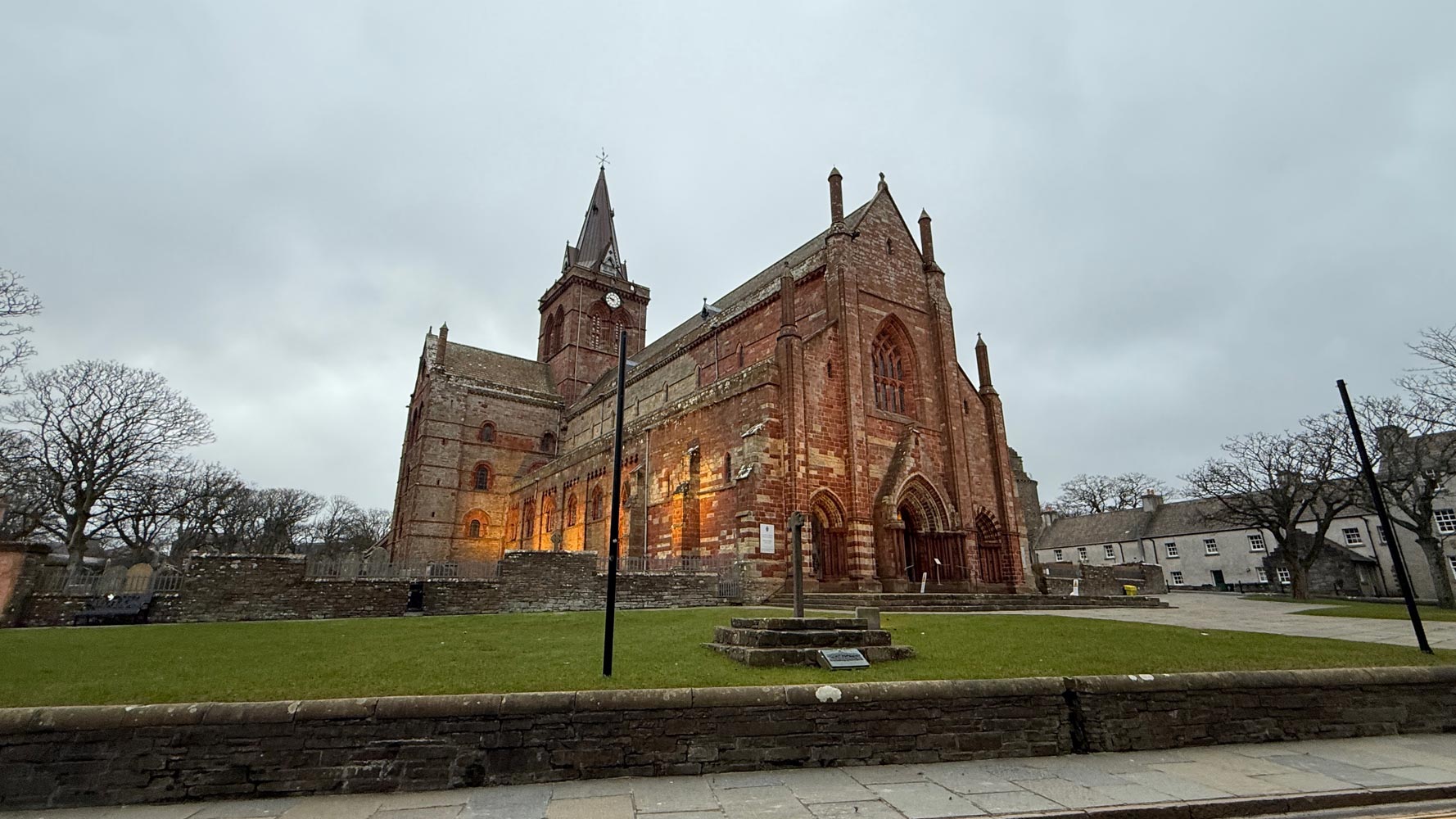
Above: St Magnus Cathedral, main entrance.
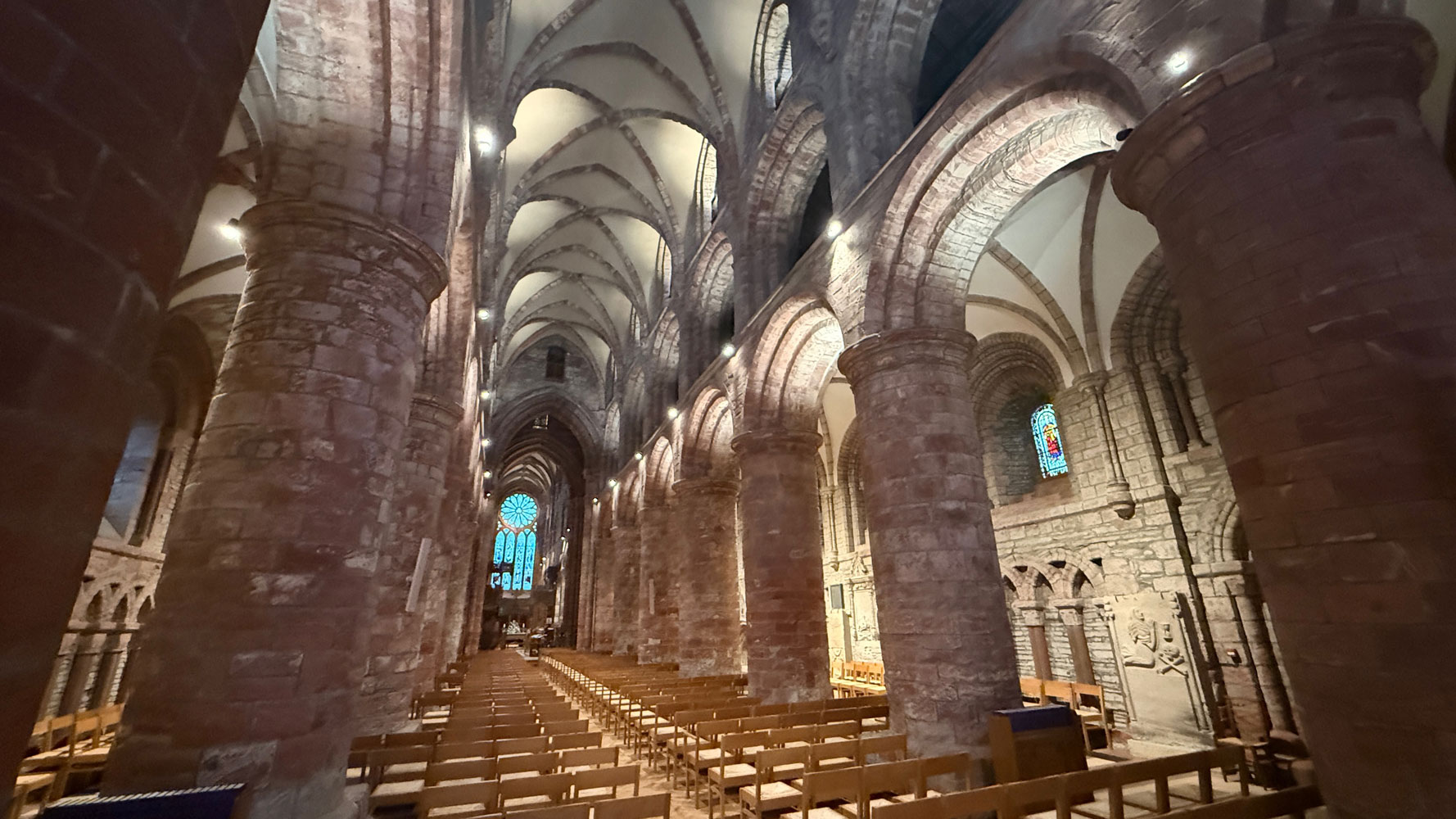
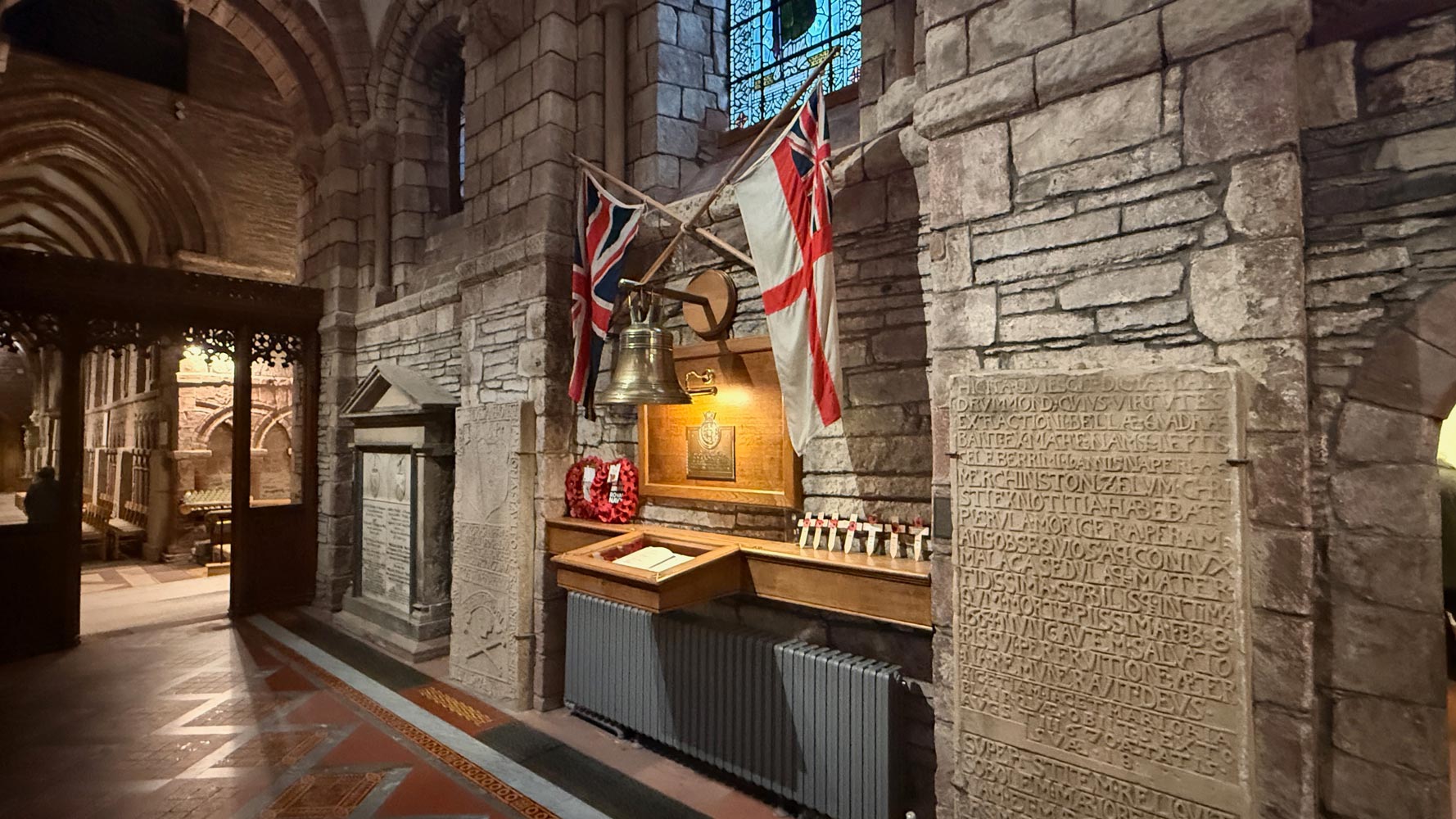
Above left: Inside St Magnus Cathedral. Above right: The Royal Oak memorial and ship's bell, raised from the wreck.
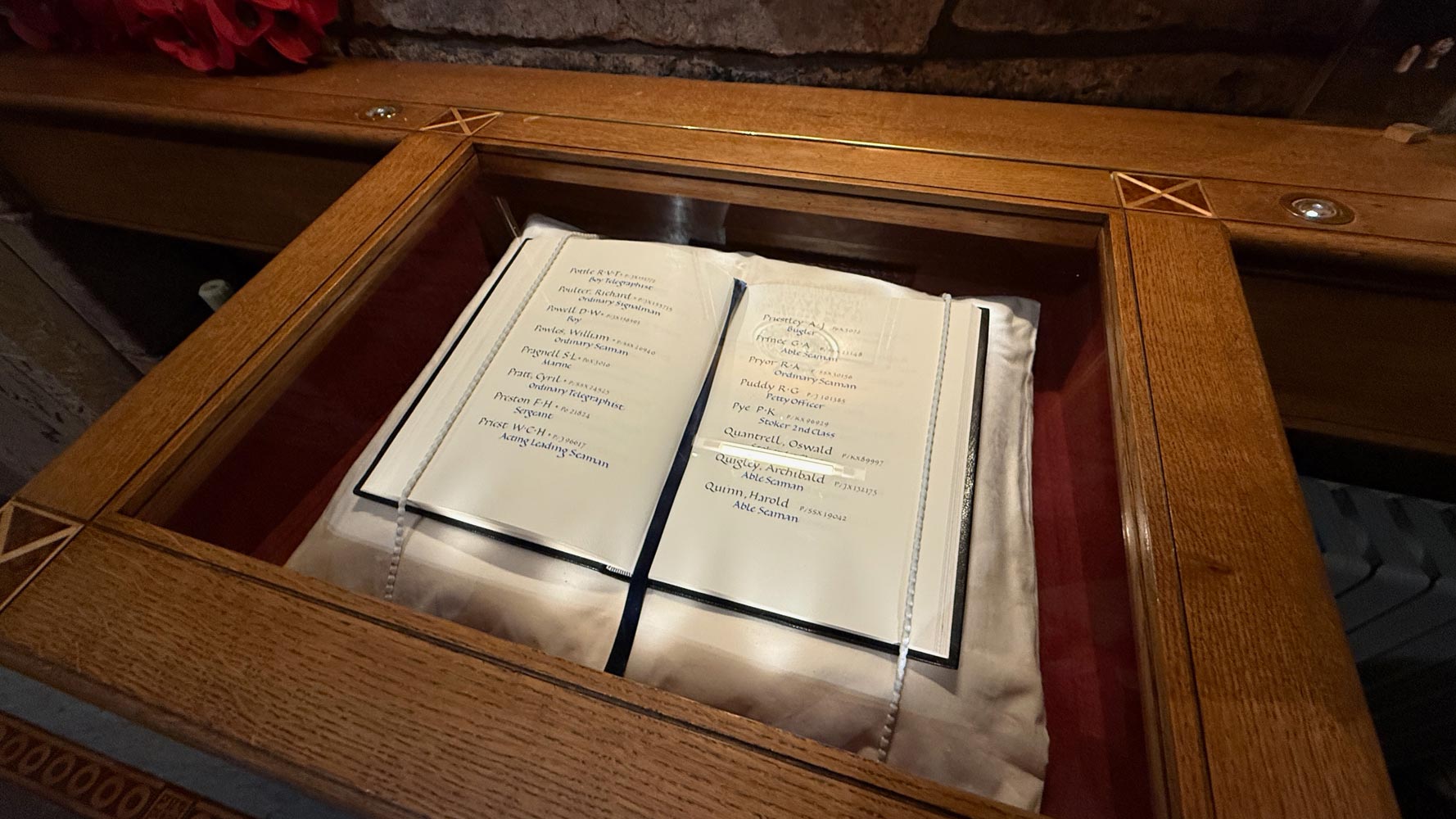
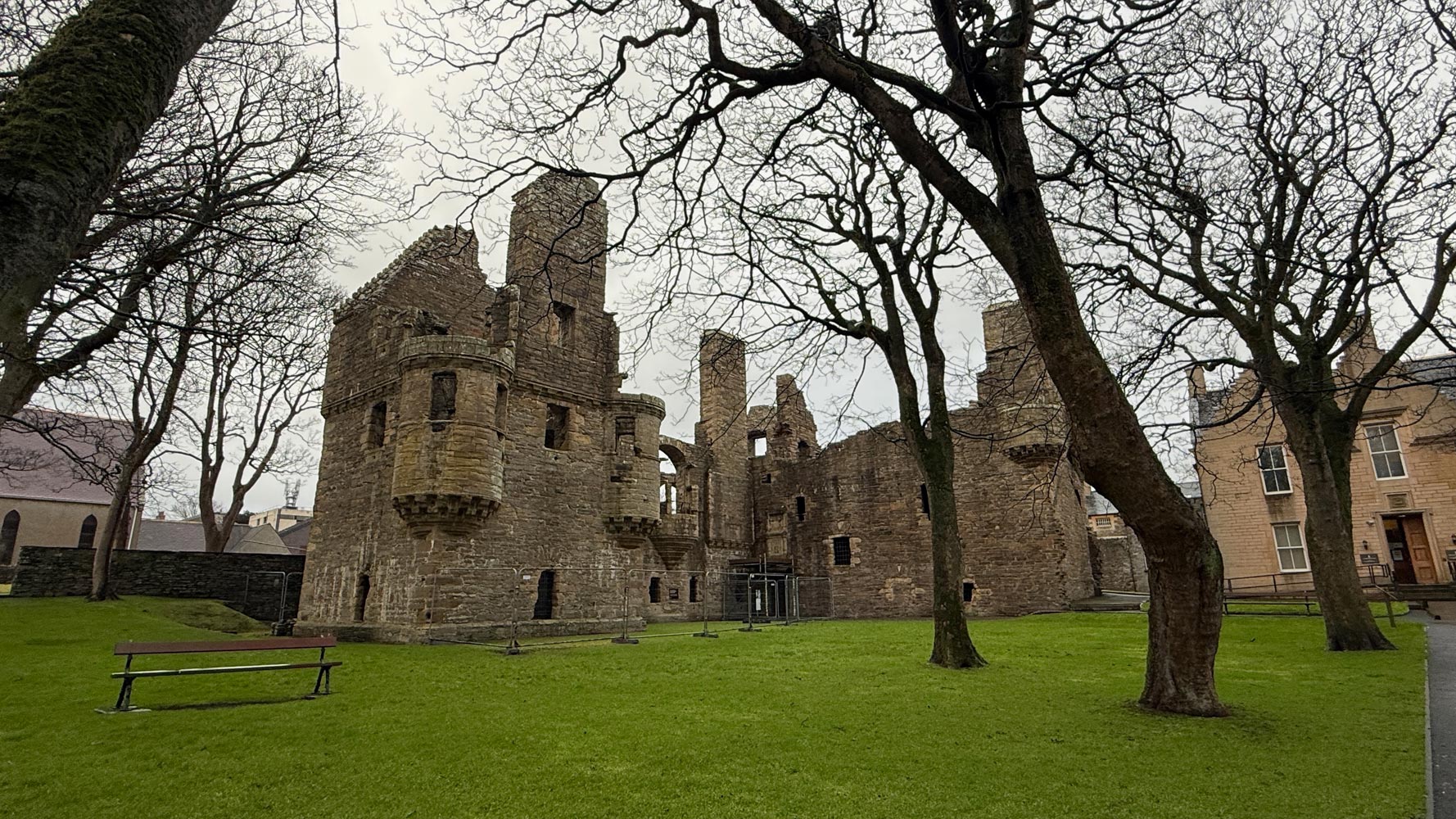
Above left: HMS Royal Oak, book of names. Above right: The bishop's palace, across the road from the cathedral.
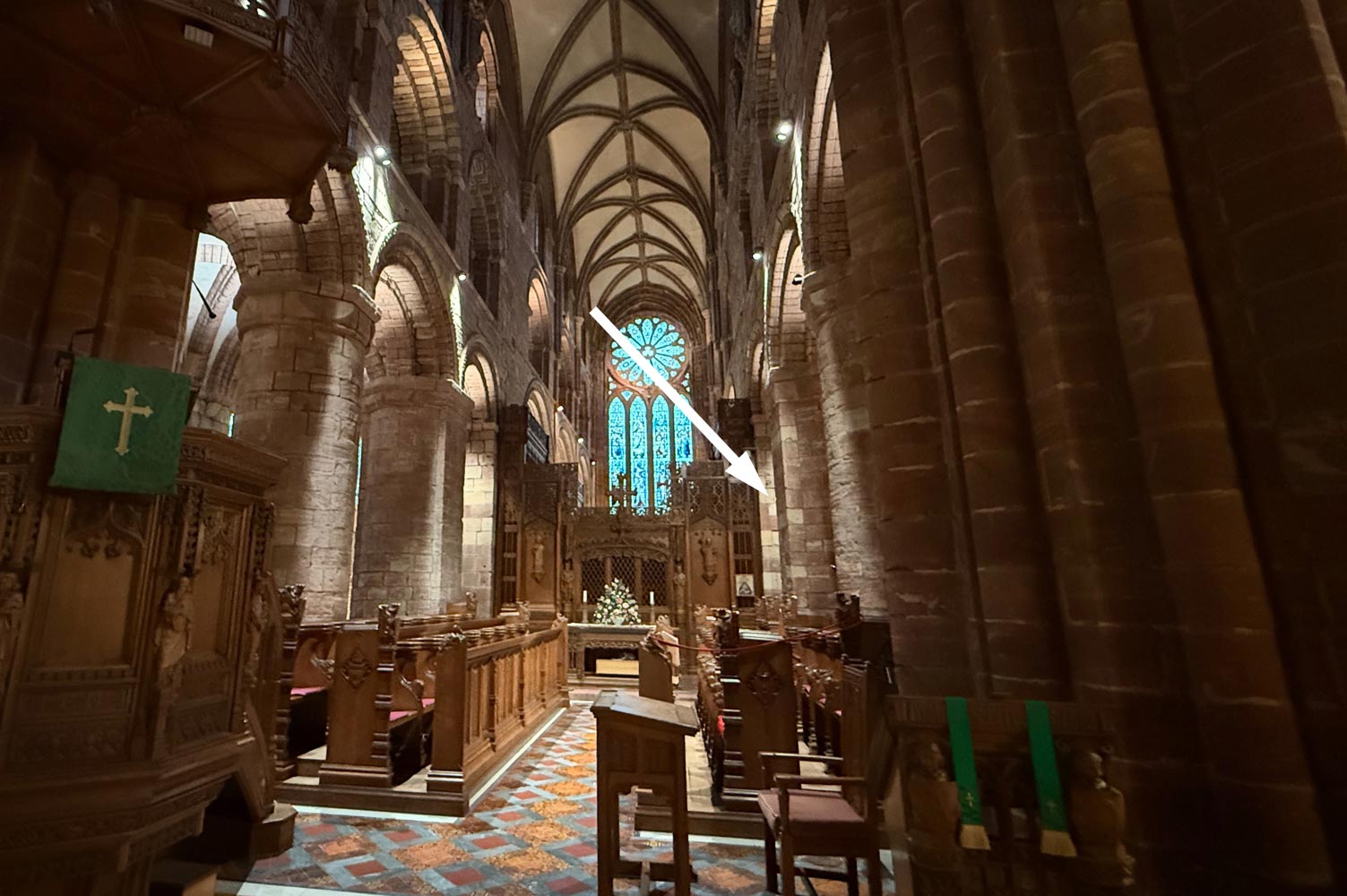
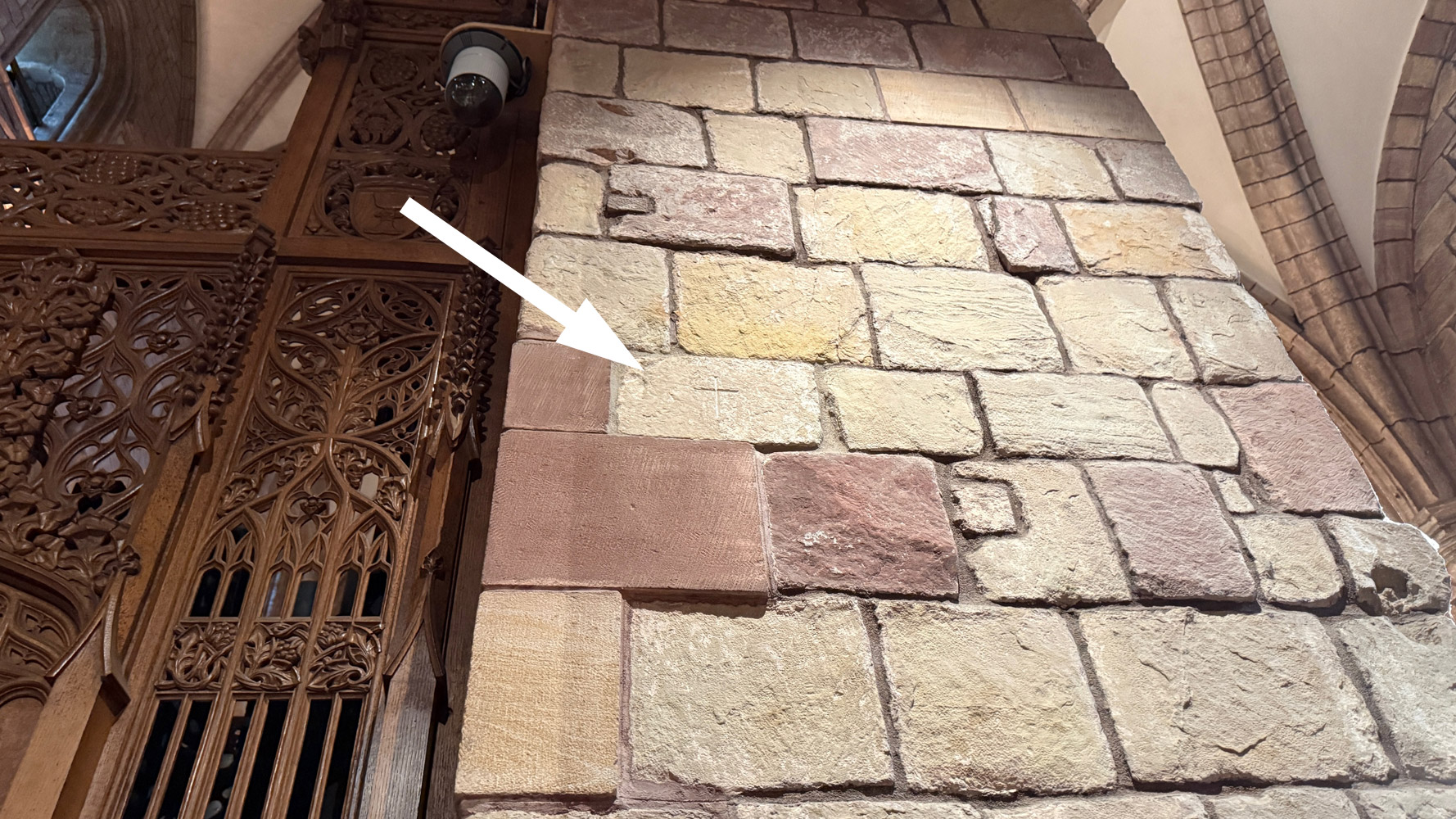
Above: In 1919, bones believed to belong to St Magnus were found hidden behind one of the stones in this pillar, the stone with a small cross carved on it. The bones were placed back behind this stone in 1926 and remain there to this day. Story of Viking Earl & martyr St Magnus.
The sinking of HMS Royal Oak
On 14 October 1939, German U-boat U47 successfully penetrated Scapa Flow's defences. Fortunately, most of the home fleet was out on manoeuvres, but the U47 found and torpedoed the veteran battleship HMS Royal Oak with the loss of over 800 lives. Marked by a buoy (not visible in the murky January weather when the photo below as taken), the wreck lies upside down in just 100 feet of water, roughly in line with the row of telephone poles. More about the sinking of HMS Royal Oak.
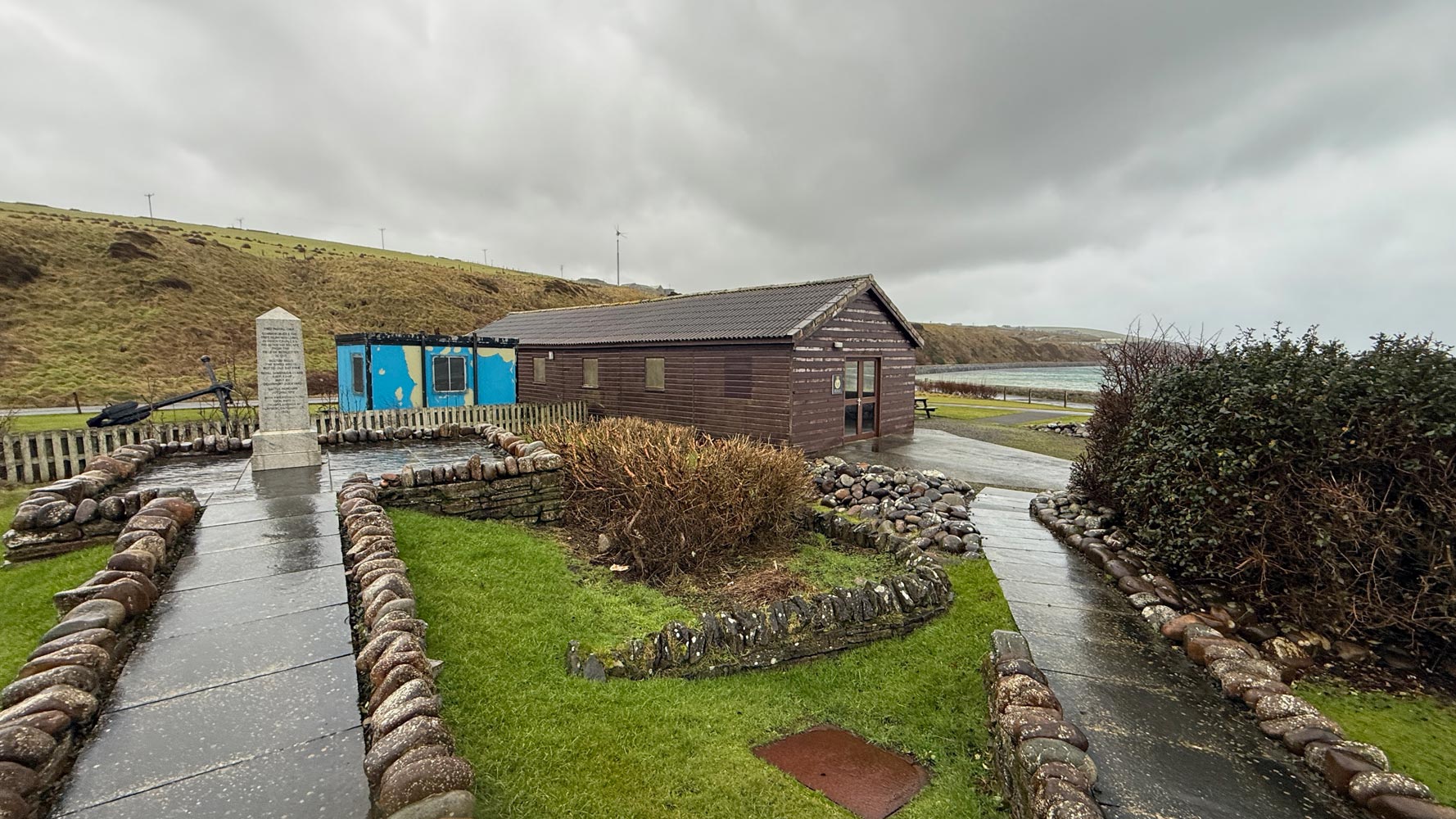
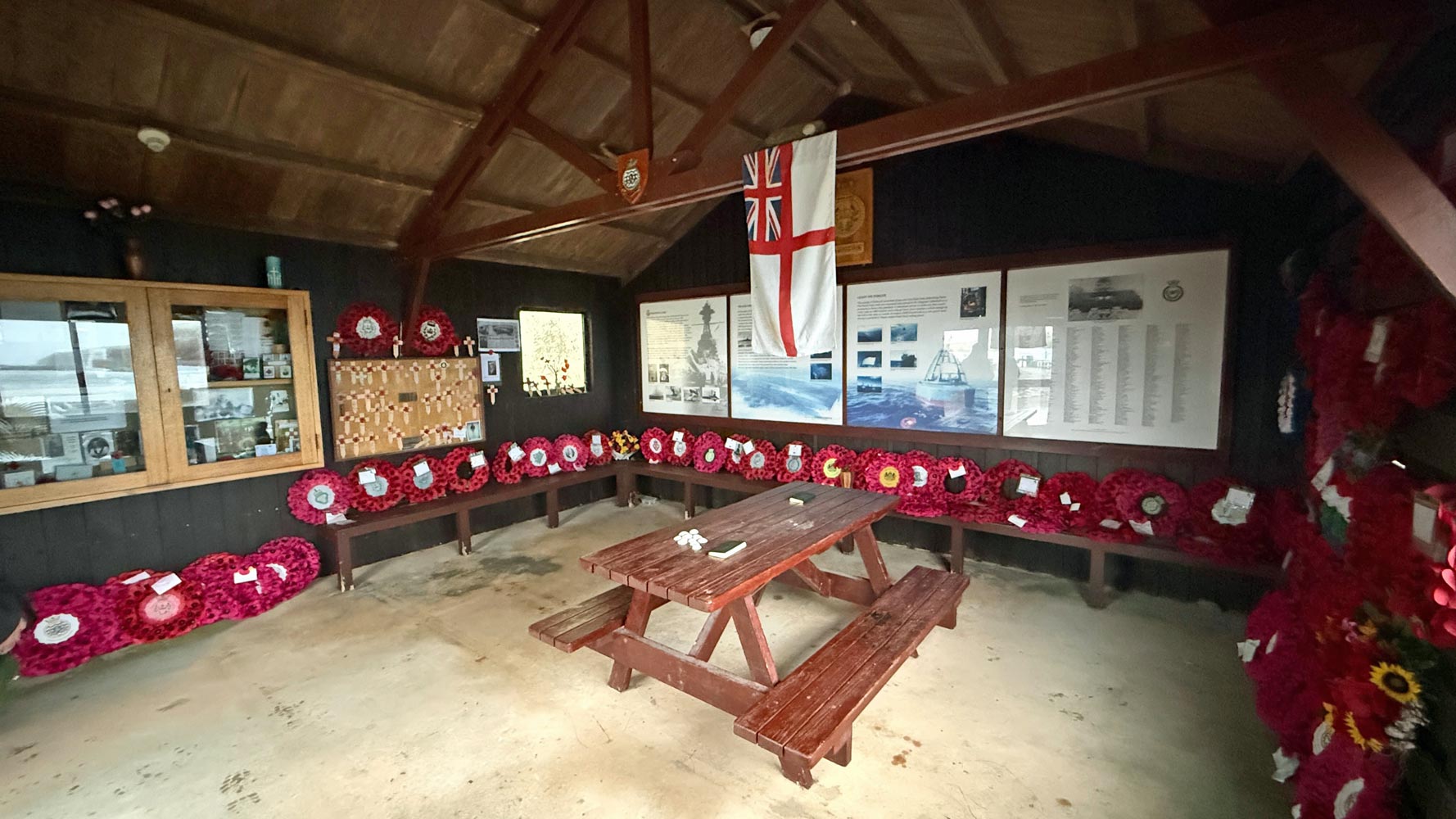
There is a memorial with the ship's bell in St Magnus' Cathedral, and a memorial on shore at Scapa.
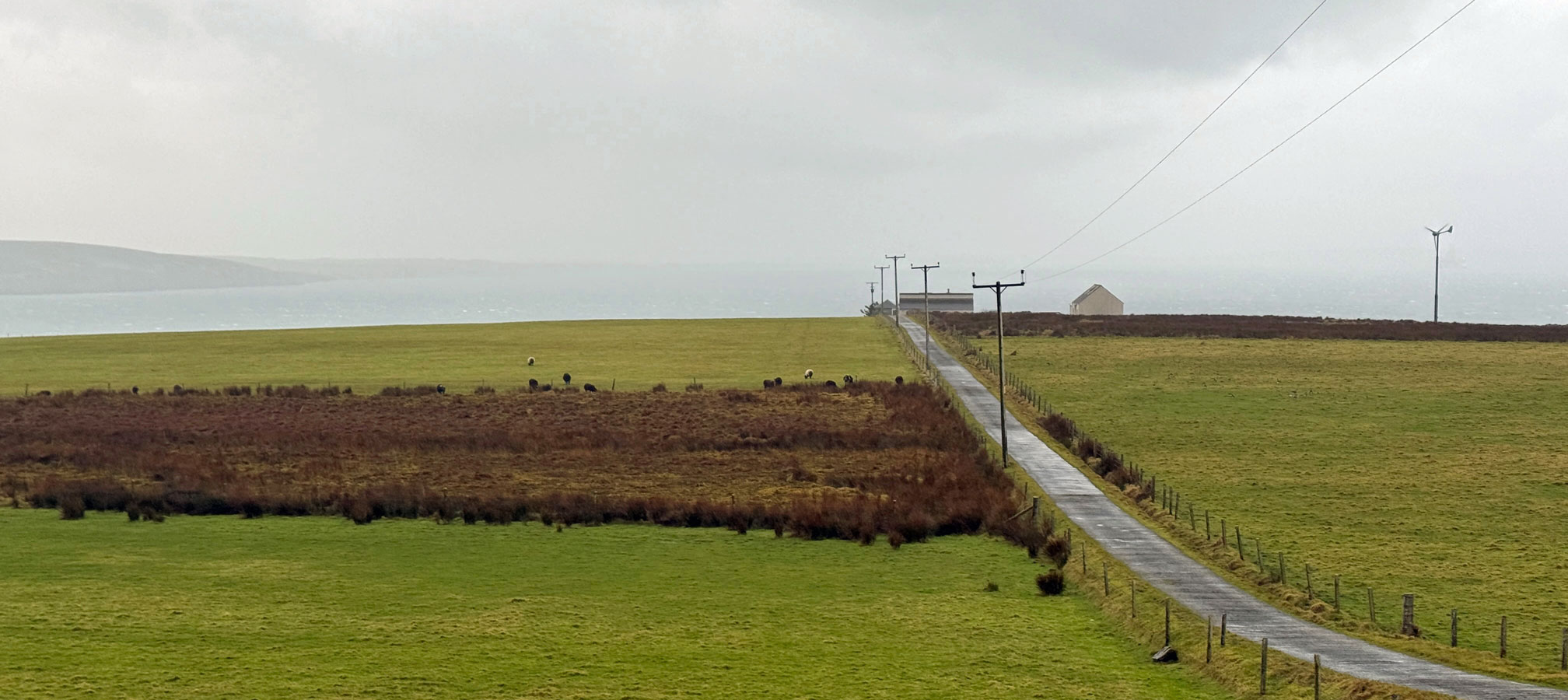
Above, looking east towards the wreck site.
Below, the Royal Oak memorial at Scapa Beach, a 40-minute 1.8 mile walk from Kirkwall or an 11-minute ride on hourly bus 9 from Kirkwall travel centre.
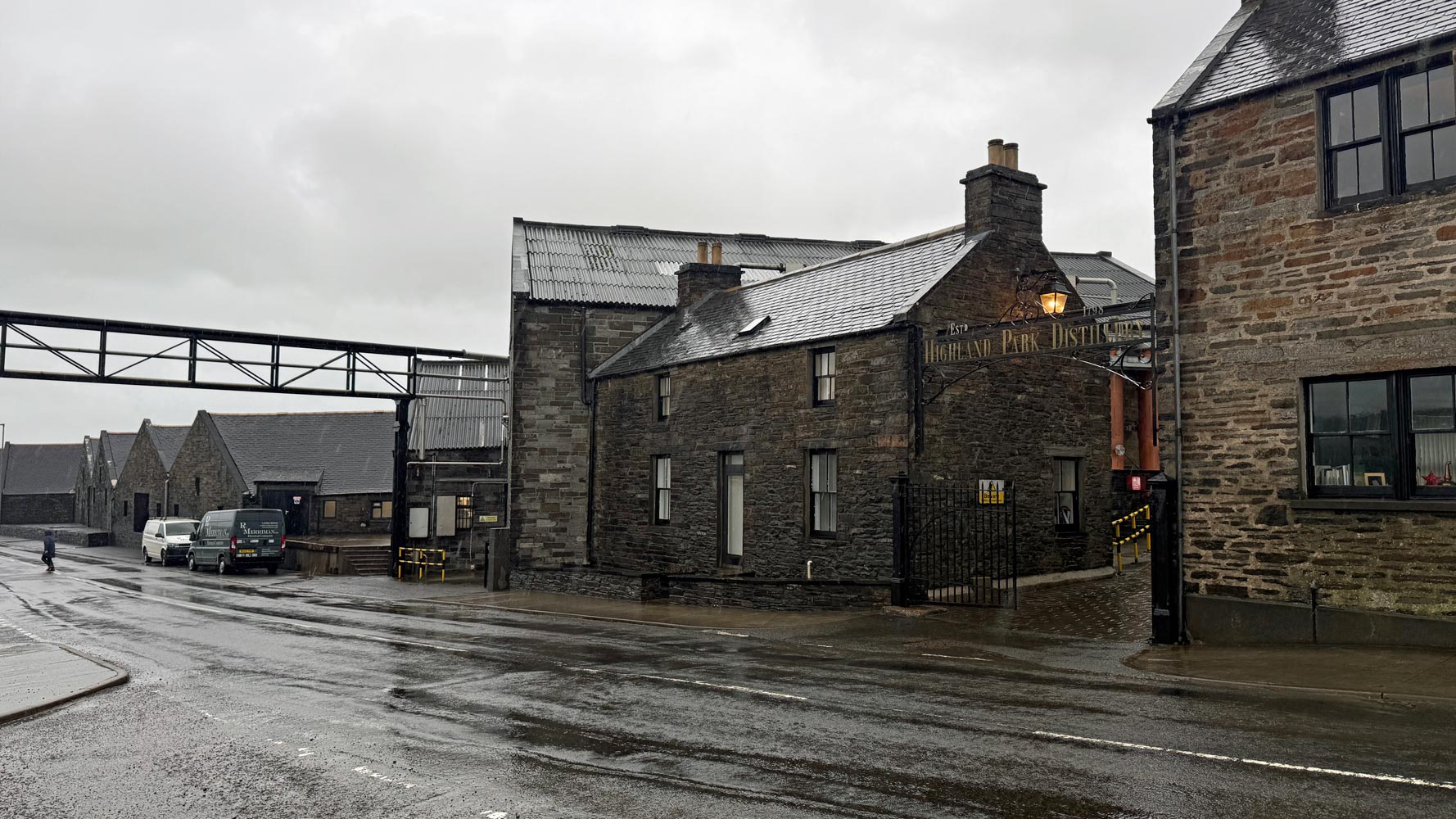
Highland Park whisky distillery
Highland Park is Orkney's most famous brand of whisky, www.highlandparkwhisky.com. Open for pre-booked visitor experiences February-September, the distillery is just southeast of Kirkwall on the road towards the Italian Chapel, a 30-minute 1.2 mile walk from Kirkwall town centre. Open April
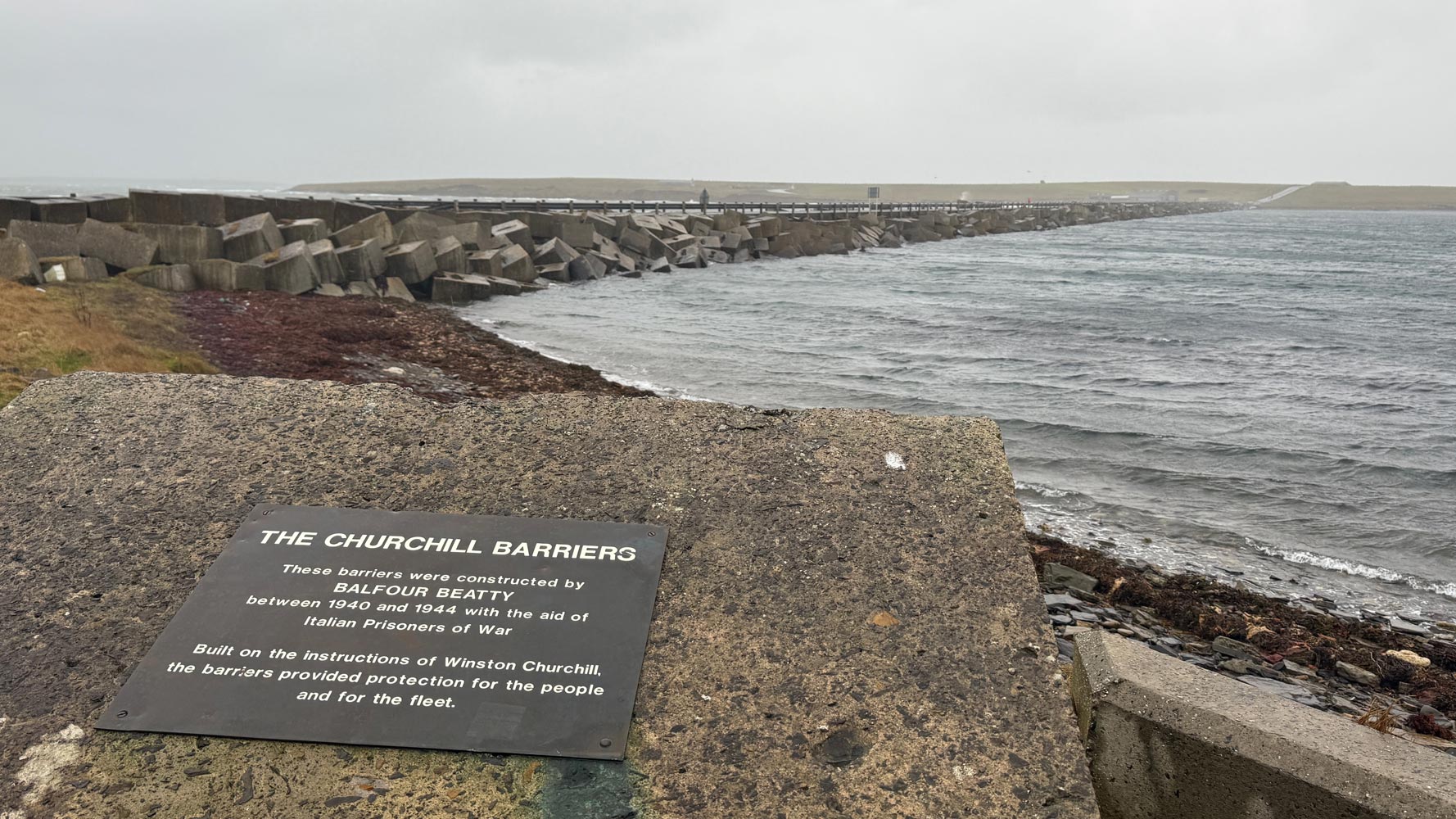
The Churchill Barriers
Between 1940 and 1944, the sinking of the Royal Oak prompted the construction of causeways in four locations between islands surrounding Scapa Flow, to block access to enemy submarines. The photo below shows Barrier 1 between Orkney's mainland and the isle of Lamb Holm, this was the channel used by the U47 to enter Scapa Flow. Each Churchill Barrier has a road over the top, improving communications around Orkney to this day. The X1 bus crosses this Churchill Barrier on its way to the Italian chapel. More about the Churchill Barriers.
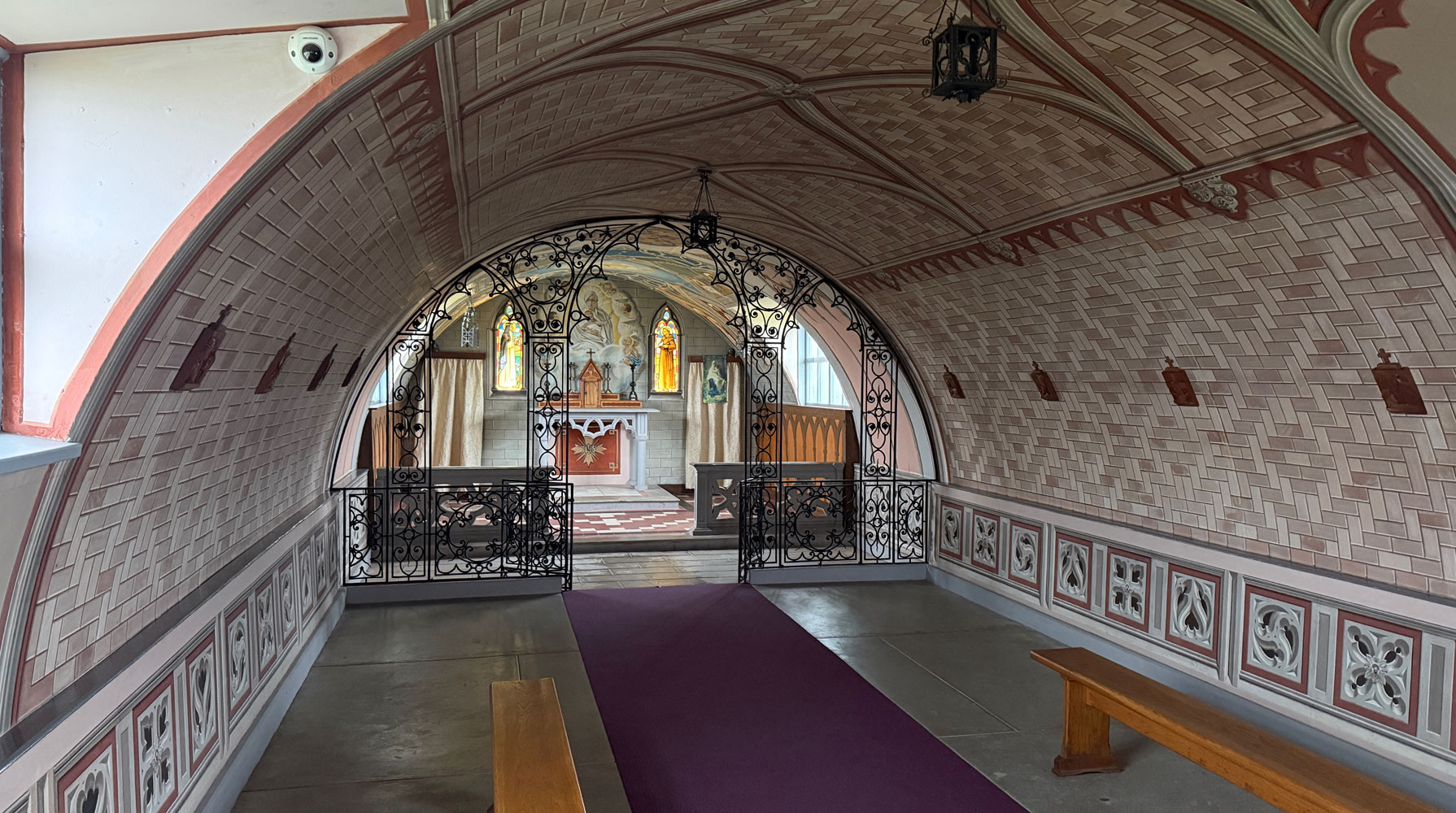
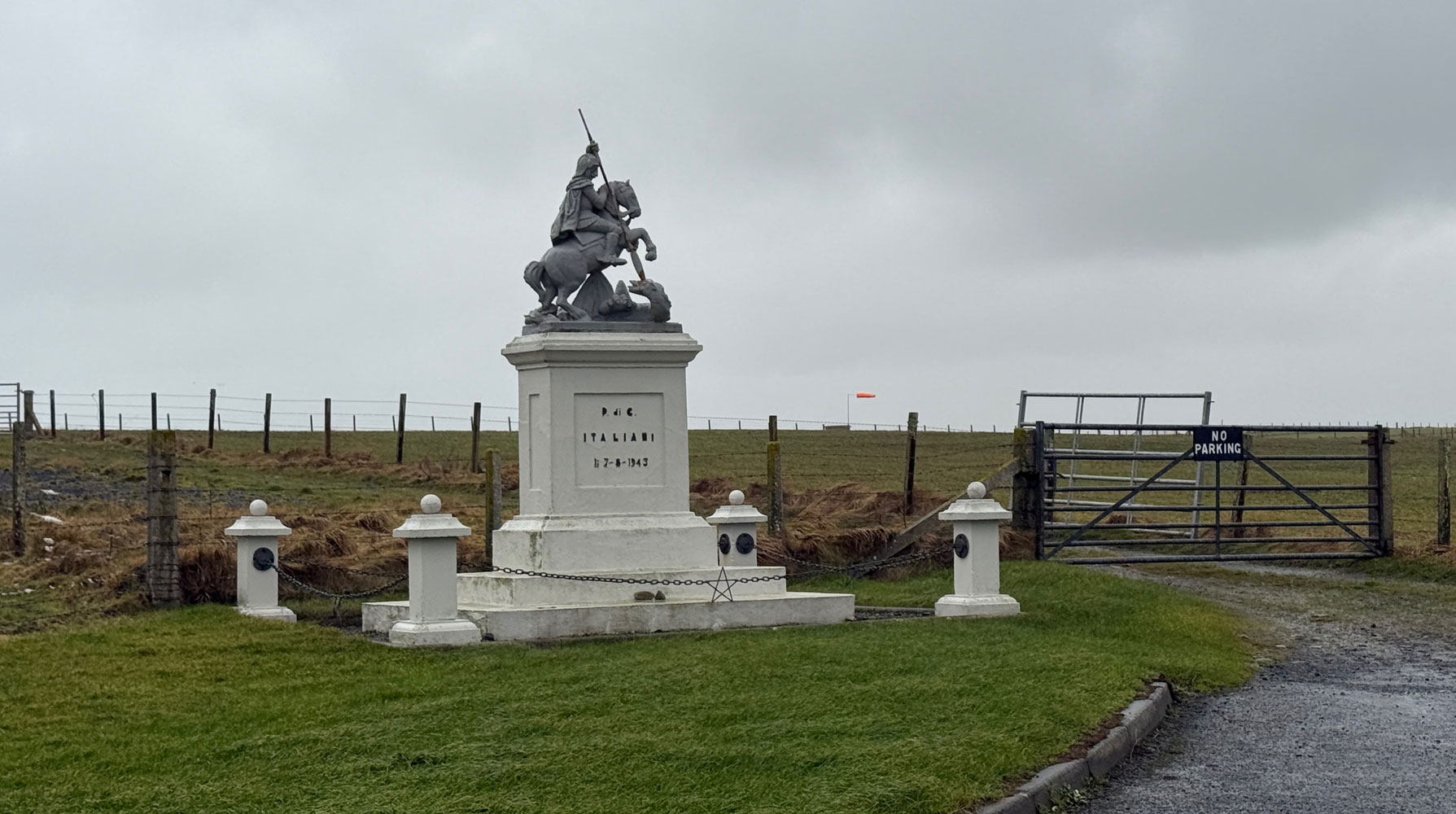
The Italian Chapel
The Churchill Barriers were built with the help of Italian prisoners of war who had been captured in North Africa and taken to Orkney. Housed in a camp on the islet of Lamb Holm, a number of them converted two Nissen huts into an exquisitely-painted chapel. You can still see the foundations of the PoW accommodation blocks to the right of the chapel. Open all year, for ticket prices see www.orkney.com/listings/the-italian-chapel.
To reach the Italian Chapel, take bus X1 from Stromness or Kirkwall, the bus stop is on the main road just after crossing Churchill Barrier number 1.
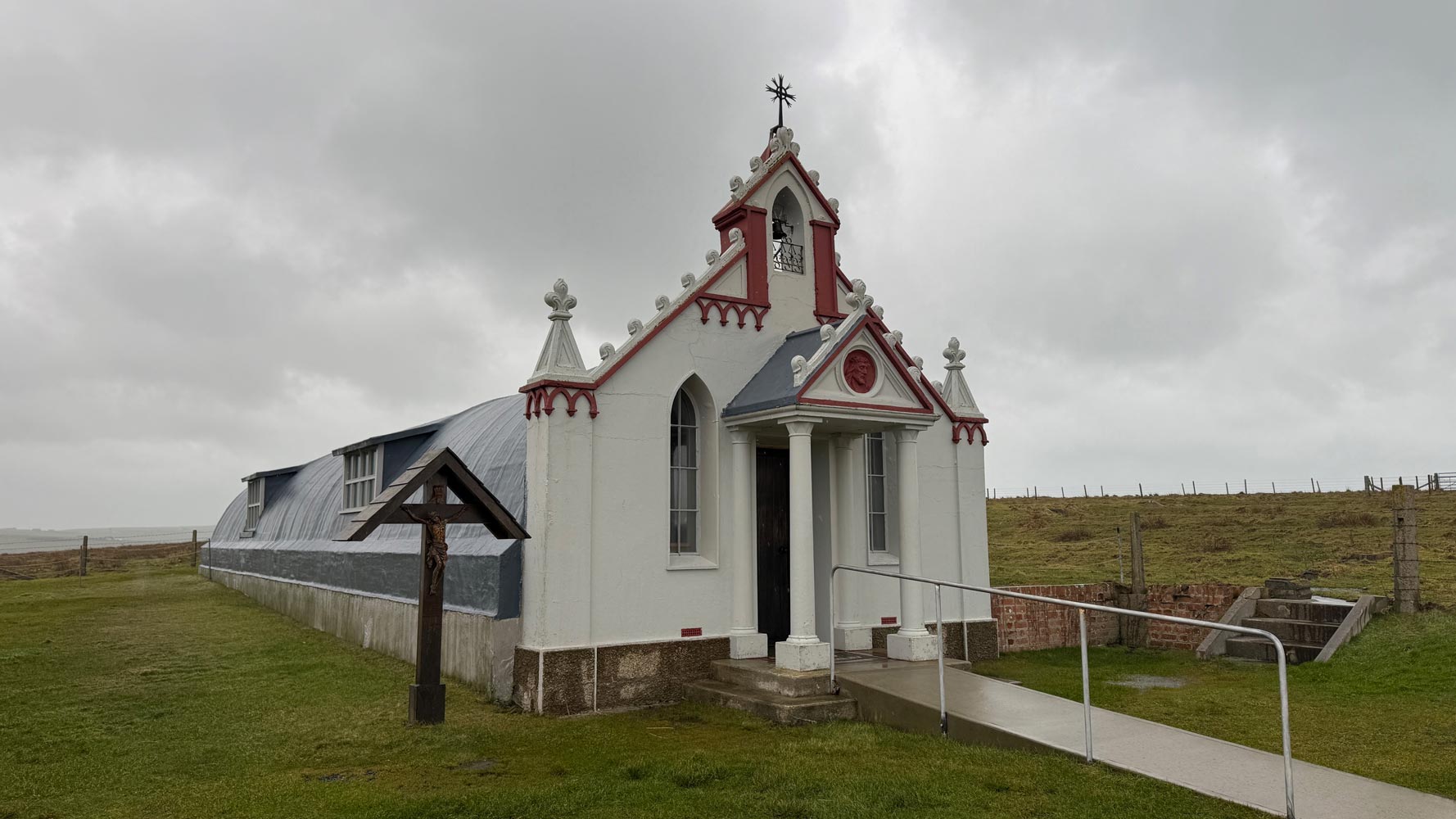
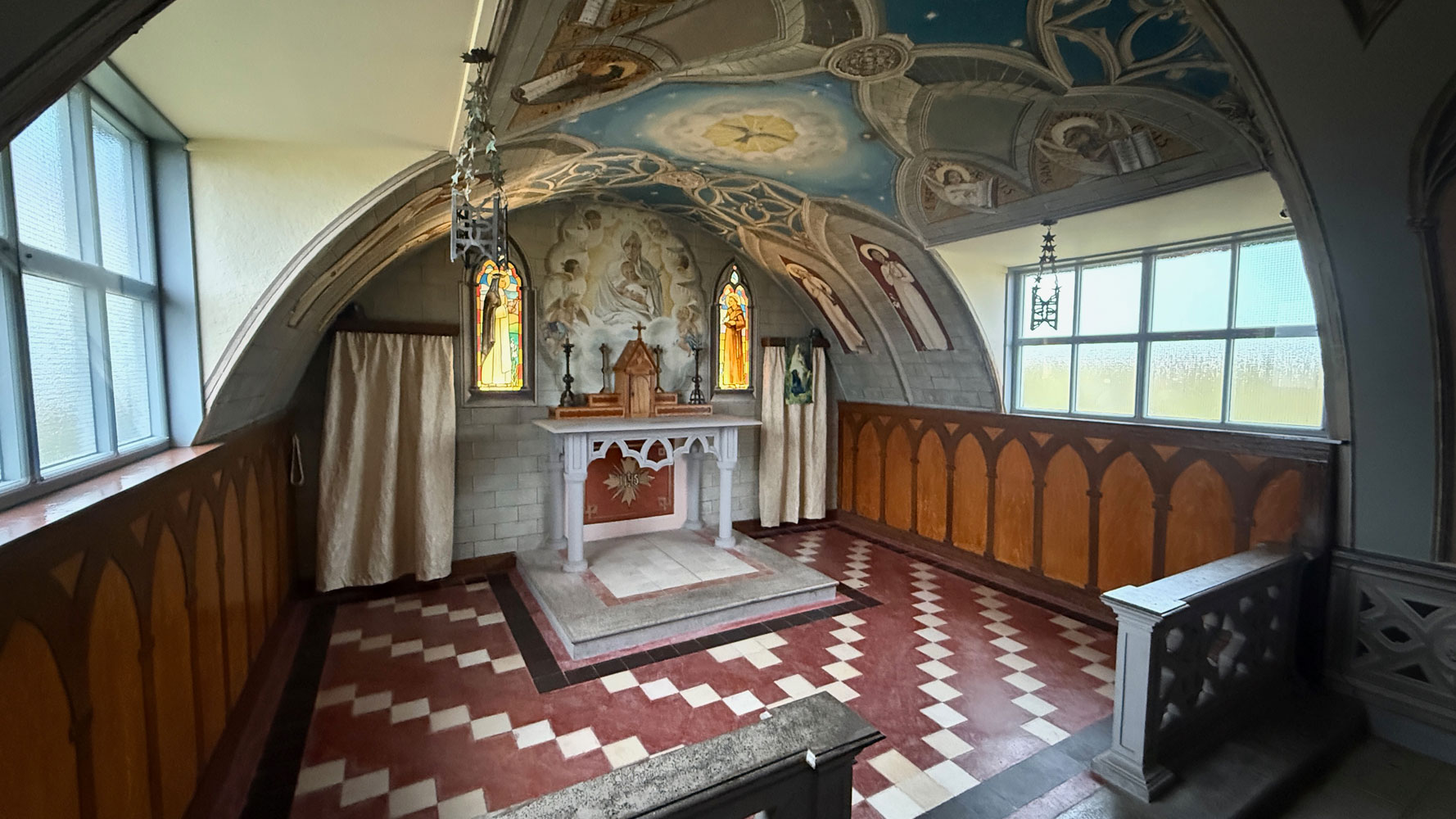
Above & below: The Italian Chapel.
Scapa Flow & the WW1 German fleet
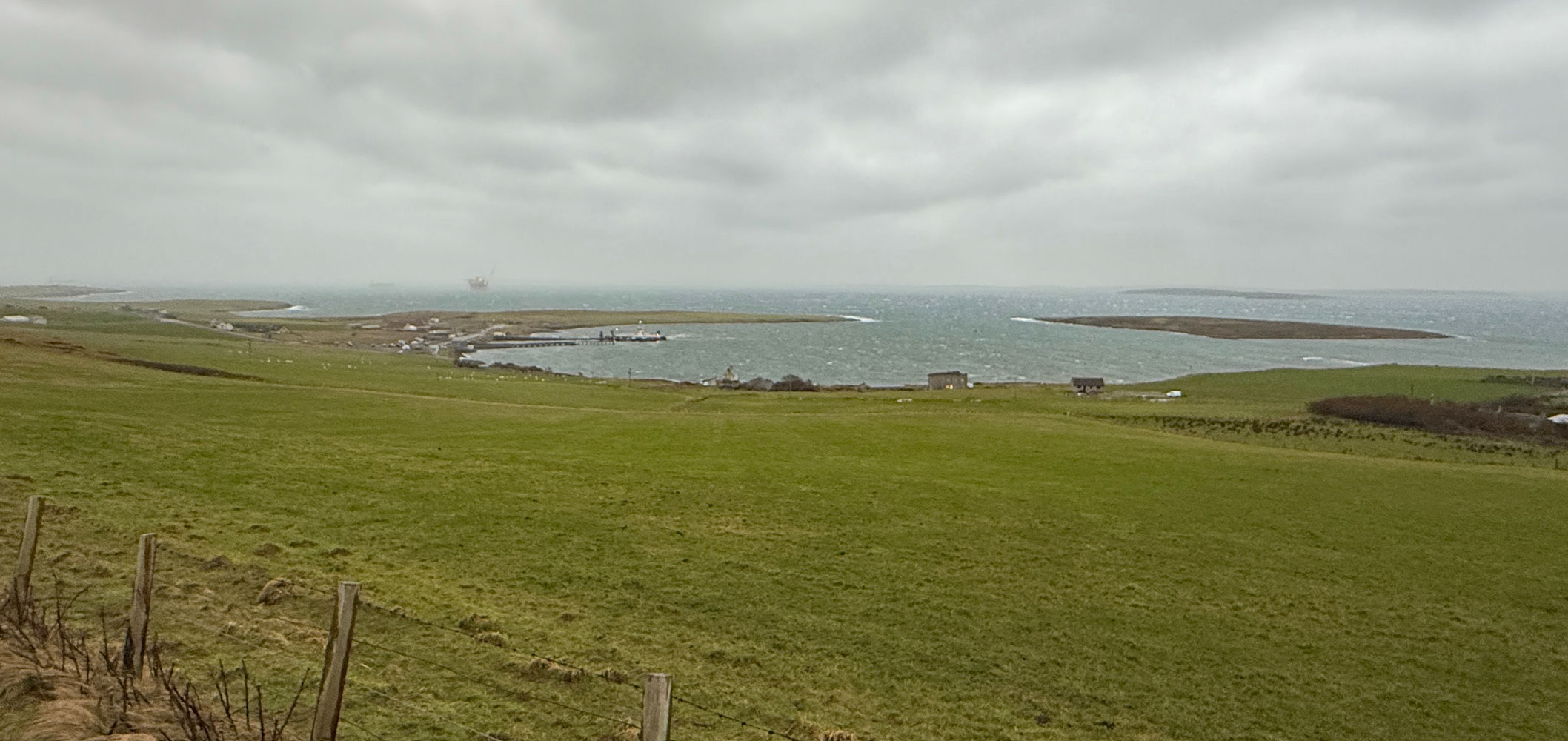
A vast natural anchorage enclosed by a number of Orkney's islands, Scapa Flow was the Royal Navy's home base throughout both world wars. At the end of WW1, the German fleet was interned here and in 1919 German sailors successfully scuttled over 50 of the 70-odd German warships. Most of these ships lie scattered on the sea bed, more or less to the right of the oil rig visible in the photo below. More about the scuttling of the German fleet.
Standing Stones of Stenness
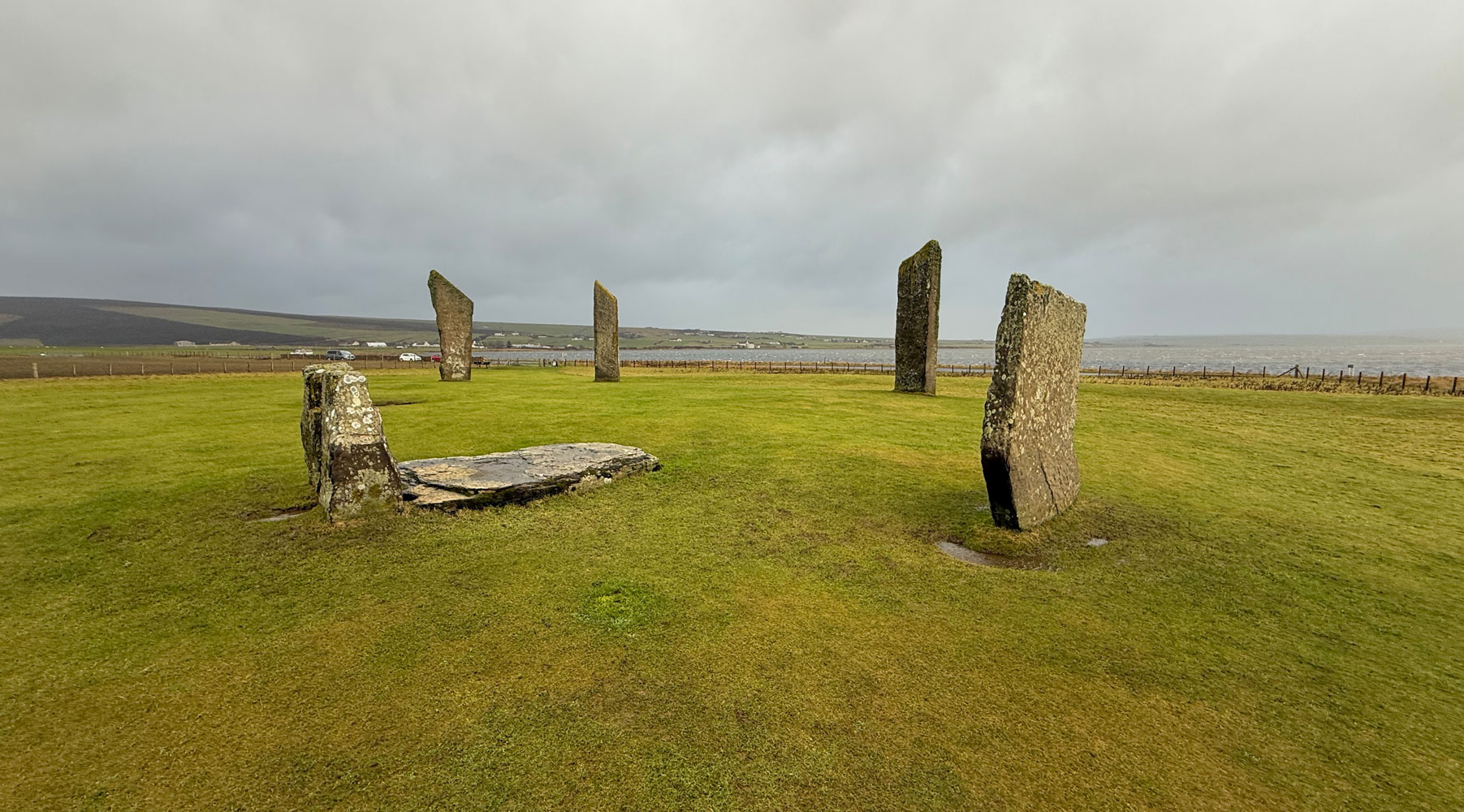
5 miles from Stromness, the stone circle at Stenness is quite possibly the oldest henge in the British Isles. Thought to date from around 3,100 BC, it may pre-date Stonehenge by some 1,000 years! Entry is free, open all year. More about the Standing Stones of Stenness.
The Stones of Stenness are an 18-minute 0.8 mile walk from Stenness Garage bus stop, served by the hourly Stromness-Kirkwall bus X1.
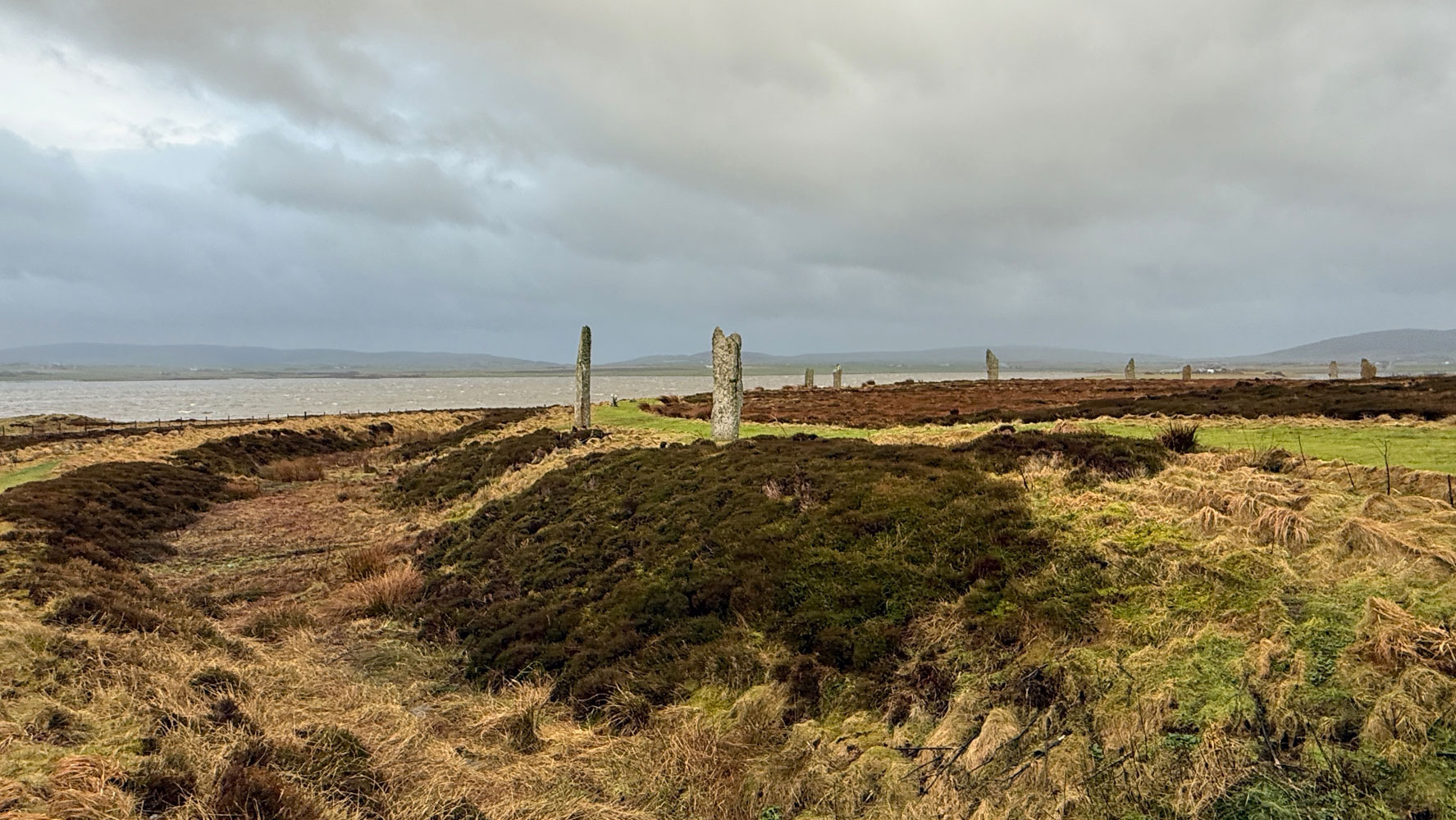
Ring of Brodgar
Dating from 2,500-2,000 BC, the Ring of Brodgar is a Neolithic henge some 6 miles from Stromness, now part of Orkney's UNESCO World Heritage Site. Unlike the Stones of Stenness, the remains of the ditch surrounding the stone circle can still be seen. Entry is free, open all year. More about the Ring of Brodgar.
The Ring of Brodgar is a 46-minute 2.1 mile walk from Stenness Garage bus stop, served by the hourly Stromness-Kirkwall bus X1. It's a 28-minute 1.3 mile walk from the Stones of Stenness.
Skara Brae
Skara Brae is Orkney's famous Neolithic village, located 7 miles north of Stromness. It's closed in winter, see www.historicenvironment.scot/visit-a-place/places/skara-brae/prices-times for opening times & admission tickets. Bus X1 is extended to Skara Brae April-October, check bus times & prices at www.stagecoachbus.com/plan-a-journey.
Alternative ferry route: Aberdeen-Kirkwall
Northlink Ferries also sail from Aberdeen to Kirkwall (New Hatston Pier, 2 miles from the centre) 3 or 4 times a week, a 6h early evening crossing, cabins and premium Magnus lounge available. Southbound, the ferry sails overnight. Check sailing dates & times at www.northlinkferries.co.uk. Using this route, a same-day journey is easily possible from Edinburgh or Glasgow to Orkney.